

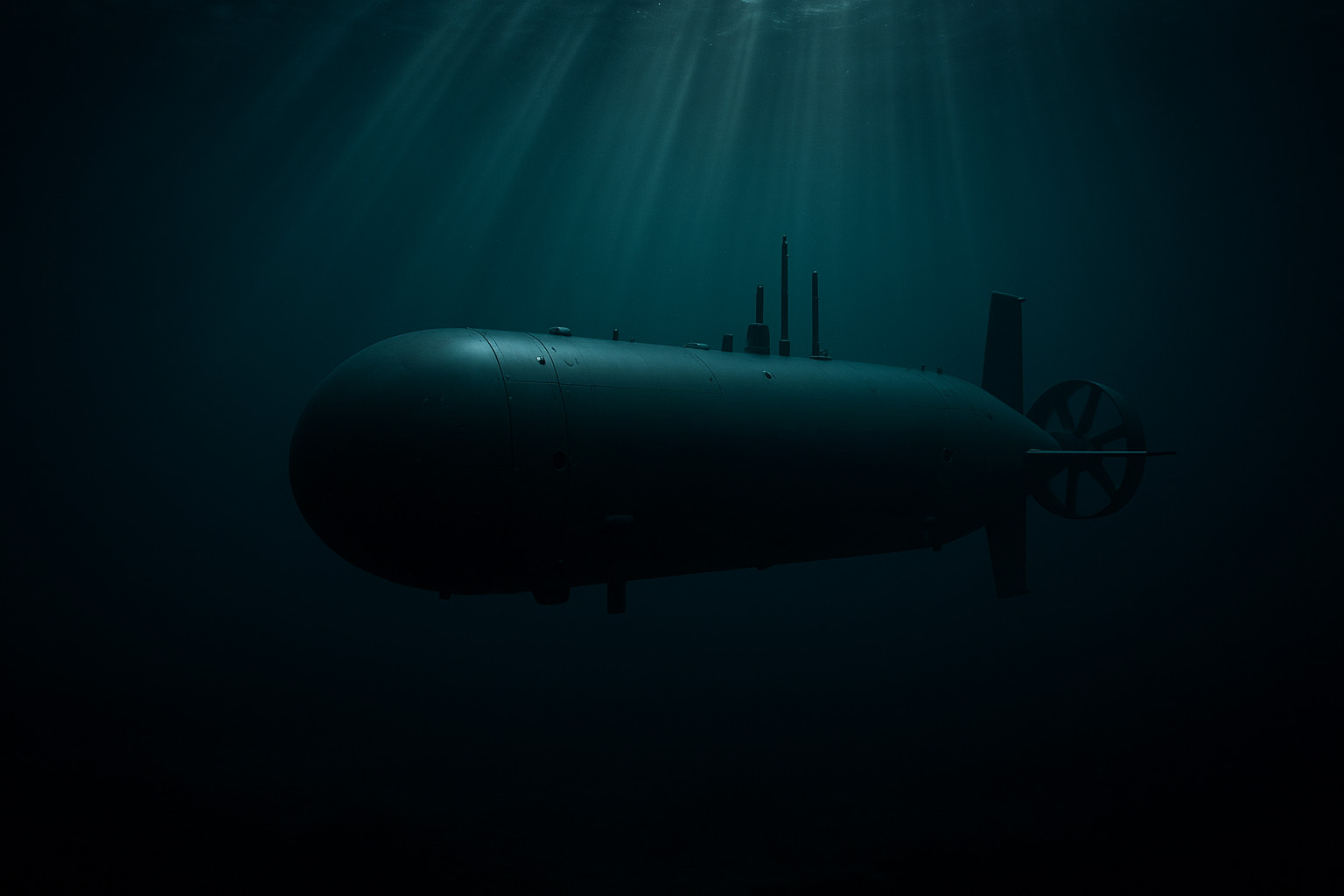
AUKUS Pillar Two came under sustained pressure from MPs during the Defence Committee’s final evidence session, with ministers and officials repeatedly challenged on whether the technology pillar is producing meaningful capability or drifting into an open-ended process without clear outcomes.
While witnesses defended Pillar Two as an inherently long-term effort focused on emerging technologies, committee members argued that nearly four years after AUKUS was announced, industry still lacks a clear demand signal and government cannot point to scaled, fielded capability.
AUKUS Pillar Two is the part of the trilateral pact focused on advanced military technologies rather than submarines, covering areas such as artificial intelligence, autonomy, cyber, undersea systems, hypersonics and electronic warfare. Its purpose is to allow the UK, US and Australia to co-develop, share and deploy cutting-edge capabilities more quickly by removing regulatory and security barriers that have historically slowed cooperation.
Unlike Pillar One, it has no single flagship product or delivery date, which makes success harder to define and has increasingly drawn scrutiny from MPs concerned about focus, accountability and tangible outcomes.
Ian Roome MP said evidence heard during the inquiry showed that early enthusiasm among companies across the UK, Australia and the US was now being undermined by uncertainty about what Pillar Two is actually meant to deliver. He warned that firms were investing on the basis of partial information, with significant financial risk for smaller suppliers.
“No one is telling industry exactly what AUKUS wants them to deliver, and they are spending money on assumptions,” he said, adding that for SMEs the consequences could be severe.
Luke Pollard MP accepted that criticism in principle, confirming that the government had accepted Sir Stephen Lovegrove’s recommendation to narrow Pillar Two to a small number of “signature” or “marquee” projects. However, he could not provide a timeline for when those projects would be announced, indicating that meaningful clarity was unlikely before 2026.
Senior officials pointed to experimentation and trials as evidence of progress, including underwater autonomy work and remote-control demonstrations during multinational exercises. Air Marshal Tim Jones acknowledged, however, that these activities had not yet translated into operational capability at scale.
“We are not scaling these things yet,” he told MPs, describing Pillar Two as having generated promising early work but lacking a clear path to deployment.
Several MPs questioned whether interoperability experiments should be described as success at all, noting that recent exercises involved different platforms developed independently rather than jointly. Fred Thomas MP said that presenting such activity as a Pillar Two achievement risked lowering expectations compared with the original ambition of co-developed capability.
Officials also conceded that governance arrangements for Pillar Two remain underdeveloped. Jones said there was clear scope to strengthen oversight, introduce firmer deliverables and improve measurement of progress, while stressing that informal collaboration between project teams often ran ahead of formal structures. Pollard accepted that Pillar Two lacks the clarity of Pillar One, arguing that its diffuse nature reflects the complexity of emerging technology rather than poor management. MPs countered that diffusion was precisely what was preventing accountability and delivery.
Questions of responsibility ran through the session, with Emma Lewell-Buck MP pressing ministers on who would be held accountable if Pillar Two failed to deliver over the long term. Pollard said responsibility ultimately rests with ministers and the government of the day, a response that did little to reassure committee members concerned about the programme’s multi-national and cross-departmental structure. MPs also raised concerns about UK Defence Innovation, questioning how it would generate a clear demand signal for industry and who would lead it.
The possibility of expanding Pillar Two to include other countries, including Japan, Canada and South Korea, prompted further caution. Pollard said expansion could only proceed where it delivered clear benefit to the UK and existing partners, while MPs warned that widening participation before establishing focus risked further dilution.
By the end of the session, there was broad agreement on one central point. Pillar Two has created activity, engagement and experimentation, but without sharper priorities and clearer ownership it risks remaining a pre-capability space rather than becoming a driver of deployable military advantage.









“AUKUS Pillar Two can deliver fast—after we fix it” I remember reading this article recently from “The Strategist” an analysis and commentary blog which is part of ASPI, the Australian Strategic Policy Institute, and it seemed to made a lot much sense then; create a structured mechanism to focus, advance and accelerate innovation, this would instil confidence and direction with ongoing investments in critical technologies.
(ASPI was established by the Australian Gov. and is partially funded by the Department of Defence.) Makes for good reading with insightful and constructive perspectives.
https+//www+aspistrategist+org+au/aukus-pillar-two-can-deliver-fast-after-we-fix-it/
Dot’s (.) have been replaced with a plus symbol (+) … or just hightlight the string and search using your search engine of choice.
🙏🏻 🙏🏻 🙏🏻 Sydney.
Bit of a chicken and egg scenario. Needs to be focused true, but equally it’s searching for appropriate technologies to back no doubt with some that are going to be rather speculative as the look at them. Then you have to coordinate between 3 countries, one of which has just been evaluating whether it even wants to participate and under the present regime (though more generally too) must be hell to work with and knowing the goal posts could be rearranged at any moment. Probably best to concentrate on a few better understood or perceived most promising technology and pursue agreements on them and build on that. Underwater drone tech and quantum sensors seems two of the most likely. I would examine matters with Australia before committing with the US just so that a certain stability can be established even with US potential machinations in play. Maybe easier said than done mind especially if the US is on a fishing expedition hereover true cooperation. They have history for that even under more enlightened regimes.
Personally Government (all of them) just need to distribute seed funding to anything which might conceivably come to fruition regardless of how likely or unlikely that might appear at first glace. Be happy that somewhere between 1 and 10 percent of the funding might lead to something. MPs focusing on anything at this stage is missing the point – nobody has a clue what might work – even the people who will eventually build it.
What we do need if massive funding in robitics and computer chip production. Worry less about whap we might grow and more about having enough manure.
The recent US review of AUKUS apparently said similar, although the actual report has not been published. Canada, New Zealand, India and Japan were all keen to become AUKUS pillar 2 members, but don’t seem to have missed out on much so far.
Sadly Not India. With Modi in charge they are unreliable.
Slightly off topic, the French are now developing a cold launch missile system to increase the missile carrying capacity on their FDI Frigates. The system uses existing vertical launch spaces on the ship to support higher missile density and alternative missile types, including CAMM and CAMM-ER. The competition between the Type 31 frigate and FDI Frigate for the Swedish and Danish Navies just took a turn for the interesting
Yes. Wondering now if the UK manufacturer of the six CAMM silo farm unit will produce an evolved design, maybe a more compressed space for six or more silos in the same space footprint for a cheaper alternative to ExLS, mk41?
Were just going with Mk41 rather than evolving mushrooms
If we use Mk 41s can we use them without US permission? If not we need to develop our own cold launch system. We are letting the French as usual steal our lunch and let the mushrooms grow under our feet.
Mk41 or exls is objectively better than this export system the French are coming up with though
Obsessing over AUKUS isn’t going to fix the UK’s defense problems; Money and micromanagement.
The Americans and Australians aren’t suddenly going to inject billions into UK sub building, like so many seem to hope lol.
In reply to your comment, I think that you will find that the Australian government will provide 4.6 Billion ASD to UK industry for nuclear submarine reactor design and production, expanding UK facilities, and supporting ventures with BAE Systems. Yes that is being spent over a number of years and it may not seem like a lot but it still counts as an investment
Hope has nothing to do with it, it’s actually been happening now for over 4 years and we are busy spending some of it. Australia committed £2.4 Billion over a 10 year period, the majority of that is loaded at the front end of that timescale. At present we are just under half way through the uplift in capability process and Australia has provided over £1 Billion so far as their part of the overall investment. The bulk of that is being spent here in Derby at the RR Raynesway site and the new Nuclear Training facility on infinity park.
And if you don’t believe me well you can come to Derby and have a look (from outside the perimeter). What gave you the idea the US was investing their money here ? they have their own issues to deal with. But so far Australia has provided over $2 Billion to the US to help update their facilities for Virginia production and that’s on top of ours.
For the UK the real problem is a lack of Defence spending in general. It needs to be increased and ring fenced against cheating by including infrastructure. Right now we should be headed to 3.5% GDP by 2028 to demonstrate our resolve to resist the tyrrants and bring all the Astutes into service next year. All.
Too late we got your money already 😀
No one trusts the US enough anymore to get into these development programs.
The thing is both the current US Gov, and also the Behaviours of the Indian Gov, does give me concern that they are “trusted partners” for high-end defence collab.