

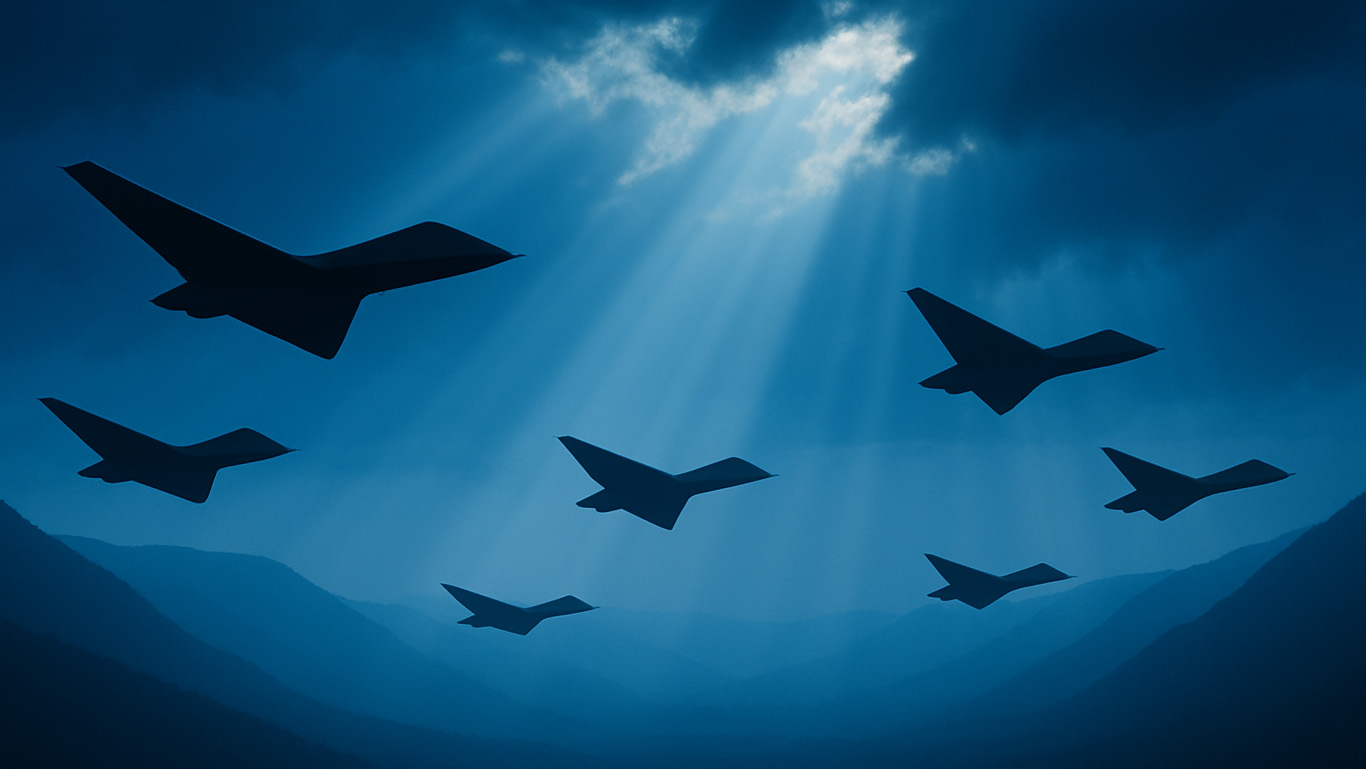
The Ministry of Defence says it is accelerating the development and adoption of uncrewed systems, while acknowledging that regulation remains a major barrier, following an exchange in the House of Commons during Defence questions.
Responding to a question on uncrewed capabilities, Defence Minister Al Carns told MPs that the government is expanding procurement at scale. He said the MOD plans to buy “up to 5,400 drones” in 2024, with numbers expected to rise to “8,000 in 2026”, according to the department. Carns also confirmed that a UK uncrewed systems Centre of Excellence will be launched later this year to improve coordination across defence, industry and academia.
Labour MP Fred Thomas warned that fragmented regulation across multiple departments and regulators is slowing progress. He described the current framework as “stifling” for innovators and military users alike, and said meaningful reform would require cross-government coordination. Thomas asked whether the minister would convene departments and regulators to address the issue collectively.
Carns agreed that regulation is constraining development and pointed to lessons drawn from the war in Ukraine. He told the House that “the majority of casualties in the front line in Ukraine are caused by uncrewed systems”, adding that, according to the government’s assessment, uncrewed platforms have demonstrated decisive effects across maritime and air domains. He said the new Centre of Excellence will act as “a centralised body of expertise to cut across the regulation and align regulatory freedoms with defence.”
He added: “Enough is enough when it comes to regulation. We need to get on with it and we’re going to double down over the next 12 months.”
Conservative MP Rebecca Smith raised concerns about maritime autonomy, arguing that the Maritime and Coastguard Agency’s Workboat Code is preventing autonomous vessels from even being licensed to operate in UK waters. She said this was holding back innovation in areas such as Plymouth, where several defence firms are based.
Carns acknowledged that testing and trialling in both airspace and maritime environments is “full of regulatory issues and hurdles”. He said the MOD has held “a couple of meetings with the Department for Transport” and now has “a firm grasp of the problem”. The next step, he said, is to “unlock legislation to ensure it’s easier and faster for those companies to develop cutting world technology and get it into the open market, but also procure it for defence.”





What Drones?
Give types, numbers, service, who uses them.
All hot air until those minor details are given.
More spin and rubbish
Now you mention hot air.. I understand that they have purchased a number drone swarms each consisting of 99 red balloons to pressure Russian air defences…
Good song, that!
Bizarrely Apple Music has just started playing it.. we are being watched 😬
Talk talk talk – never orders….
There have been orders, but so few details given in their haste to cover up and obscure the state of the forces that it’s very difficult to judge.
For us or Ukraine or its just figures well knowing our forces will get the smll share?
We are planning to have 8000 drones in 2026. These will be made from the paper created by the hundreds of reports we will publish talking about nothing.
Paper planes. Surely we can afford them. Unless they are fitted for but not with paper.
Totally off topic but still drone related. I’ve just seen a report that Ukraine has wiped out another Russian Kilo Class submarine in port, using an underwater drone. The accompanying video is very convincing, indeed. This sub must be a goner!
Well Russia has 6 improved kilos in 2022 in the Black Sea fleet, one ended up with a couple of storm shadows in it, the rostov on don poor thing.. then got blown up a second time.. now they have blown up the Varshavyanka another project 636.3 Improved Kilo.. the the thing is these are some of the most modern boats in the Russian fleet and are only about 10 years old.. devastating..
These were done with sub surface drones as well… this is the new reality of ASW.. not just high end SSNs but small attrition drones used as mass.
This just goes to show the value of supporting Ukraine’s resistance in anyway we can. Some of the targets have been strategic in nature and could threaten us on day one of any conflict. Not just the submarines and their missile silos but also the depletion of Russia’s heavy bomber fleet and other, old soviet era, aircraft just going extinct through overuse and falling out of the sky.
In port?
And they had no subsurface nets to stop access?
God help us if we’re so stupid that we think we can go without.
It’s clear that the inner area of Faslane has a boom of some sort but not the wider Berths where SSN come alongside?
Yes, in port. I don’t know the circumstances of the drone slipping in, but from the video and images it looks like a good part of the Black Sea Fleet was moored up there and the Ukrainians could have destroyed any vessel they liked. The Russians can at least be thankful that only one drone got in among them.
Yes they clearly went for the most painful conventional strategic strike asset they could. Russia only had 12 of these total with 4 building.. and the none existent Ukrainian navy has clearly destroyed 2, these are modern and not cheap at about 350 million a pop + the loadout of cruise missiles.
Slava 🇺🇦 ! 😁👍
Trouble is if you have ships going in and out then your small drones could slip in if it’s piggybacking off another ship you would not be able to do much about it unless you had your own drones to delouse.
A centre of excellence…yawn
8,000 is a p’s in a pot, when russia is using circa 200 a day, your talking a month and a bit’s worth, i’d be much more impressed if we were investing in dispersed drone production lines
having said that, russia aren’t the aggressors, so 8,000 may be way more than we actually need anyway