

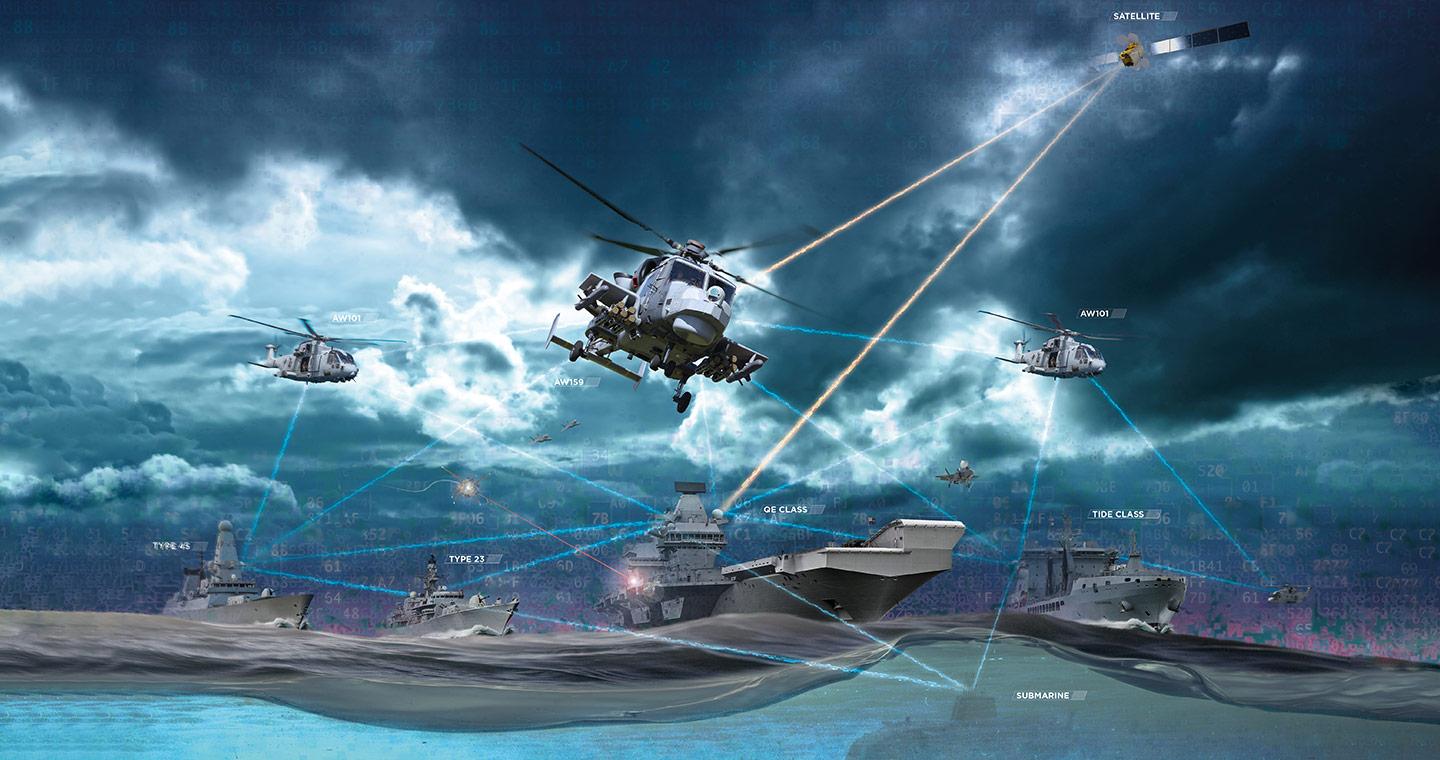
The UK has successfully demonstrated advanced networked radar and sensor fusion across multiple air platforms, marking a significant step towards faster and more accurate air threat detection, the Ministry of Defence has said.
The breakthrough was delivered through Project SIREN, led by the Defence Science and Technology Laboratory, and represents the first time such advanced radar signal processing and multi-platform sensor fusion has been demonstrated in the UK. The project directly supports the development of the UK’s future integrated air domain sensing capability.
According to Dstl, the demonstration showed how data from multiple radars can be fused to generate a near real-time picture of both the air and maritime environment, improving situational awareness and tracking. This capability is increasingly important as air threats become more complex and faster-moving.
Project SIREN, short for System for Integrated Radar Early-response Networking, was funded through the Chief Scientific Adviser’s research programme and reflects the “One Defence” approach outlined in the Strategic Defence Review 2025. The consortium progressed from concept to live airborne demonstration in just 15 months, concluding a series of flight trials off Scotland’s east coast in May 2025.
A key element of the work was the use of cloud-based integration to fuse data from distributed sensors, linking airborne platforms with ground stations. Dstl said this lays the groundwork for future multi-platform sensing across defence and supports the UK’s emerging Digital Targeting Web, designed to speed up the flow of information from sensor to decision-maker.
The project brought together industry and academic partners including Leonardo, Igence Radar and Voyant, alongside researchers from the University of Edinburgh and the University of Liverpool. Dstl provided overall leadership and technical direction, aligning commercial and academic innovation with defence needs.
Dstl said Project SIREN demonstrates how closer collaboration between government, prime contractors, SMEs and universities can accelerate the delivery of operational capability. The work has generated new intellectual property and technical expertise that will feed into future defence programmes.






This is what we need as an AEW capability on the carriers, combining a helicopter borne sensor with a very high flying MALE drone. Ideally putting F35B sensor data in also however seems unlikely Lockheed would be able to code for that.
I agree Jim, but we need to move away from the limited nature of Helicopter borne AEW sensors.
Radar data from F35B comes out via an API.
There was an article around that being done a year or so ago.
But I agree sensor fusion is the key here.
Which means that the F35 data should be able to be included in the overall network. If I understand it correctly the F-35 already fuses data from multiple sensor and other off platform sources so being able to include F-35 data feeds as well would be a real asset. Assuming it hasn’t already been done as, putting the imagery aside, the article only talks about ‘airborne platforms’.
Cheers CR