

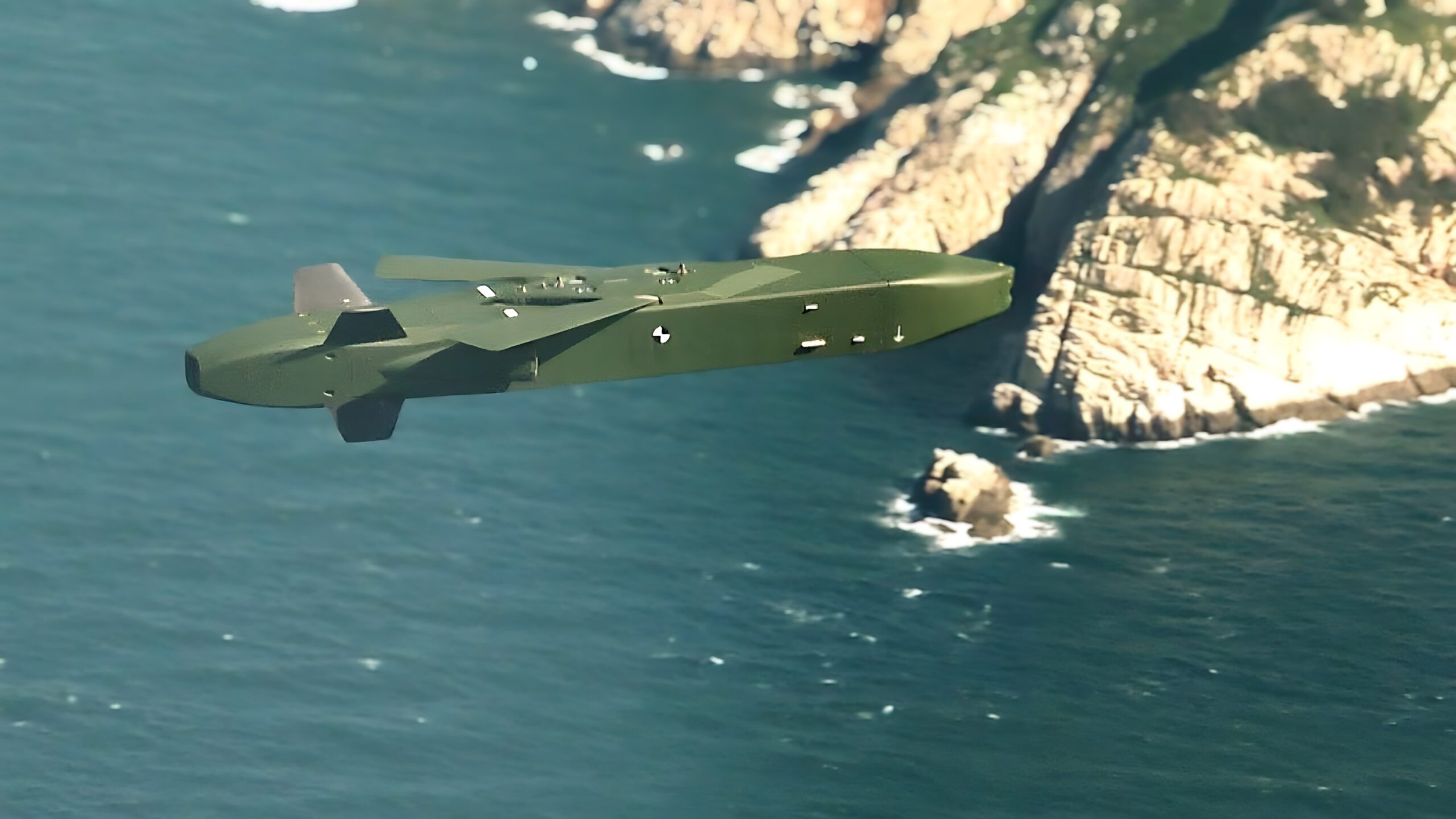
Germany has taken the first formal step toward large-scale production of an upgraded TAURUS stand-off missile, with the Bundeswehr and TAURUS Systems GmbH signing a contract to prepare a serial production line in the country.
TAURUS Systems GmbH is a joint venture between MBDA and Saab.
The agreement focuses on establishing manufacturing capacity for the capability-enhanced TAURUS NEO variant, which MBDA intends to build in quantity at a German facility. The system is positioned by the company as a core element of Berlin’s effort to restore long-range strike capacity at scale following years of limited munitions stockpiles.
Thomas Gottschild, MBDA Executive Group Director Strategy, said the programme reflects a broader industrial and strategic shift in Europe. “MBDA has always been committed to delivering decisive capabilities that ensure European sovereignty. With TAURUS NEO, Germany is specifically building up its state-of-the-art deep strike capabilities, thereby providing a critical contribution to the deterrence capabilities of Europe and NATO. In so doing, MBDA demonstrates its unique expertise in Europe, offering a comprehensive portfolio of deep strike solutions launched from the ground, air, surface, and sub-surface.”
According to the company, TAURUS NEO offers a range beyond 500 kilometres, low-observability features and guidance systems intended to defeat modern air defence networks. MBDA argues this allows German Air Force aircraft to strike fixed targets from outside the envelope of hostile surface-to-air systems, reducing risk to crews and platforms.
MBDA has already begun technology development under a maintenance and modernisation contract signed in late 2024. The firm says this early work is intended to accelerate first deliveries once production begins. The latest agreement also supports expansion of the missile’s modular architecture for future growth, according to the company.
The deal arrives as MBDA increases throughput across its portfolio. Between 2023 and 2025 the manufacturer expects to have doubled missile output and plans to invest EUR 2.4 billion from 2025 to 2029 to support higher production rates across Europe.










Should the UK have a policy of matching Germany’s arms build-up to keep pace with Europe’s richest country and to avoid a repeat of pre – WW1&2 mismatch, which almost destroyed us on both occasions?
I would suggest not,
Of all our major Allie’s Germany is probably on the closest page to us. German rearmament is the best thing to happen to Europe for some time and the biggest boost to UK security in a generation.
With Germany and Poland handling the eastern border we can focus on the North and west and remove any need to count on fair weather friends to our south or west both of which have their own agendas and are quite happy to screw us over when it suits them.
Happy New Year Jim. I think the jury is out on that one, in some ways yes they probably are but in some others are. IMHO Sweden, Norway, Poland, Netherlands all have their own points of common interest with us and at present I’d say it’s Norway and Poland that closest to our stated position.
And that is the big issue our stated position just doesn’t get mirrored in either conventional capability or actual actions.
Which is why I’d look at it the other way round and ask a simple question “Is the the UK a reliable and fully committed Ally ?”.
It shames me to say this but at present the answer has been “TBC” for nearly 4 years now !
IMHO the really big “Elephant in the back yard” is actually ourselves, as at present I can honestly say the UK is probably the 2nd least reliable ally in NATO at least Spain was upfront about not meeting their obligations, we just hope no one is noticing. Our leaders talk, they blatantly mislead, make grandiose statements and have done absolutely nothing !
I may just have had too much Cheese, Port and Malt last night but I’m heading towards joining Mr Mandelli on the pessimist step.😱
No, you’re quite right, and it needs shouting from the rooftops.
These charlatans need calling out and I will keep highlighting the rhetoric vs the reality to whoever in the world reads this forum until this crap government change their behaviour.
To be fair the Tories didn’t do much better in defense spending cutting troop numbers when the Ukraine war started and of course Reform MPs taking bribes from the Russians, was those issues shouted from the roof tops in comment section then?
If only you guys had the power to project t these truths into the mainstream. We seem to be painfully close to being the school shrill urging the kids on from the back to stand up to the bully knowing they are going to be the cannon fodder for our safety and it seems merely betting on them being strong enough together to hold him off.
Rodney, “as at present I can honestly say the UK is probably the 2nd least reliable ally in NATO” — we need to be critical of ourselves, but I think this is far from reality.
NATO’s purpose is obviously collective defence, achieved primarily through deterrence. If we ever find out conclusively who is or isn’t a “reliable” ally in a shooting war, then that’s a different story.
So for me, reliability can only really be judged on deterrence right now. What people are actually assessing is credibility — political signalling, forward deployment, integration, readiness, and the possession of capabilities that make aggression look too risky to attempt in the first place.
From that perspective, some contributions matter disproportionately. Nuclear deterrence is the obvious one: the UK provides one of only two European nuclear deterrents, and its forces are formally included in NATO’s Nuclear Planning Group (NPG) and declared to the Alliance’s collective defence. France, on the other hand, does not participate in the NPG and has historically kept its nuclear forces entirely outside NATO’s formal nuclear-planning structures. I’ve read some of your posts, so I know you understand this better than most — I’m just stating it here to hopefully change your mind about how reliable we are compared to others.
I agree with your points about the government talking too much without backing it up. There is clearly no sense of urgency, and just because we have a nuclear deterrent, it doesn’t excuse the current state of our conventional forces. I’m simply arguing that I still think we are on the other end of the reliability scale.
Anyhow, just my thoughts. Happy New Year 🍻
Hi Greg, Yes up till recently I’ve been pretty positive about the industrial efforts being made and particularly in the Maritime sphere and yes are renewing our CASD and yes we are the only ones who dedicate it to NATO tasking.
However non of that is of any use whatsoever if the mindset of those in charge isn’t credible to actually deliver rather than talk.
Deterrence only works if it’s 100% credible and causes an enemy to pause, I now have zero faith in our Political masters to be able to deliver on their end of that bargain.
Other than the pre planned and funded equipment 2020 – 2030 we have bought precisely zero extra New Build defence equipment, added zero extra manpower and given away a lot of what we had with no replacements. Spain was at least honest about not going up to the Trump inspired NATO spending targets but they have actually increased their budget and are buying new kit. Meanwhile since 22/02 22 we have done zilch extra !
Any foreign leader looking at the UK would probably bet on the UK doing precisely nothing if they were to attack NATO in the cease and tell the UK that if we just stay quiet they will leave us alone.
And right now I wouldn’t bet against that working !
Oh I forgot we have ordered 1 RCH155 for testing purposes ! I’m sure Putin is shaking in his boots. ☹️
Happy new year ABC, I agree on Poland and Norway however I was not counting them as major powers like France, USA or Germany.
However as long as Europes Easter boarder is secured by democratic countries I believe it means our job is largely done and we only have to worry about the North Atlantic and Scandinavia both of which we are well suited and able to defend with the JEF countries.
I have no fears of German rearmament,I was much more afraid of un armed Germany as we cannot afford to have tens of thousands of troops wasted on the German or Polish boarder. A second BAOR would be an epic waste of resources in a century where we have to be ready to fight China.
I don’t agree that the UK is not a reliable ally, actions speaker louder than words and willingness to intervene counts for more than anything (looking at you Donald). No one has done more for Ukraine and for NATO than us. We have been the lead NATO nation since 2014. Indeed it’s one of the reasons our forces have capability gaps.
I could point to any force in NATO as a well as China and Russia’s forces and show you massive capability gaps, areas in need of spending and industrial bases failing to keep up with demand.
I don’t see us as particularly different and I believe most issues are well on their way to being solved (although AJAX is now a colossal potential capability gap)
I believe the government is acting in the countries best interest with a steady sustained increase of defence spending of 0.1% of GDP each year up to a level of 3%. I don’t believe more than 3% is warranted but I’m happy to band around a 3.5% target to keep the orange one on side for three more years. Indeed this is what everyone is doing including the USA be have they have even less chance of getting to 3.5% than we do.
Only fly in that ointment is we have decimated our Amphibious lift so reinforcing Norway will be challenging !
Careful now. The mouth breathers on this site who say we should have a large land force in the east instead of playing to our strengths and focus on air and naval threats (to the west and north as you say) and only put a relatively small mobile force in the east or in Scandinavia, might get upset with you.
But anyway, island nation, island problems. We should most definitely put the army last in our NATO plans and focus on what we are expected to encounter e.g. naval and air threats to the NATO northern flank
I agree with your theme but we do have to be strong enough on the ground to be the prime force multiplier to the Scandinavian Countries who all together cover a large area yet have a joint population far short of our own. If Germany and Poland are guarding our Eastern front France filling in as strategic back up around the whole border from Romania to the Baltic States we are going to be expected to support the high north as our priority, the thought of losing Norway is a nightmare scenario for Europe and even Britain’s homeland survival. Naval and airforce would mean little other than as a desperate home guard if that land mass fell. May seem fanciful now but in a decade after Ukraine who knows, this is the area where Russia’s strategic weakness could be reversed if they succeeded and is why their warmongers, political, military, media and online trolls spend so much time pondering the options long before Ukraine happened.
The problem is we aren’t putting anything first or second and concentrating extra resources on those.
OK we can do damn all about increasing surface fleet anytime soon due to the shipyards being at capacity and no realistic way to increase it now, same for Submarine force we are building everything we can and ramping up the future capacity !
Fact is we knew we wanted 13 Frigates 15 years ago, ordered them in cribs and drabs and laid the bills in such a way as to spread the cost out over as many years as possible. That resulted in a Snails pace schedule which isn’t geared to replace the existing T23’s as they go off to the breakers.
As for the Airforce being expanded there is zero excuse for not having ordered anything extra since 2022 except the 25 F25 that already planned and budgeted for (and they reduced that bill by ordering 12 cheaper A’s instead of 12 B’s).
So to summarise yes IMHO we shouldn’t have a large ground Army, but it should be more than we have or haven’t got ! And since 2022 we have done zilch for Naval, Air or even worse no GBAD for U.K.
Jim, the question must be, what happens if the main threat (Russia) is neutralised through mutual agreements leading to the establishment of cordiality, possibly due to a significant political turn around in the Kremlin. At that point, Germany’s substantial rearmament could become a growing bone of contention within the EU? History tells us that a country that is not only economically powerful but can wave a big sword is likely to create imbalance, especially if the UK continues with a, ‘Just Enough’ policy on defence as in the post WW1 years. Any serious swing to a more radical minded government in either Poland or Germany demanding a greater voice in EU policy would further marginalise the UK and its diplomatic influence. By the UK matching German military spending could at least avoid the supremacy of any given nation within NATO especially if the US membership begins to draw down.
So why the issue with Germany but not with France? France has tried to conquer Europe far more times than Germany and it has nuclear weapons.
I don’t see why anyone would single out Germany as a major issue. Of all the major powers it’s probably the least threatening.
Jim, you are right to suggest France and the same cautions apply to her. However, France is not as finacially strong as Germany and unlikely to topple the latter from that position anytime soon. Ukraine and the ramifications from that conflict has awoken Germany’s need to rearm and the noises coming from the White House have spurded on the need to strengthen defence.
Jim, I totally agree with you. German military expansion is good news for Europe; however, it all depends on who runs the government. If you want an example of the misuse of supremacy, just keep watching Trump’s activities.
That is why I support a balanced military build-up in Europe, including the UK. It may not stop war between us, but it makes an imbalance less likely.
If only we’d known in 2014 that we could get away with spending 1.5% of GDP of defence instead of 2%, like Germany, then we too could have been saving it and proudly announce a massive increase with 11 years worth of spare change and finally reach 2% only in 2025. Just imagine all of the things that we have today that we instead could have been boasting about purchasing in the future. Devil’s advocate 😀 Happy New Year.
It would be interesting what the liberal EU view is if AfD gained power in Germany and started remigration. That build up might not look so friendly depending on your viewpoint or if you believe the nonsense that far right equals Nazi.
I’ll make a bet with you if “Everlasting Peace” breaks out again in Europe anytime soon the following will happen. .
1. Germany signs on the dot to get cheap Russian Oil and Gas.
2. Germany backtracks on its Defence increase and German Industry floods the market with Cheap weapons and effectively scuppers the Defence industry in most of Europe.
3. Starmer and Co will claim that it was theirfplan all along and cut the budget back again:
Poland and Germany are far better at fielding large land armies. Frankly, there is no way we could offer more than minimal support there. Meanwhile, things like the Norwegian tie up are far more useful. Yes, we need more ground forces – but I would say they would be best orientated more towards the Baltic and Nordic areas rather than central Europe.
The issue is if you want to have elite forces such as SF, Para, Marines you need mass to select quality.
I’d say the ratios are wrong for that.
So I’d approach this by determining the size of SF and then let that determine RM and Para etc and from that determine the necessary size of land forces.
It really is that simple and I can’t for the life of me see how we do that with 75k people?
What about RAF Regt? 👀
What about them ? They don’t guard UK Air Bases or anything else, they don’t provide Air Defence anymore so what use are they ?
Not a serious comment, just a joke about “the big three”.
Makes sense 😉
The reality on the ground is that NATO has very little in the way of land forces on the North German Plain, let alone anywhere else.
There are 4 Polish Divisions, one of the two German armoured infantry divisions, the equivalent of one from Benelux and one – on paper, but well understrength, from the UK. 7 divisions is not a lot, in fact is pretty small next to the number Ukraine fields and of course Russia has even more.
That is why NATO expects and requires the UK to provide a corps of two armoured infantry divisions to deter Russian adventeurim or if that fails, toreinforce Germany-Poland in any conflict. We have been paying lip-serice to meeting our NATO land commitment for 20+ years now and hoping our allies won’t notice. (The US military and political leaders have noticed and been pretty critical, quite rightly).
We have instead been playing at, and spending far too much of our budget on, having an expeditionary naval capability out of area. Reality is that this naval sideshow is just a distraction from the main threat in Europe and one that we have next to zero naval.capabilty to undertake.
The NATO requirement is
1. Airpower, which we have run down nearly into the ground.
2. Land forces in northen Europe, not just Germany- Poland but also in support of Scandinavia and the Baltic, which we have run even further into the ground.
3. Naval power in the North Atlantic, which is primarily an ASW and sub-sea task. We will be about up to that when the RN gets its Astutes and T45s actually working and some.of the T26s in the water.
But as things stand, we are not actually playing our proper part in NATO, we are expected to be a leader and the glue that holds together the allies in our area of operations, but are in reality complete laggards in the Air and Land domains and, despite years of the RN elbowing for primacy, have next to nothing to put to sea in the North Atlantic.
The matelots here will of course hate this conclusion, but the chants of we-are-an-island-nation! and we-must-safeguard-the-trade-routes! need closer examination.
Many of our allies have long littoral coastlines that need defended, just as much as our sceptered Isle
A lot of our allies will be assisting in protecting Europe’s critical trade routes. It is not necessary for the RN to take on an exaggerated role of of trying to do all these tasks, we are not a 200-ship navy of old colonial times!
The best way to harness what military resources we have in support of NATO is to limit the RN to primarily doing its Atlantic role, with a limited secondary capacity for out-of-area patrol and guardship duties.