

The Chief of the Defence Staff, Air Chief Marshal Sir Richard Knighton, has told MPs that the UK does not yet have a complete national plan for mobilising the NHS in the event of a major war producing sustained mass casualties.
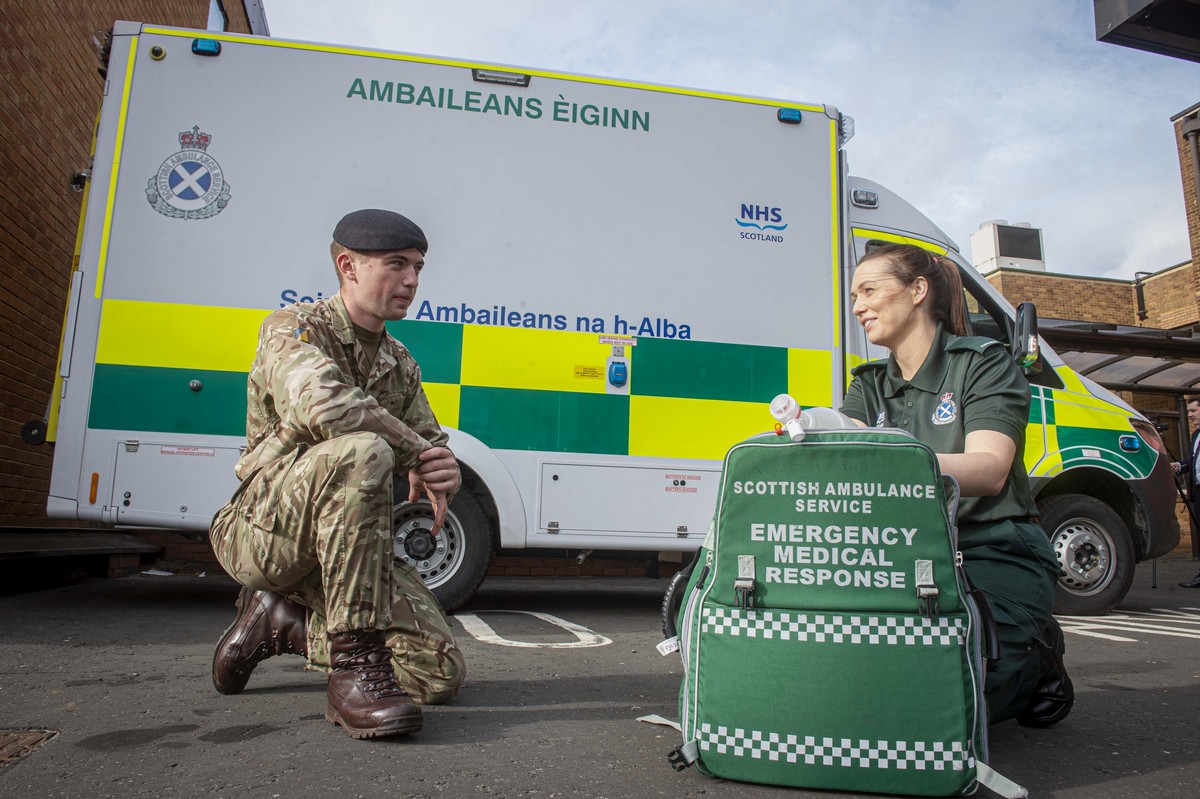
Speaking to the House of Commons Defence Committee, Knighton said Defence Medical Services would have to plug into the National Health Service during an Article Five conflict, and that while the two systems work closely day to day, the wider mobilisation framework is still incomplete.
The issue was raised by committee member Derek Twigg, who said he had dealt with defence medical problems as a minister in the late 2000s and wanted a clear sense of today’s risks. Twigg noted that Defence Medical Services and the NHS handled the flow of casualties from Iraq and Afghanistan effectively, but argued the health system now faces heavier pressures than it did then.
He asked whether Knighton had concerns about the ability of Defence Medical Services and the NHS to cope if casualties were significantly higher than those seen in previous campaigns.
Knighton said his concerns fell into two areas. “I think I’d lay out my concerns in two buckets,” he told MPs.
First, he said there were current gaps in specialist skills. “In the short term, we have a number of gaps in specialist skills,” he said, adding that hard to fill roles across Defence were not limited to medical posts. “High demand, highly skilled roles are difficult to fill. Cyberspace, specialists, engineers and some in the medical profession.”
He said work was underway to address that short-term problem through recruitment and retention measures. “The work that the head of the medical services and the head of cyber and specialist operation command is doing around financial retention incentives, to improve recruitment, all of those is about how we’d address that,” he said.
Second, Knighton pointed to the scale of demand that would follow an all-out NATO war. “If we ended up in an all out conflict under NATO Article Five and sustained mass casualties, the defence medical system is not set up to do that, it would have to plug into the National Health Service,” he said.
Knighton linked that assessment to lessons he said had been visible in Ukraine, where civilian health systems have had to absorb and support large-scale military casualty care. “It’s exactly what we saw happen in Ukraine,” he said, adding that he had spoken publicly about the need to think through national-level responses and to align government levers for such a scenario.
While placing confidence in the people involved, he warned that planning and structure were not yet complete. “At the moment, we don’t have a full plan for how we would do that,” he said. “I have every confidence, given the way the NHS and the brilliant people in the NHS and in the defence medical services responded historically that we would do that, but right now, we don’t have a complete plan for how we would mobilise the National Health Service in the event of armed conflict and a NATO Article Five.”
Twigg pressed for timelines, arguing that service personnel need assurance that the best possible care will be there if they are wounded, and that urgency should be visible across government, not only inside the Ministry of Defence.
Knighton said Defence Medical Services already work closely with the NHS, including through the way clinicians are integrated into civilian settings. “The National Health Service and our defence medical services already work very closely together,” he said. “Quite a lot of majority of our specialists actually work inside the National Health Service, even though they’re in uniform.”
However, he said more work was needed, and suggested the lead for the wider national framework sat outside Defence. “There’s a wider piece of work run by the Cabinet Office, which is about developing our national defence plan and structure,” he said, adding that it would be “right” to direct questions on that to the Cabinet Office.
Asked when a fuller plan might emerge, Knighton pointed to an indicative timeframe rather than a fixed date. “I think that over the next year, 18 months, we’ll start to see that evolve,” he said, before restating the current gap: “We don’t have a holistic national plan for how we would mobilise the National Health Service in times of all out war in Europe.”











I’m shocked, shocked i tell ya!
Why would anyone think we have a plan for anything?
We don’t plan; we make do when the time comes.
Staffing at the front line is just one of many issues that the NHS faces. Even the most modern hospitals have limited ICU/HDU gas flows. Oxygen supplies to ordinary wards are limited such that only basic flows are available by design. Add a ventilator to a normal ward and most non ventilated patients won’t get support. That was a major problem during COVID when additional ICU/HDU beds were needed.
Put a missile in a hospital it has no gas supply full stop.. in a peer war we know Russia will happily hit hospitals.
And don’t we know it.
I would also add that a damaged O2 supply would have serious fire implications. Probably something that should be thought about if we really think we are in a pre-war era…
There will be safety features on the systems, but do the standards consider missile damage..? I bet they don’t and some of the gas storage tanks I have seen at hospitals are pretty big. We are so ill prepared!
As for there being no mobilisation plan for the NHS clearly the lessons of COVID haven’t been learnt or applied. OK I know a pandemic isn’t a war but many of the actions you would need to take in either scenario are the same, e.g. clear elective cases ASAP, move people with past specialist experience into appropriate teams which means you then need to back fill posts to maintain services etc etc…
Its complicated but it should already be in place…
Cheers CR
I had a lovely incident once where the hospital trust I was a safely lead for had one of its hospital O2 tanks catastrophically fail.. the whole lot went up in the sky in a big of whoomp sound… bit brown trousers to be honest.. luckily there were no ignition sources so the gas just made a bid for freedom.. but trying to sort out the bottled gas afterwards was hard yards.
I bet… I am guessing no one was hurt.
The thing is if there is any kind of fuel and slightest heat source then an Oxygen fire will result because of Oxygen being such a highly reactive gas. In fact, if you mix Hydrogen and Oxygen in pretty much any ratio you will get something of an explosion even without a heat source..! As I am sure you understand. So Oxygen tank, ward O2 lines and a missile strike would be a nasty combo and very very difficult to deal with, although I expect it would very quick!
This is only one example of how vulnerable our key national infrastructure is to attack. There is so little resilience built into any of our networks, zero hard defence and it seems no effective rescue and recovery planning. All I can think of is the government alarm system on our mobiles! Basically, they give us a chance to bend and … well you can guess the rest!
Cheers CR
????
That’s just one of many many issues affecting NHS capacity to cope with genuinely large numbers of unfamiliar casualties. The NHS has a distinct lack of trauma units, trauma surgeons, burns units. ICU/ HDU beds, surgical theatre capacity, stockpiles of drugs, wound dressings and all manner of supplies needed to treat casualties of war.
Outside of a few specific units and hospitals ( not going to name them and do our enemies a favour) there isn’t the expertise in dealing with gunshot, blast injuries, burns and blunt force trauma or penetrating injuries.
The issue with oxygen supply was mostly well mapped out during the pandemic and the COVID receiving wards had much better O2 delivery systems put in place to cope with large numbers of patients on nasal high flow or CPAP/ BiPaP.
More concerning would be critical care capacity as the number of funded and resourced ICU beds in the UK per capita is less than Bulgaria. Think about that one.
uk economy pretty miserable, its hard sell for the population to take on burden of war preparedness. agree whitehall still needs to be working on how to make uk more resilient.
They can’t even deal with the flu that comes in every year to strain the NHS at the predictable… They should be able to ramp up serious care, since the Doctors abandoning the NHS for jaunts to Gaza must know enough about gunshot trauma and high ex injuries to teach their fellows.
We have let our military evaporate, we appear to be unable to purchase, on time, appropriate equipment or maintain what we already have. Minister admit we have an inadequate infrastructures, no Civil Defence and ever increasing City profits. We want to do everything expected of us with today’s admission of no plans! I am reminded of that infamous World War One comment of “heroes led by donkeys” and feel it’s quite appropriate with current donkeys in plush London SW1 offices.
The NHS is already mobilised for war. It’s on a war footing every single day with huge and excessive demands Vs inadequate resources, staffing numbers and capacity. I’m thinking if the Tories hadn’t shut 30,000 hospital beds in England alone we might be in a significantly better position then we are now.
We don’t have a war plan, I think CDS also admitted.
I find that shocking. Surely the old war book still existed and they could update it?
On the medical services, the bulk of the RAMS formations are Reservists. Who are almost all NHS, as J explained a few times.
So….either hardly and Field Army medical capability beyond the regular RAMS or no staff back at the NHS.
What is it to be?
UK has no plan. Nuff said full stop. Carry on chaps.
There is no plan because the war talk is just that.
Spot on John.