

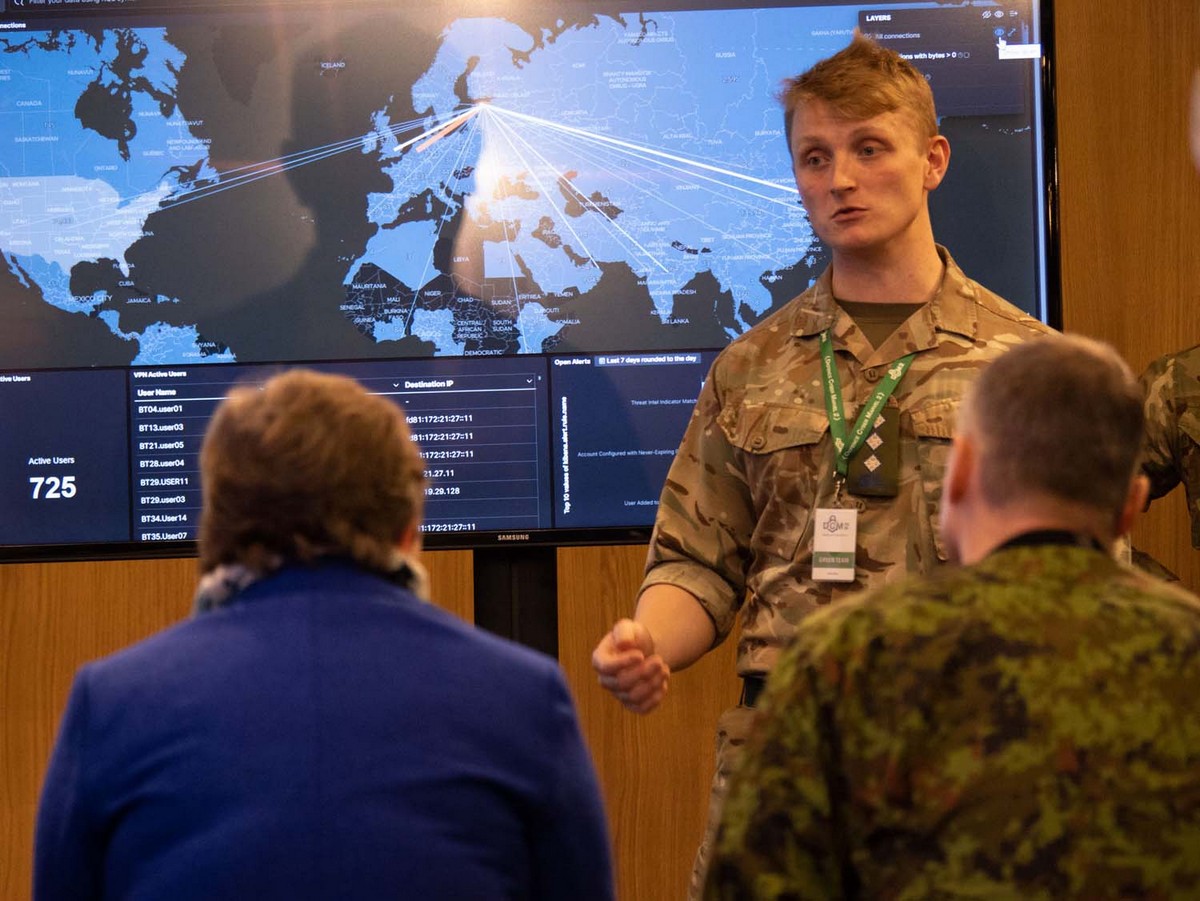
The British Army is set to test the next iteration of its ASGARD digital reconnaissance and strike system at corps level in the second quarter of 2026, the Ministry of Defence has confirmed.
In a series of written parliamentary answers, Defence Minister Luke Pollard said ASGARD is intended to create a digitally enabled network linking sensors, decision-support tools and precision weapons in order to improve battlefield decision-making and increase lethality. According to the minister, the programme is designed to deliver incremental capability upgrades between 2026 and 2029, aligned with the Army Command Plan, NATO standards and the wider Defence Digital Target Web.
Pollard said ASGARD will underpin the Army’s move toward networked warfare, enabling faster identification of targets and more rapid coordination of fires across formations.
“ASGARD will create a digitally enabled reconnaissance and strike network, bringing together sensors, decision-support tools and precision weapons to improve decision-making and increase lethality,” he said.
The next major milestone will see a corps-level version of the system tested in 2026, marking a shift beyond earlier experimentation at lower tactical echelons. However, the government has declined to provide firm costings for the programme. Pollard said the overall cost of ASGARD “will continue to develop and change as it progresses”, with future funding decisions now being considered as part of the forthcoming Defence Investment Plan.
The answers also confirm that ASGARD forms part of a broader effort to establish a digital targeting web across the UK’s Armed Forces by 2027. Pollard said this work is being led through Cyber and Specialist Operations Command and includes the creation of a Defence Targeting Enterprise Office, intended to coordinate cross-defence targeting activity.
“The Department is progressing plans to create a wider digital targeting web across the UK’s Armed Forces by 2027,” he said, adding that the Ministry of Defence remains committed to delivering the recommendation set out in the Strategic Defence Review.











This is great news and has been long in coming. In 2003, the MOD publicly committed to a network that would join sensors, effectors and decision makers. Networked Enabled Communications (NEC) as it was then called, promised faster and superior decision making and superior logistics. These days it’s called the Digital Backbone, and it’s still promising the same thing, and the warfighting aspect that sits on the network was dubbed the Digital Targeting Web in the SDR. It shouldn’t have taken nearly quarter of a century to reach this point, but this is the Army working towards their bit of it. Hopefully, the other services will be building compatible networking and systems for a full multi-domain solution that can also reach out to our NATO allies (yes, even America).
All the UK needs now is some hardware buying to make use of this
Interesting, sounds a lot like the system that Ukraine has been using. Wonder if they gave us a look under the hood..!
Might not be super glamourous, shiny, or loud, but the Ukrainians credit theirs with helping reduce their kill chain massively- and the effects on the battlefield speak for themselves.