

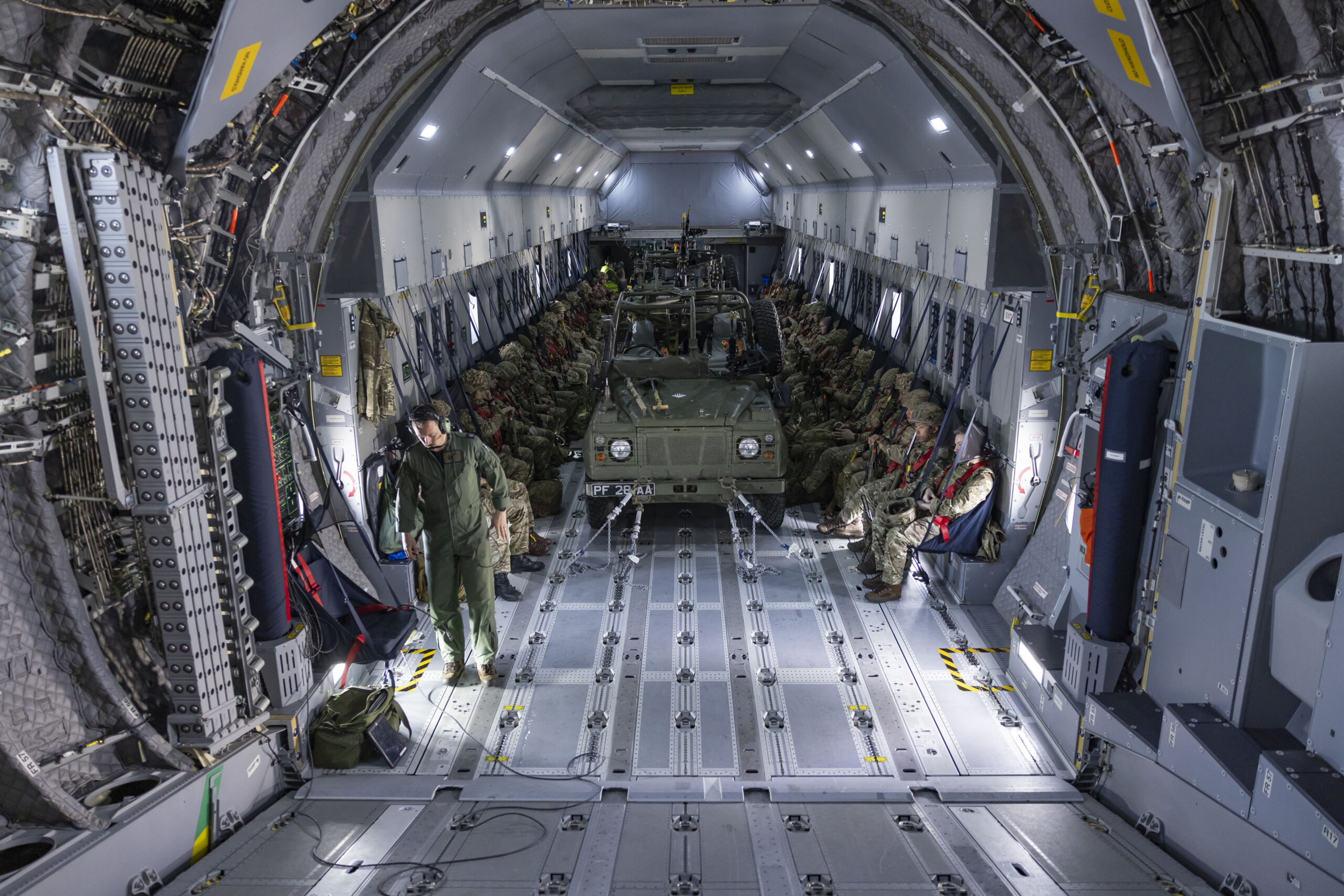
Almost 60,000 applications to join the British armed forces have been rejected on medical grounds since July 2024, according to new figures released by the Ministry of Defence.
In a written parliamentary answer to Conservative MP James Cartlidge, Defence Minister Louise Sandher-Jones said a total of 59,010 applications across the Army, Royal Air Force and Royal Navy were rejected for medical reasons between 5 July 2024 and 31 January 2026.
The Army accounted for the vast majority of rejections, with 45,680 applications declined on medical grounds during the period. The Royal Air Force rejected 12,310 applications, while the Royal Navy rejected 1,020.
The figures relate to rejected applications rather than individual people. The MOD said a single applicant can apply more than once and may be rejected multiple times.
“These figures represent the number of applications rejected and not the number of people rejected; one applicant can apply (and be rejected) multiple times,” the minister said.
The data also covers applications rejected within the specified period regardless of when the original application was submitted. Medical eligibility is one of several stages in the armed forces recruitment process. Applicants must meet health standards designed to ensure personnel are able to undertake military training and operational duties, which can include strenuous physical activity, deployments to austere environments and exposure to combat conditions.
The figures come amid continuing political and military attention on recruitment and retention across the armed forces. In recent years the services have faced challenges in maintaining personnel numbers while modernising recruitment processes and expanding outreach to new candidate groups.









Given the obesity crisis in the U.K. I wonder what percentage were down to being overweight and/ or just being physically unfit due to lack of exercise.
possibly none as that would be a fail on the physical fitness test rather than the medical test I’d think. No breakdown of reasons is given here so we don’t know why those people were rejected or if the rejections were lifelong or time limited. Neither do we know of those that were time limited whether they reapplied at a later date. So the data is rather meaningless unfortunately.
thinking about it further the really big thing we don’t have here is how many overall applications had medical assessments, so we can’t convert this into any sense of the percentage of medical fails.
Almost all the rejections are caused by the applicant ticking some box on a form and the CRAPITA computer saying no because checking that a basic medial condition like eczema when you were a child won’t affect your ability to sit in an armoured vehicle controlling a gun with a joystick.
Come to think of it just how sick or disabled do you have to be to do 50% of the jobs in the army.
Given that almost every job in the Army at least has the requirement to be able to do operate up to section level as infantry…
Rember the days when people joined the army to get fit. Given the vast majority of jobs in the army involve sitting on your ass it seems daft to me they reject so many candidates. Better to have a basic medial requirement to get people in then have them pass more strenuous medicals of they apply for specific jobs like light infantry.
We managed to fight two world wars with a medial exam that involved little more than coughing while someone held a stethoscope to your chest.
If the army thinks we are near a state of war (which is keeps screaming about) then why is it turning away 45,000 recruits in two years.
Yes, you’re correct, we did fight 2 Wirld Wars with less stringent medical assessments than todays Armed Forces. However, our fathers and Grand Fathers weren’t driven to school daily and survive on a diet of convenience foods and caffeinated drinks. Councils hadn’t sold off school sports fields for building land and news wasn’t fed to the public on a 15min loop, scaring the bejesus out of parents who cannot complete a simple risk assessment, and believe that every 2nd male is a child molesting murderer.
We cannot blame the effect when the cause continues unchecked…
Actually the health system we have is because every time the county went to war it ended up rejecting huge tranches of fighting age men due to medical conditions.. the rejection rate in WW1 of young men was 60%… its was 40% for the UK in ww2 and 50% for the US in ww2..
In the Boer war one case study showed of 12,000 volunteers, 8000 were rejected out of hand and only 1200 were found fit to fight..
the MOD should have a set of fitness centres (perhaps using the reserve facilities) to get people fit enough to join. We need to understand times have Changed and potential recruits need help
60k applications is like 20% of all applications through this period. It would be interesting to see a breakdown of medical conditions as some of the stuff on social media is silly (I broke my leg when I was 11 = refused)
My view is if they want to join – let them join and see if they can hack it (outside of serious medical conditions that could result in death)
The issue isn’t physical fitness on joining. It is medical conditions which is often a completely different thing. Many candidates have been rejected for having hayfever and for having had teenage acne and childhood asthma.
When I joined the army in 1975 there was a huge number of joiners who were not fit. Not an issue. PT is done fron Day1 – you soon get fit.
“ the MOD should have a set of fitness centres”. It’s called the cadet force. Another something sadly in decline. I spent 3 years in the army cadets before joining the RAF in the early 80’s. The experience was fun and rewarding, even back then. I wouldn’t say it did that much for my overall fitness but it definitely helped with my endurance and tolerance.
You raise a good point here, a set of military run youth centres that offer a wide range of activities (perhaps using school facilities) resourced by Veterans and current serving personnel where applicable would actually fill a real gap and get kids off the streets and give some structure.
Add in accèss to Duke of Edinburgh & summer camps and this could be a real source of hope for many a kid.
Instead of handing more money to parents – perhaps we should look at ways to help the kids through somewhere that provides food and activities instead.
The cadet force isn’t really a pipeline into the forces and never has been. The vast majority go on to civilian jobs and the majority of army applicants aren’t ex-cadets.
Being overweight shouldn’t cause a medical rejection. I was slightly overweight when I applied and they told me to come back once I’d lost it, application was paused rather than rejected.
This was before Crapita, mind.
Sadly, many are rejected due to prolonged periods on anti depressants as younger teens.
Huge numbers of of youngsters are ‘medicated’ these days and wonder through life in a drug induced emotionally neutral state through their mid teens.
The problems come later, when they grow up a bit and find themselves barred from military, police etc, etc service.
Yep.. very very good point, the prescription of antidepressants has become endemic.. these are powerful drugs with sometimes lifelong complications.. they should really only be used for a short time for very high risk cases.
We have spoken about this before mate, l also had a conversation with a chap who is well positioned within my local mental health services a few weeks ago at a long drawn out planning meeting, he agrees with everything you have said on the subject in the past…
He said the levels of prescribing to youngsters in our area, is way too high.
I sadly know of a bright young lady, 19 years old, who was all set to join the Navy, sadly, she lost her mother after a protracted illness in her mid teens and spent far too long on antidepressants following her passing.
She was rejected by the RN because of the length of time she was prescribed the medication.
Such a shame…
Still refusing for things like Hayfever think. I lied and never mentioned the hayfever served regardless. They are very strict with medical.
Hayfever? That’s a thing to reject you for… I just thought it was sneezing around Pollen, etc.
Yes, as far as i can remember that was a bar. I didnt tell them and got on with it.
You have to be super fit to pilot a drone I’m told.
You actually do.
If you’re a drone pilot within an infantry section obviously you still need to be able to do infantry stuff, but even within a drone unit you still need fitness. Drone controllers tend to emit signal, which makes them a target, and after most flights they have to hoof it at speed in a sort of shoot and scoot type situation before enemy fires or drones hone in on their position.
I would wager than many of those are for a history of childhood asthma. I had asthma as a kid but became very sporty in my teens and never had an attack again. Went on to pass many BFTs and got CS gassed with no adverse reaction (yes I fibbed on my application because I was clearly over my asthma). The point being that being in the military and expanding chest capacity through proper exercise is probably the best thing that some sufferers could do.
That many rejections suggests that the system may be too strict considering there is a shortfall in recruitment. I’m not saying we should recruit people who are medically unfit; I am saying perhaps we need to look closer into some of those rejections to see if they are valid.
Not just the number, the 45-fold difference between the Army and the Navy is telling too.
The navy does seem to be the easiest to get into – did an AI search on rejections percentages: ‘Recruitment vs. Medical Rejections (2023–2024)
British Army: Medical rejections were 679.8% of the total intake. For every 1 person who successfully joined, approximately 6.8 applicants were rejected on medical grounds.
Successful Intake: 6,720
Medical Rejections: 45,680
Royal Air Force (RAF): Medical rejections were 683.9% of the total intake. For every 1 person who successfully joined, approximately 6.8 applicants were rejected on medical grounds.
Successful Intake: 1,800
Medical Rejections: 12,310
Royal Navy: Medical rejections were 41.6% of the total intake. For every 10 people who successfully joined, approximately 4 applicants were rejected on medical grounds.
Successful Intake: 2,450
Medical Rejections: 1,020’
Rob,
Do the RN figures include the Royal Marines?
Might be interesting if the figures for the marines can be looked at as well for comparison to the Army and RAF.
Cheer CR
Sorry, no idea.
Hmm, my guess is that the RN figures would include the RM on account that they are formally apart of the same service. If correct then it begs the question why the Army and RAF have such a high rejection rate..?
Cheers CR
And I’d wager a hell of a lot of them would be able to serve perfectly well with whatever condition they have, particularly those applying to the RAF or Navy who don’t need to be able to live a trench. Just imagine being turned down because of hay-fever when you have applied to serve in a submarine. The system needs a total overhaul.
As an ex matelow, I feel offended by your comment regarding the RAF and RN fittness, our service personnel are equally as fit as anything in the Army and as one that served on land with the Army, they often had trouble keeping up. Life at sea is not playing but REAL.
Yet the RN had a far lower rate of medical rejections that either the army or RAF – something seriously wrong somewhere!
Where did I mention fitness???
Candidates are not failed at their pre entry medical assessment for hay fever. The medical standards for service entry are determined by the three services, and describe a spectrum of conditions which have little consequence to a candidate in military service as well as conditions that on the balance of probabilities, are not compatible with completing basic military training and consequently military service. Even obesity with a BMI of up to 32 KG m2 Is eligible for service entry if the waist circumference is less than 94 CM in men.
The largest percentage of candidates who fail the medical assessment have enduring musculoskeletal conditions that breakdown in training or military service, or mental health conditions that do not meet the psychological robustness required for military service.
Capita defence recruitment deliver pre employment screening medical assessments for the three services, apply the medical standards for service entry created by the services, and pass far more candidates medically fit than those who eventually complete the whole recruitment selection process for all three services.
Standards, it can be seen as good thing or a bad thing. Lowering them might not be the ideal thing to do. With out data of what conditions etc made a person fail its a bit random and vague.
Lots of comments from old men who say what they think with no evidence to back it up the general inference being ‘we were better back in our day’! I don’t think I know anyone who is under 30 who doesn’t go to the gym or participate in sports. They barely even drink anymore it’s frankly disgusting.
I would hope a parliamentarian could write a better question to force a meaningful answer with context rather than the pointless responses given but this is a general pattern we seem to see.
Interesting coming from another article where loads of people where complaining about the percieved lowering of standards for women, to come to an article where everyone is adamant standards should be lowered to get men into Uniform.
Totally agree, but frankly the rate of medical rejections for both the Army and RAF are so off the scale based on these figures that something is badly wrong somewhere – either standards set are virtually impossible to meet or the screening process is badly flawed.
Are they? Do you have historical data showing a trend or are you just going off of “I feel like this number is high.”? Because personally I haven’t a scoobies if the number of medical rejections is going up or staying level, or even going down.
See above result of AI search on the proportions and see the difference between the RN and Army/RN.Then look at the comment by Scribes. Something in the figures is wrong somewhere! Then compare the figures with something the French found in the 19th Century : ‘During the 19th century, particularly during the Napoleonic era (1798–1815) and the mid-19th century, roughly
one-third (approx. 33%) of young French men called up for military service were declared unfit for duty. While specific, consistent statistics isolating urban populations over the whole century are scarce, records show that cities often had higher mortality rates and poorer health conditions than rural areas, leading to significant rates of unfitness in urban centers due to physical deficiencies’ – are things really so much worse than it was in France back then?
So first of all a different army in a hugely different historical context. Yes I know I used the word Historical but it needs to be historical and relevant. Ie what where medical rejection rates between 1970 and 2010. 1790, a time when the British Army lost more men to Yellow Fever on the regular than to any sort of combat and loosing a few thousand soldiers a year during peace time was considered an unfortunate, but unavoidable, cost of doing buisness isn’t *really* relevant to current medical acceptance rates.
I’m not trusting an AI search on principle as a valid source. Not saying you’re wrong, but I just don’t take AI either way, but fortunately the article has some of the data (I’d guess your AI search probably grabbed it direct from UKDJ btw). Again without data behind it, hard to say if there is a problem. Maybe the Navy just has lower medical standards, living in a ship with less physical exercsion and less exposure to things that can trigger for example Asthma might have something to do with it. Or the Navy rejects fewer people because the Army/Air Force attract more people who just don’t meet the standard. Or perhaps there is a problem. But again, without seeing whether we are increasing rejections, baselining or decreasing them and what the data behind the actual rejections are; it’s just impossible to say.
Unless you decide it’s a problem before seeing the numbers in which case, why bother with the numbers?
Read that comment from Scribes – ‘As an ex matelow, I feel offended by your comment regarding the RAF and RN fittness, our service personnel are equally as fit as anything in the Army and as one that served on land with the Army, they often had trouble keeping up. Life at sea is not playing but REAL.’ – in other words, Navy life isn’t ‘soft’!. And is Navy life really softer than the RAF? As for the use of AI – my question used the article’s figures and simply asked how the proportions worked as a comparison – nothing really new there. The French example I knew abot already and specifically asked for it, AIU was simply used to summarise what I already knew. Relevance? Do you seriously believe that people in the towns and cities of France in the19th Century were healthier than people today? Do you REALLY believe that for every person recruited to the army, 6.8 people were rejected for medical reasons??? Frankly, the Navy rejection rate is worse than that French example and is (or should be) considered to be either too high or our population is basically not fit to survive.
I know you don’t like it, but an AI search provided ‘Between 1840 and 1860, the average life expectancy at birth in France was approximately 34 to 36 years. While life expectancy was slowly increasing during the 19th century—moving from roughly 30 years in 1800 to 45 years by 1900—it was still heavily impacted by high infant mortality, infectious diseases, and poor sanitation in industrial areas’ – average life span in UK today is 81!
My point is that those medical rejection figures are just plain WRONG!
I explained why the French example wasn’t relevant, and it had nothing to do with the health of people, so I suggest if you want to have a conversation go ahead and re-read it.
Also you can cite AI all you like, but I won’t pay attention to AI numbers so I’m just glossing over any mention you make of them.
And as I said, you don’t really have a comparison point, so you can’t say they’re “just plain WRONG!” unless you go with your feels, and if youre doing that you might as well not bother to cite numbers because 6.8 for each person rejected is something you simply have no frame of reference for.
Then we agree to differ. Quite simply, my terms of reference are that people today are healthier than they were then so we should expect to see a smaller rejection rate, not a rejection rate that goes from 33% then to 680% now, we would expect rejection rates for all three services to be pretty close to each other, and I haven’t ‘just’ gone with my feelings… I have given you 3 ‘frames of reference’ – conditions a long time ago, comparisons between the three services today, and the subjective experience of someone on this forum. Your sole reference seems to be that you don;’t trust AI (neither do I – that’s why I like to use it to summarise something I think I already Know.)
Wow. So you are really not reading anything I write are you?
I’m saying there isn’t sufficient data to make a conclusion one way or another. Your use of AI has *nothing* to do with that conclusion.
You’ve given one frame of reference that is irrelevant, and then ignored me when I explained why it wasn’t relevant (and again when I said it’s irrelevance is not because of the relative health of the 18th vs 21st centuries). I then pointed out that the raw data from the three services means little without understanding what is causing the difference between those numbers. And the subjective experience that the Navy is “as tough as other services” is something I’m going to be very polite about and going to say that when I was tabbing tri-service the Navy got to do it with 4kg, while the army did it with 20kg. But *again* if you bother to read my replies instead of deciding what you want them to say, you’d see I pointed out that medical standards *might* be lower and that reasons for that could be, for example, asthma aggrevators being less of a factor in a climate controlled ship than in the field.
So please. If you want to continue this conversation, actually pay attention to the arguments I’m making. If you can’t do that then what’s the point?
You mean, as in ‘Then we agree to differ.’.I did bother to read your comments, it’s just that we have different opinions as to what is relevant. I consider a comparison on rejection rates between the services to be valid; you don’t. I consider a comparison of relative health in the middle of the 19th Century to be valid, you don’t. I don’t think that deaths from yellow fever after joining the army to be a valid comparison when dealing with rejection rates on joining, you do. As for the army, fine, but what about the RAF? So as I say- to me the massive rejection rate on medical grounds of army and RAF candidates doesn’t fit statistically. Actually, the way the AI listed rejections is a bit weird – based on the number accepted rather than the total number of applicants.
So yes, not worth continuing the conversation! Regards.
I don’t understand these “fibbed about asthma/hayfever on application” comments.. was always a handful of folks after PT going to med centre looking like they been in cbrn chamber after crawling through fresh cut grass on the field.. they didn’t fib and wer let in and stayed in.. i said no to having asthma, i didn’t have it but because medical records said “has tendancy to weeze/potential asthma” i had to ride exercise bike with mask on breathing cold air(thankfully, if it been warm air id have been proper fk’d).. did they/do they not check medical records?
Drs are reluctant nowadays to use the word Asthma on childhood medical records unless the condition is very severe because of the implications on careers. A significant amount of children suffer symptoms that would be previously diagnosed as asthma because of the disproportionate affect viral illnesses can have on the child’s respiratory system due its smaller size, these children become asymptomatic once they get older (I was a paediatric nurse practitioner after serving as an avionics engineering technician in the RAF)
If you were to read any of a number of autobiographies of ex pilots there is a repeated theme of tabards being swapped and a fellow applicant taking the (mainly eyesight examinations) for those who knew they would fail. These candidates went on to have successful careers at least one commanding a fast jet squadron!
There is a case for relaxing medical requirements while we have serious shortages for certain career fields eg RAF predator drone crews and cyber specialists.
How many of those Ukrainian service personnel being trained in the UK would fail our medical requirements?
I’m not advocating widespread lowering of medical standards, rather if only during the crisis we find ourselves in, an evidence based practice re looking at individual medical requirements for certain specialists where having no person would be worse than someone with excellent skills but a manageable medical condition
Only 23% of Americans aged 17-24 are judged fit for military service. Main reasons are obesity, physical unfitness, drug use and criminal records.
Makes you wonder how conscription could possibly work.
I was rejected for raf aux in 2021 due to my cruciate repair in my right knee. I am fully operational cop in my day job and am required to pass fitness tests every year. Even at 51 im still fit after 26 years in my current profession and surgery. One lad I went to my attestation with at Honnington was a professional rugby player. He also had re-constructed cruciate and was also rejected on medical grounds because of it. It seems to me the dom has an archiac way of assessing fitness and capability.