

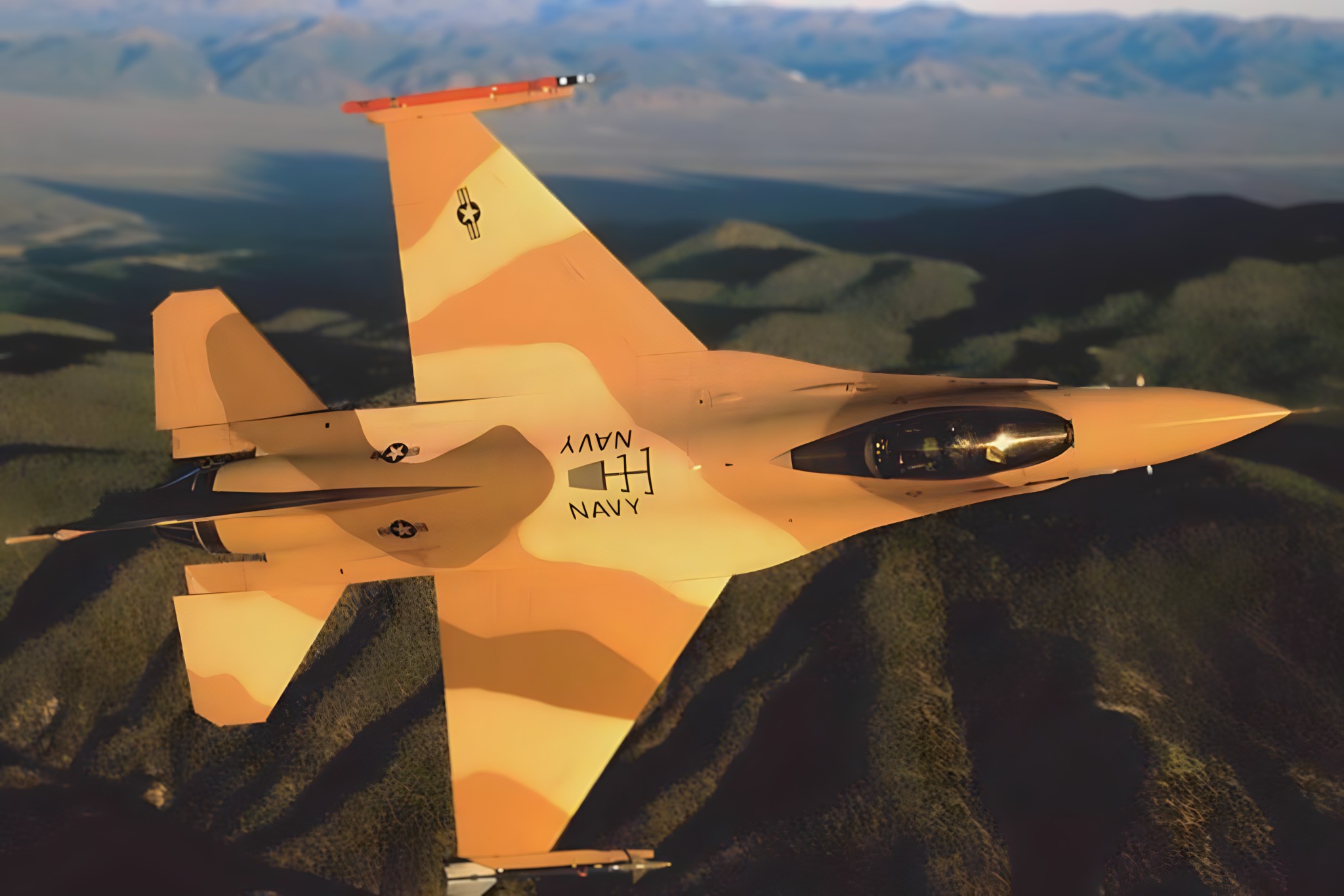
The U.S. Navy operates a small fleet of F-16 Fighting Falcons in a dedicated adversary role, using the aircraft to replicate current and emerging threat fighters during advanced training exercises.
Assigned primarily to the Naval Strike and Air Warfare Center at Naval Air Station Fallon, Nevada, the F-16s support high-end training for carrier air wings and other fleet units. In this role, the aircraft are used to simulate the tactics, performance characteristics and employment methods of potential adversaries, providing realistic opposition in complex air combat scenarios.
According to Naval Air Systems Command, the Navy’s F-16A and F-16B variants are single-engine, multi-role fighters capable of air-to-air and air-to-surface missions. In Navy service, however, their primary function is as adversary fighters. The aircraft enable dissimilar air combat training, helping frontline squadrons prepare for engagements against capable peer threats.
The Navy’s F-16s are equipped with fly-by-wire flight controls, inertial navigation systems and AN/APG-66 or -68 radar systems. The type’s agility and performance envelope make it well suited to replicate advanced fourth-generation fighters in training scenarios. Specifications published by NAVAIR list a maximum speed of approximately Mach 1.7 and a service ceiling of 50,000 feet.
The fleet includes both single-seat F-16A and two-seat F-16B aircraft, with the latter used to support training and familiarisation tasks. The aircraft entered Navy service in the early 2000s, with an initial operational capability date of 2002.
Some of the Navy’s F-16 airframes trace their origins to aircraft originally built for Pakistan in the early 1990s but placed in storage following a U.S. arms embargo. These low-hour aircraft were later transferred to U.S. service, where they were adapted for the adversary mission.
Beyond their operational flying, the Navy’s F-16s are supported through contractor logistics and sustainment arrangements to ensure continued availability for high-tempo training cycles. The aircraft form part of a broader adversary enterprise that includes other platforms used to replicate a range of air threats.




Nice when one has the budget
Getting more than a little dated though . . APG-66s ouch ! A problematic radar even back in the 70s & 80s; by that I mean partially functional BVR support. The USNavy’s F-18 & 35s could use some F-16V’s with APG-83s if they are to mimic current and emerging Chinese threats.