

Scottish Labour MP Graeme Downie has warned that Britain remains dangerously exposed to disruption of its undersea cable network, arguing that a serious attack could “unplug” the country from the global economy.
Writing on LinkedIn, the MP for Dunfermline & Dollar set out a stark scenario in which mobile networks fail, internet access collapses, air traffic systems go down and digital payments stop functioning. Supermarket supply chains would falter, markets would wobble and hospitals would revert to paper systems, he wrote, citing findings from the Joint Committee on the National Security Strategy.
Downie pointed to the Committee’s assessment of the impact of a “catastrophic” attack on the UK’s subsea cable network. While such a coordinated strike is judged unlikely, he noted that even limited interference could have profound consequences. “Around 98% of internet traffic moves along undersea fibre. These are our digital arteries. They power our hospitals, universities, businesses and our economy. They keep Britain plugged into the rest of the world.”
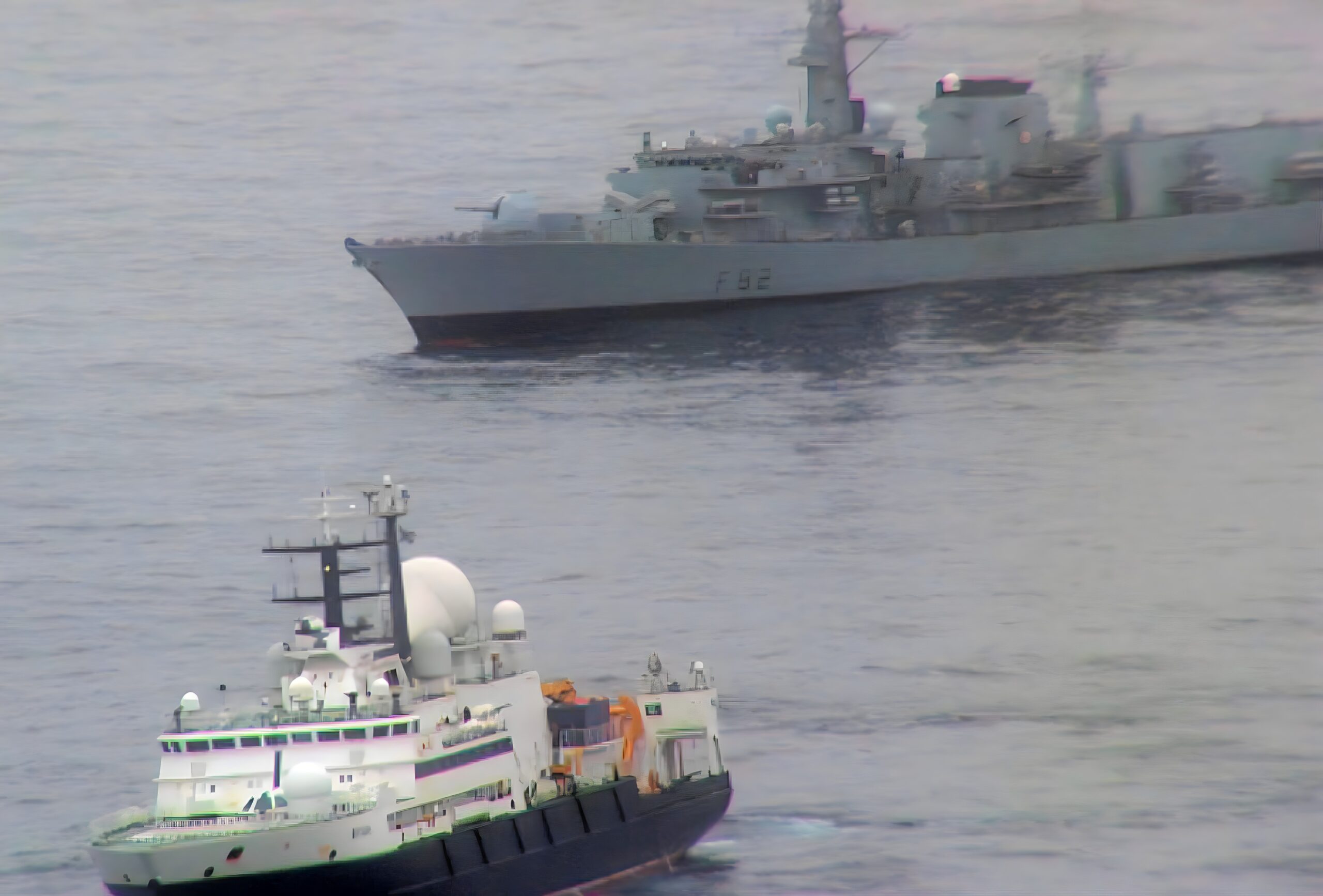
Britain’s reliance on submarine cables dates back to the mid-19th century, when the first link to France was laid in 1851, followed by the transatlantic cable in 1865. Today, the global network stretches for an estimated 745,000 miles, much of it in remote waters that are difficult to monitor. Downie argued that while cables can fail for natural reasons, including wear and tear or accidental damage from fishing gear, they are also vulnerable to deliberate interference. He cited what he described as patterns of Russian vessel activity near undersea infrastructure in recent years.
“It might not be a cartoon image of Putin knee-deep in the Channel with a pair of gardening shears and a nasty grin, but the pattern of behaviour is there and we can’t keep ignoring it.”
He criticised what he characterised as a reluctance to fully confront the scale of the threat, suggesting that cost concerns and the absence of a major incident have slowed action.
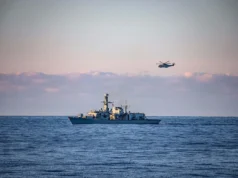
In terms of solutions, Downie highlighted both technological and military measures. He referenced Finland’s plans to deploy seabed sensors and AI systems to monitor shipping and detect suspicious activity, arguing that similar capabilities could provide earlier warning and faster attribution of damage in UK waters. He also pointed to conventional deterrence, noting that the Joint Committee found Type 26 frigates and P-8 maritime patrol aircraft would provide strong options for protecting maritime approaches if available in sufficient numbers.
“Protecting our subsea cables is not glamorous, but it is fundamental to our national security and economic resilience.”
Downie stressed that the issue cannot be addressed by the UK alone, given the global nature of the undersea cable network. He called for deeper integration with allies, shared monitoring systems and coordinated patrol and repair capabilities.



Ermm, well yes and what took him so long ?
That’s why we bought Stirling Castle (not the one that sits stationary and motionless) (well not that stationary and motionless one) that has been out in all weathers for at least a couple of weeks now (Dorset and Hampshire coast mostly, between Portsmouth and Portland Ports ).
Good job these Politicians are “On It”. 🙄🤦♂️ (that’s a Spock style Head Slap for effect)
Statement of the bleeding obvious but as for an answer I am not sure there is one.
He’s right and he intends to get his party to do what?
March, DIP, 3x Kongsberg UUV motherships, next problem?
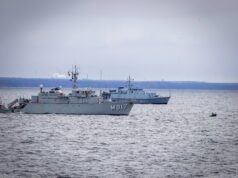
They’re more for MCM work than cable defence.
That needs another MROSS, more ROV, more intelligence data, and hard assets like P8 and Frigates.
Equally, at some point it needs balls from HMG if there’s direct sabotage underway, but even that requires care.
To be honest, I’m not au fait with the UUV undersea technology. But I do note that Kongsberg Marine have a place in Aberdeen. I’m guessing that inspecting and repairing sub sea oil and gas can’t be too different to cables. Manned or unmanned submersibles with robot arms? Whare are Echo and Enterpruse when you need them?
Point taken on the P8 or equivalent – you’ve got to be able to spot ships loitering with intent. And the frigates…’move along there sir’ 😂
I’ve learned through here that Konsberg have a whole range of sizes.
Quite happy for HMG to order a dozen for multiple roles.
On the evidence so far with this government, we might be waiting a while.
He is absolutely right however that takes investment and because of Reeves far to constraining fiscal rules and her belief she is the actual prime minster. It isn’t happening. The fact the sums involved are minuscule compared to the economic harm seen to escape her.
I’ve been saying for years that we need a load of shallow water subs and frigates, etc, to protect the North Sea and Northern Approaches – a lot of that could be covereed by drones and help from Norway, but it’s nice to see a few politicians beginning to recognise ‘local’ needs. The fact is that we still need to do a lot more in the way of surface manned vessels. The North Sea and Northern Approaches are critical to our defence and relying too much on allies is just not good enough.
Defense of undersea communication/petroleum infrastructure from hybrid warfare should be a significant priority for all NATO and allied governments. By all means, there should be advocacy for acquisition of any/all defensive systems/technologies, at an enhanced pace. Question for thought: Why not similar offensive action by NATO? Hybrid warfare should be an equal opportunity proposition. Damage our cables, expect to be paid back in turn, w/ interest. Eventually, lesson would be conveyed to the appropriate parties. 🤔