

The Scottish National Party has called for closer security cooperation with European allies following reports of Russian submarine activity near undersea infrastructure in the North Atlantic, according to the party.
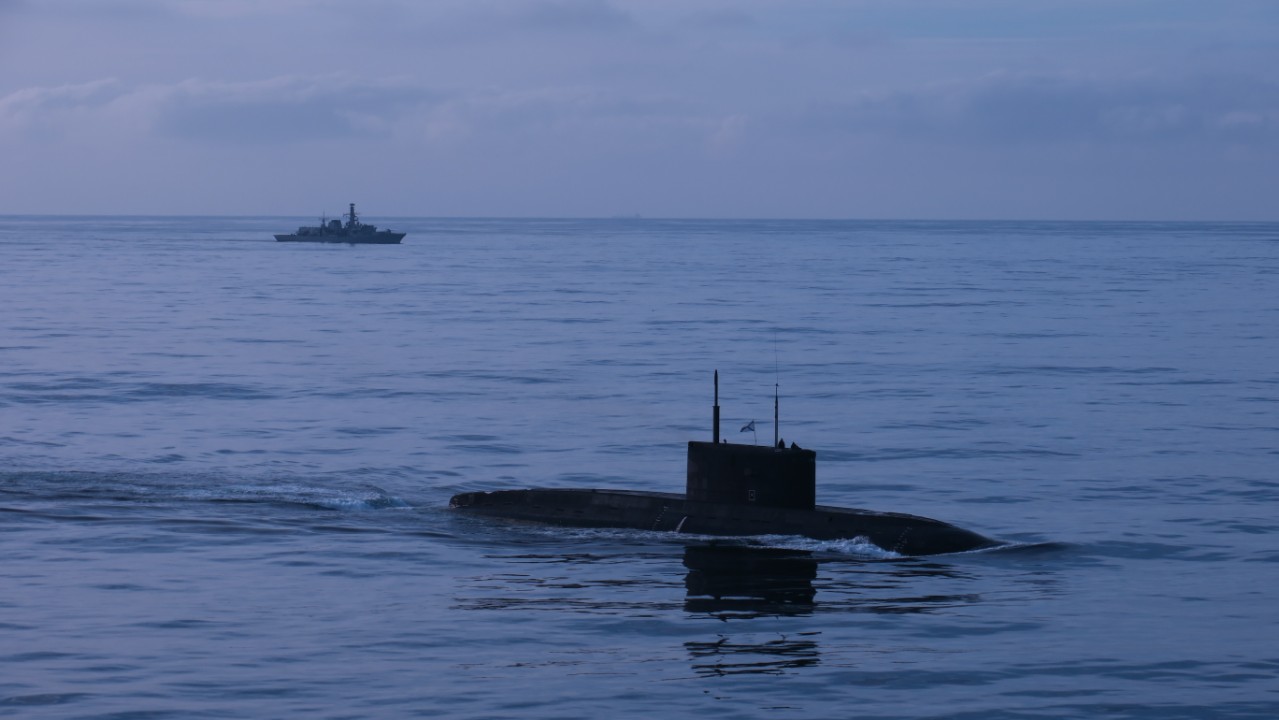
The comments follow a UK-led operation in which an Akula-class submarine and two specialist Russian submarines linked to seabed operations were tracked over several weeks by Royal Navy and RAF assets, supported by NATO partners.
Responding to the development, SNP candidate for Dundee City East and Chair of the APPG on Russia, Stephen Gethins, said: “We have long known the threat posed by Russia in the high north, including in Scotland’s waters.” He added that the incident reinforces the need for sustained focus on maritime and air capabilities in northern regions.
Gethins pointed to the operational importance of the High North and surrounding waters, arguing that investment in surveillance and response capabilities remains uneven. “That is why we have consistently called for defence of that region to be taken seriously and for greater investment in air and maritime security in Scotland,” he said.
While acknowledging the reported response by UK forces, he said: “The Navy appears to have responded quickly and effectively,” but added that broader strategic alignment remained a concern.
“It is of critical importance to recognise that the UK has left itself less secure by remaining isolated from democratic Europe at a time when our allies on the continent pull closer together on security in the face of the modern Russian threat,” he said.
“It is long past time we deepened our security ties with our allies in Europe,” Gethins added.
However, that position was challenged by Graeme Downie MP, who argued that existing UK-led and allied frameworks already provide an established basis for cooperation in the High North.
“The fact the SNP doesn’t seem to have heard of JEF as the primary focus for cooperation for High North defence shows they are not a serious party when it comes to national security,” he said, referring to the UK-led Joint Expeditionary Force.
The Joint Expeditionary Force (JEF) is a UK-led multinational framework bringing together ten Northern European nations, including Norway, Denmark, the Netherlands and the Baltic states. It is designed for rapid deployment and focuses on security in the High North, North Atlantic and Baltic regions, with regular exercises and coordinated operations aimed at responding to regional threats, including Russian submarine activity.
The UK routinely operates alongside these partners through JEF, as well as through NATO and bilateral arrangements, particularly with Norway. These activities include anti-submarine warfare, maritime patrol and the protection of critical undersea infrastructure.
He added: “They have ignored defence issues and the defence sector for the last time 20 years so this lack of knowledge should come as no surprise.”




That the SNP, who are full on CND, not pro NATO, and would close the Navy Base, just checking,
Yes them indeed! Makes you wonder what an independent Scottish navy would look like!
a fleet of rainbow warrior fisher protection ships
‘Remaining isolated from a democratic Europe’, who is this turnip? I say that as someone who voted Remain. What has Russian sub activity got to do with that odd statement. We are not isolated given our alliances with Norway and others on the high North. The Russian activity is also a threat to Scotland and he just can’t admit that the most effective response to a UK problem is a UK response, ie the British military/ Royal Navy with Scotland being part of it. Instead he has to make a non case that the UK hobbles Scotland on security because we are outcasts.
No he cannot do that because it would show that UK cohesiveness is a key part of security… where as Europe as a security blanket can allow for small
Er independent nations to be secure.. which completely ignores the fact that ENATO security will be utterly dependent on large nations.. with the little Nations able to contribute very little.
Surely this is exactly what NATO is for? For as long as it stays intact of course…
Apart from the idiot in the WH is anyone else threatening to quit NATO? Yes it will need a very big effort to close the big gap the cousins would leave but the structure will still be there! He is banging on about Greenland again Canada next I presume🙄
Europe is a gimp and other people are f****** tired of it. Always big talk and zero action
🤦♂️
Not to worry think of all those free holidays when you invade Cuba next👍
The US won’t have to invade Cuba, just like it didn’t have to invade Venezuela. The US will control Cuba just as it now controls Venezuela’s oil, all without the loss of a single American soldier. And only a Brit would rather vacation in decrepit Cuba rather than Miami.
My my the cousins are getting touchy today😂
No idea what’s in the Defence Investment Programme. But surely it would be a good idea to order 3 or 4 more P-8s right now? I’d like more frigates of course but the yards are maxed out for years and we wouldn’t be able to crew them even if we could magic them from no where. A small increase in the number of MPA would be achievable and given their versatility for other roles would be useful for a variety of missions, including humanitarian and rescue.
I agree
They are more useful than you might think.
They do have a pretty decent look down radar as well.
It could be much better though!
I read an article at the weekend which said that the Defence Readiness (ho ho ho) Bill that was due to be published this spring has now been delayed until next year, so no investment and no readiness. 🤔
The yards now have capacity to double their output at least. Both yards have/are undergoing massive modernisation that means they can do more, the issue is skilled workforce numbers.
We really do need to be launching 1 vessel per year from both yards and 1 ever 18 months for subs
We also need more P8’s as the minimum documented requirement was something like 13-16 & we have ways been short on numbers
Healey has been busy Grandstanding on this while the PM is Grandstanding out in the Gulf.
How about confirmation on a few more P8, Mr Healey?
£100 million on P8 for WHAT? Chicken feed.
How about putting sonar on T31?
How about confirmation of the second MROSS that has vanished into the ether along with the DIP?
The PM was busy talking tough on Shadow Tankers and yes, they’ve been sailing past for weeks, now with a Russian escort.
Not so tough talking now, are we?
We don’t want to provoke a fight of course, but all the rhetoric from HMG only portrays WEAKNESS without actual money and hardware.
Look Daniele, that money is needed by refugees who have no where else to go having crossed the globe to get here!
😠
“£100 million on P8 for WHAT? Chicken feed.”
450 flight hours over the course of a month would expend a decent amount of sonobuoys – £100m to replenish them.
Most likely, yes.
Saying “we are spending x amount on sonobuoys” would sound a bit naff so the “we are spending 100 million sounds better to a spin doctor.
All good, what about more P8!
Putin to aides: ‘That’s torn it chaps! The S.N.P. have turned against me! S… N… P… Scottish National Party. Scotland. It’s on top of that island We share a flag. That one! What do you mean ‘So what’?
just my opinion. but do we really need closer relationship with the EU. Than we do already. we have NATO that’s what it is for [protection]
what we need is a bigger stronger powerful Navy . and military overall.to defend our country and waters.
if we cant defend ourselves. then how can we defend others. in conflict. EU countries will defend them selves before us. that why we need a stronger military and a strengthened NATO. just my humble opinion like?
The headline is wrong, should be ‘the SNP calls for action on the Russian sub as long as someone else pays’.
This is where I think Trump has a point (sorry I can’t believe I’m agreeing with Trump), all these alliances are a cop out hoping the other parties will pay for defence. It’s time the UK took responsibility and paid for its own defence, the current government blames the Torys for the current state ( correctly) but we’re 2 years in and I don’t see any orders to rectify the situation, 5 more frigates plus 6 P8s and more typhoons or F35s. An actual funding commitment to tempest, I don’t even understand the delay on that, that’s committed anyway unless we want to be really embarrassed.
That was the sole thing I have ever agreed with Trump on. Too many NATO members were freeloading off the US and not picking up their fair share of responsibility. The man is a rancid skid mark on humanities underwear but on that he made a very valid criticism.
SNP? haha
Pretty well sums it up.
The SNP are just showing ( given their record on defence) what a bunch of jerk-offs they are.
I’m always cynical when it comes to this sort of thing., So what do the SNP want us to do? Please Spain, could we borrow one of your ships for duties in the far north? We are already borrowing one of Germany’s ships to cover for our deficit. It’s time we spent some money on what matters, rather than fiddling around wasting money on every kind of nothing. The SNP would have the nation dis-armed if they thought they could.
“SNP Make Pointless, Grandstanding Comment”
There, fixed the headline for you.
You’re welcome UKDJ
🤦♂️
The snp just invented the United Kingdom and NATO
The SNP have to be the most hypocritical shower of any political party. What utter tosh from them when Seperatism would increse massively the security risk they are talking about.