

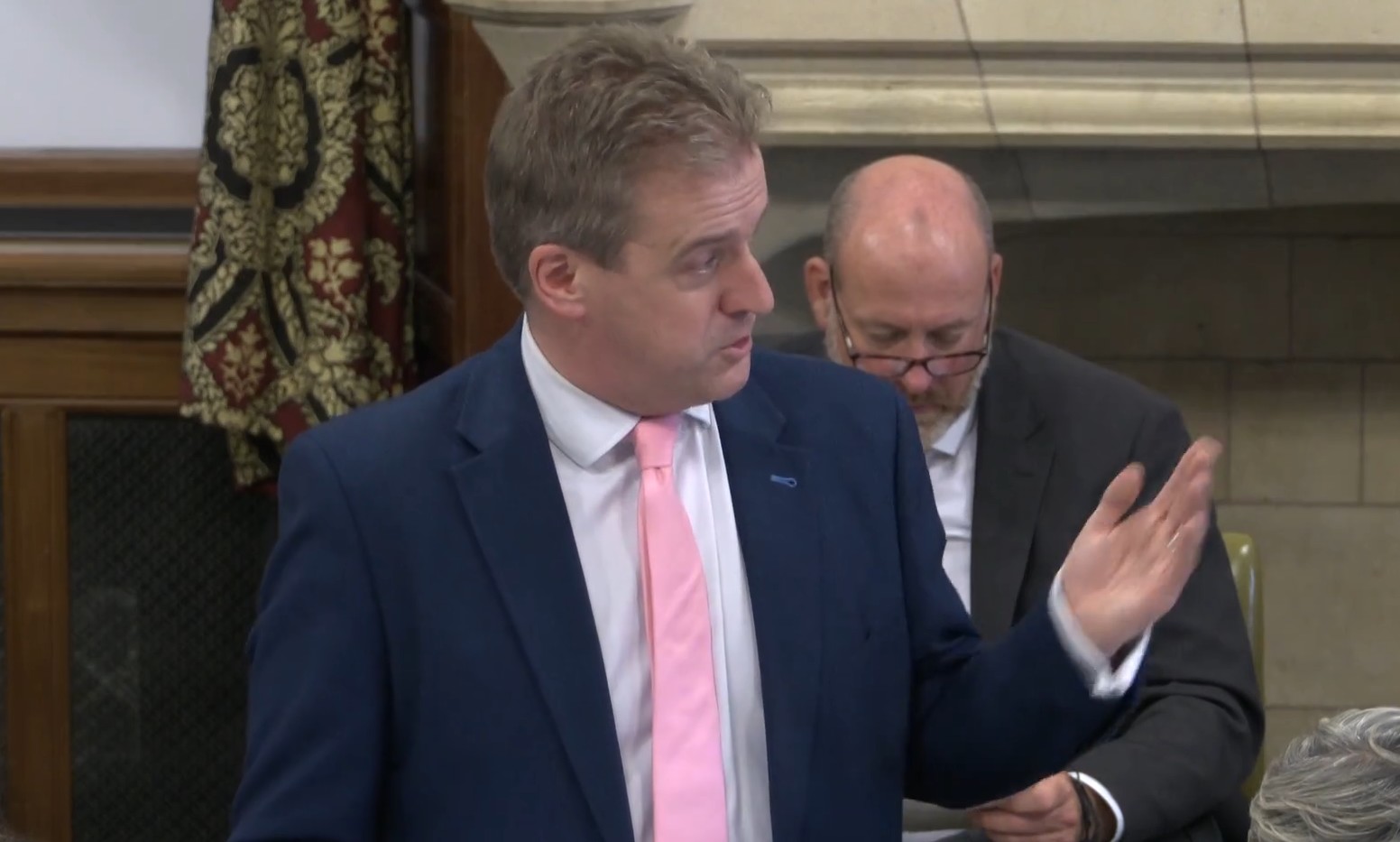
The government must stop treating national resilience as a set of plans on paper and instead trust the public with the truth about the threats facing the country, Labour MP Graeme Downie told a Westminster Hall debate on preparedness for national emergencies.
Downie, the MP for Dunfermline and Dollar, opened the debate by setting the question against what the Joint Committee on the National Security Strategy has described as an era of radical uncertainty, in which the assumptions underpinning UK security are being challenged to an unprecedented degree. The phrase has become something of a refrain in Whitehall since the government’s National Security Strategy, published in 2025, warned that for the first time in many years the UK had to actively prepare for the possibility of the homeland coming under direct threat. Downie argued this concern was already shaping the lives of constituents, and that resilience across infrastructure, communities and the economy had become vital.
He structured his speech around a handful of aims: to reflect on a recent case where preparedness fell short, to set out the nature of the threats now facing the country, to press the case for stronger coordination across government, and to make an argument about the role of the public.
Downie set the argument in a failure he had watched unfold during Storm Éowyn in January 2025. The storm, which brought record-breaking winds and prompted rare red warnings across Scotland and Northern Ireland, left around a million homes and businesses across the UK and Ireland without power, with some areas waiting well over a week for supplies to be restored. Thousands of homes across his own constituency lost power, many of them for several days, and because it came during a spell of cold weather people were left without heating, without electricity and, in some cases, without access to essential medical equipment. They did not know where to turn, he said, and were given inconsistent information with little clarity on when things would improve. What stood out to him was not any lack of commitment, because the energy companies, emergency services, local authorities and community organisations had all worked tirelessly, but rather that when the system came under real strain its weaknesses were laid bare. “Preparedness cannot be about having plans on paper,” he said. “It must be about whether those plans work when they are actually needed.”
A great deal of planning had been done for severe weather in Fife over the years, he said, but much of it had never been tested, had fallen out of date, and assumed staff who had since moved on. He drew on the case of High Valleyfield, a former coal-mining village in Fife, where a resilience plan that was by then about a decade old had said the local community centre would be opened in an emergency, and although the community itself knew about the plan the council had forgotten all about it and did not even know who held the keys, so in the end, as he put it, “the community figured it out for themselves.” The same episode threw up a string of other practical failings, he said, from vulnerable-customer data not being shared and confusion over what support care homes were entitled to, through to a shortage of generators, little logistical capacity to get what provision did exist to where it was needed, and poor access to temporary accommodation. These were practical failings, he said, but they had real consequences for people’s safety.
The challenges now facing the country were broad and constantly shifting, he said, taking in cyber attacks, the sabotage of infrastructure, supply-chain disruption, hybrid threats from hostile states, climate-related events and emergencies of health and biosecurity. The country only had to look at current global developments to grasp the reality, he argued, because what happened thousands of miles away now had direct consequences at home, feeding through into energy prices, food supplies, migration patterns, industrial costs and household bills. What struck him was how rarely the effect of such events is immediately dramatic. More often it is gradual, cumulative and enduring, he argued, with one crisis tending to flow into the next. “We must not just think of preparedness for an event, but for a different type of world altogether,” he said.
He pointed to Article 3 of the North Atlantic Treaty, an often-overlooked provision placing a duty on member nations to maintain and develop their capacity to resist attack through continuous and effective self-help and mutual aid. Although the article refers to armed attack, Downie argued that in an unstable world it should be read in the broadest possible terms, since attacks no longer happen instantaneously as they did when NATO was created, nor do they come only from other states. The lesson he drew from it was that preparedness had to be constant, collective and not confined to defence departments, requiring active participation across the whole system, and he asked the minister to set out how that principle was reflected in cross-government working and how resilience was being embedded not just strategically but operationally across departments in the areas of threat identified by the national security strategy.
Turning to critical national infrastructure, Downie said much of the risk no longer required full-scale conflict, but could arise from hybrid threats below the threshold of war that were still capable of causing real and widespread disruption. Referring members to his entry in the Register of Members’ Financial Interests, and drawing on his role as chair of the campaign on secure technology, he described discussions with senior officials about the threat posed by Chinese-manufactured cellular internet-of-things modules. These small communications components are embedded in everything from utility meters and vehicles to industrial and infrastructure equipment, and security analysts have warned that, because they can transmit data and in principle be accessed remotely, modules made by suppliers subject to Chinese state direction could be used for surveillance or disruption. The danger had been treated as theoretical, he said, and therefore as something that might not need preparing for now, even though officials acknowledged it was feasible and would have a significant impact. “Most risks are theoretical until they are very, very real, and the public wonder why we weren’t prepared,” he said. He pressed the minister on what conversations were taking place about the threat from cellular modules and which departments were involved.
On energy, which Downie described as a particularly sensitive part of the national infrastructure, he warned that Vladimir Putin had used energy as a weapon against ordinary Ukrainians and would do the same to British people. “We have seen how Vladimir Putin has used energy as a weapon against ordinary Ukrainian people, and he would be more than willing to do the same to British people as well,” he said, warning that without reliable energy, hospitals could not function fully, communications would begin to fail and supply chains would break down. Noting that the Energy Security and Net Zero Committee, of which he is a member, was due to hold an evidence session on the subject the following day, he said there remained a lack of clarity on the legal position when it came to hybrid attacks on offshore infrastructure, an issue he had already raised with defence ministers. He asked what role the Cabinet Office could play in resolving what he saw as an unclear boundary between the Department for Energy Security and Net Zero and the Ministry of Defence.
Downie also argued that resilience had to be built locally and across the whole United Kingdom rather than concentrated in central government. Emergencies were experienced, managed and built for locally, he said, yet the national security infrastructure could feel as though it was concentrated within the M25 and shaped within Whitehall rather than embedded across the country. He stressed he did not believe this was a matter of intent, but said it created risks. Security advice and expertise did not always flow consistently to the devolved administrations and local partners, he said, while those administrations dealt with national security less regularly than central government, creating a potential blind spot that arose from the structure of the system rather than any lack of commitment, and exactly the kind of gap that hostile actors could seek to exploit. He asked what more could be done to embed security advice and capability across the devolved administrations and councils so that resilience was genuinely UK-wide.
His central argument, which he conceded was becoming something of a hobby horse, was about the public. Preparedness could not be delivered by government alone, Downie said, and required the trust and participation of the public to succeed, meaning clear information about risks, practical guidance for individuals and communities, and a shared understanding of resilience. “We must not hide the scale or nature of the threats we face from the public,” he said. “We must trust people with information that we might previously have chosen to withhold, and we should worry less about causing alarm and more about appearing to hide the truth.” If people did not understand the threats, he argued, they would not support and force the investment needed to address them, and he warned of a large political price for any government that failed to do that work with the public at its heart. He added that he had not even had time to address a further danger he regarded as pressing, the need to prepare the public against sustained misinformation, but warned that “if trust is lost, resilience is weakened.”
Preparedness for national emergencies, in Downie’s view, was a system and ultimately a mindset rather than any single policy or programme, and he ended by warning that the next crisis would come. “When the next crisis comes, and it will, the question will not be whether plans existed on paper,” he said. “It will be whether, on the ground, government did enough to prepare and make sure our communities were ready.”





Mr Downie has touched a nerve.
Net zero climate action is being done to people rather than with them.
And net zero climate action is almost certainly in direct conflict with NATO Article 3, particularly in Scotland:
Article 3: ‘…the Parties, separately and jointly, by means of continuous and effective self-help and mutual aid, will maintain and develop their individual and collective capacity to resist armed attack.’
Scotland’s long-term energy vulnerability:
Lower Inertia: Traditional fossil-fuel and nuclear power stations provide “rotational inertia” that stabilizes the power grid. As Scotland replaces these with intermittent wind and solar power, the grid becomes more susceptible to sudden frequency drops during grid faults.
System Balancing: Managing the delicate balance between supply and demand as the network moves away from synchronous generators requires ongoing, significant upgrades to transmission and storage infrastructure.
That may very well have contributed to the power outages in Dunfermline in Jan. 2025. Nearby Rosyth dockyard is a key target in any conflict. Net zero policies make it and the rest of Scotland (wherein, of course, resides Britain’s nuclear deterrent support facilities) extremely vulnerable.
There is an easy and risk free answer.
Net zero is all about posturing, image and green washing. The government know the UK emits <1% of all greenhouse gases. Yet we are told we have to drive ultra hard to meet a 2050 deadline when every other nation in the world is moving much slower.
Our efforts and expense is for nothing even as a lauded example of a zero carbon economy (if we ever get there) unless the biggest emitters USA, China, India, Brazil, Indonesia follow our example.
Quite so. Not only is net zero impoverishing the nation on a daily basis but it also represents a major threat to our national resilience, contrary to the claims made by its fanatical supporters.
I’ve gained $17,240 only within four weeks by comfortably working part-time from home. Immediately when I had lost my last business, I was very troubled and thankfully I’ve located this project now in this way I’m in a position to receive thousand USD directly from home. Each individual certainly can do this easy work & make more greenbacks online by visiting
following website—.,.,.,.,.—>>> JobatHome1.Com
The answer is to jettison net zero policies. Why?:
Net zero policies in Britain conflict with Article 3 of the North Atlantic Treaty to which we are a signatory.
Net zero policies are based on alarming future climate scenarios generated by climate models known as General Circulation Models (GCM).
But GCMs should not and must not be used for policy decisions.
‘Forecasts of both likely anthropogenic effects on climate and consequent effects on nature and society are based on large, complex software tools called general circulation models (GCMs).
…critical information for decision makers on model uncertainty is not available for GCMs.
While these models can be plausible, pass a Turing test of sorts, and agree with each other, the problems of irreducible dynamics and numeric uncertainty (e.g., McWilliams 2007) and other issues mean that the theoretical underpinning of the models cannot be assumed to imply validity for making useful predictions.
This raises the question of their usefulness as predictive tools’
Loehle, C. 2018. Epistemological Status of General Circulation Models. Climate Dynamics 50:1719-1731. DOI 10.1007/s00382-017-3737-7.
‘One of the most striking features of Earth’s climate history is its rhythmic natural structure. Throughout the Holocene, we observe:
multidecadal oscillations (~60 years),
centennial fluctuations,
millennial‑scale cycles such as the Eddy cycle,
and the Hallstatt–Bray cycle.
These patterns appear in ice cores, marine sediments, tree rings, and historical documents. They also correlate with solar and astronomical proxies. These cycles are not speculative; they are among the most robust features of paleoclimate research.
Yet current GCMs do not reproduce these oscillations with the correct amplitude or timing.
This is not a minor detail. If models cannot capture the natural background variability of the climate system, then attribution regarding the global warming from 1850–1900 to the present becomes inherently uncertain, because any unmodeled natural contribution to the warming (for example due to solar activity increase during the same period) necessarily reduces the fraction of warming that can be confidently assigned to anthropogenic forcings. And if the anthropogenic contribution to past warming is smaller than assumed, then its contribution to future warming — and therefore the associated climate risk — must also be proportionally reduced.’
‘The Frontier of Climate Science: Solar Variability, Natural Cycles and Model Uncertainty’ Nicola Scafetta
We would need to cope without electricity and gas supply. How long without water? Has anyone seen the price of tinned soup these days which definitely went up with cost of living.
I’ve gained $17,240 only within four weeks by comfortably working part-time from home. Immediately when I had lost my last business, I was very troubled and thankfully I’ve located this project now in this way I’m in a position to receive thousand USD directly from home. Each individual certainly can do this easy work & make more greenbacks online by visiting
following website—.,.,.,.,.,.—>>> PayAtHome1.Com