Lockheed Martin has completed a second flight test of its new Joint Reduced Range Rocket, a reusable-pod training system being developed as a potential replacement for the Reduced Range Practice Rocket used by the U.S. Army and international operators, according to the company.
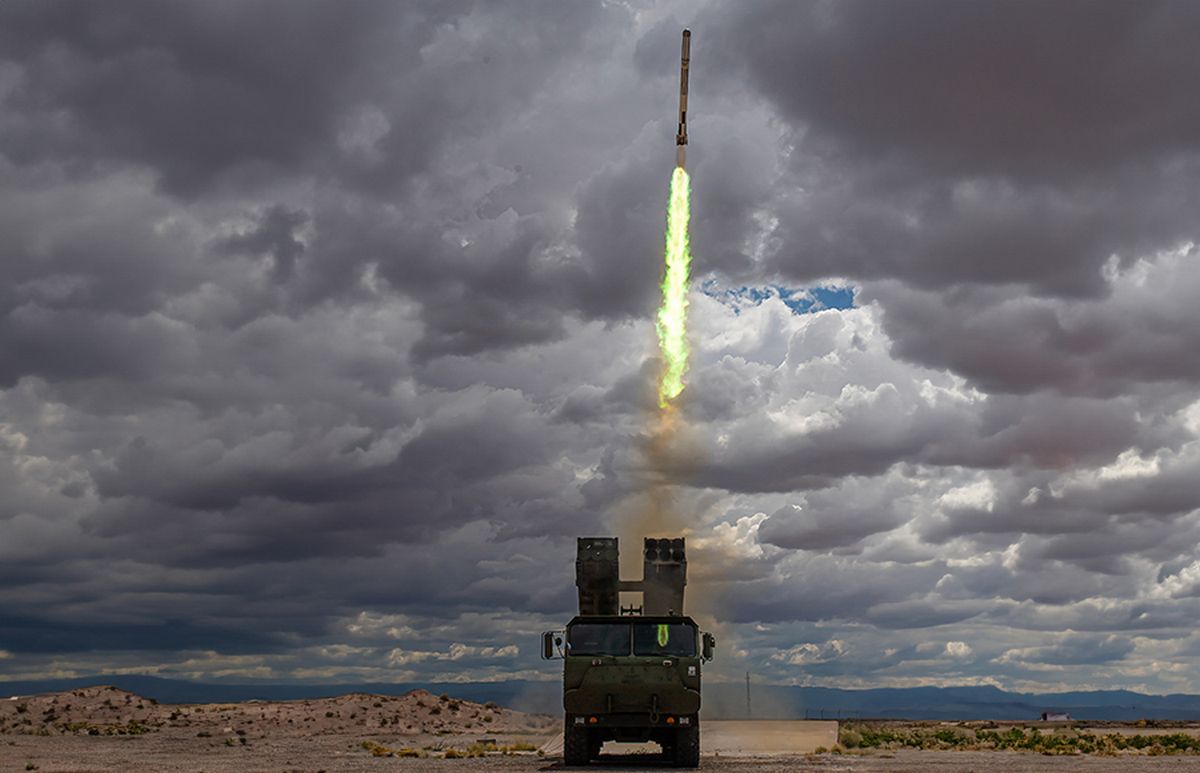
Lockheed Martin announced the test on 28 August, saying multiple JR3 rounds were launched from a HIMARS launcher at Yuma Proving Ground in Arizona. The firing was used to demonstrate the rocket’s range, trajectory, accuracy and marking payload effects, following an earlier flight test of the system. JR3 is designed for use with both HIMARS and the tracked M270 launcher and is packaged in a 24-round launch pod intended to support repeated live-fire training.
The company is pitching the system as a lower-cost training alternative which can be fired on ranges where the distances required for operational rockets would be impractical. Lockheed Martin said the design uses mature rocket motor technology with a low-cost motor and an adaptable payload, while the launch tubes can be reloaded and the pod itself reused. The 24-round configuration is intended to give launcher crews a larger number of training firings while allowing exercises to take place under different environmental conditions and during day or night operations.
Dave Griser, vice president of Lockheed Martin Precision Fires Rockets, said: “Our new training round offers a scalable, very affordable solution built on mature rocket motor technology. With a 24-round rocket launch pod, our JR3 system meets the Army’s demand for higher training volume and lower cost without sacrificing performance.”
JR3 is being developed to replace the existing Reduced Range Practice Rocket, which allows HIMARS and M270 crews to conduct live-fire training without using full-range operational ammunition. Lockheed Martin said the new system is intended to increase the number of firings that can be carried out while reducing the cost per training round. The reusable pod and reloadable tubes form part of that approach, allowing the launcher hardware to be retained for successive training cycles rather than treating the complete assembly as expendable.
The company said another JR3 flight test is planned later in 2026 to continue validating the design. It also identified the architecture as potentially applicable to future U.S. Army programmes, including the Direct Support Fires Technology initiative, which is examining lower-cost rockets intended for production in larger numbers.