

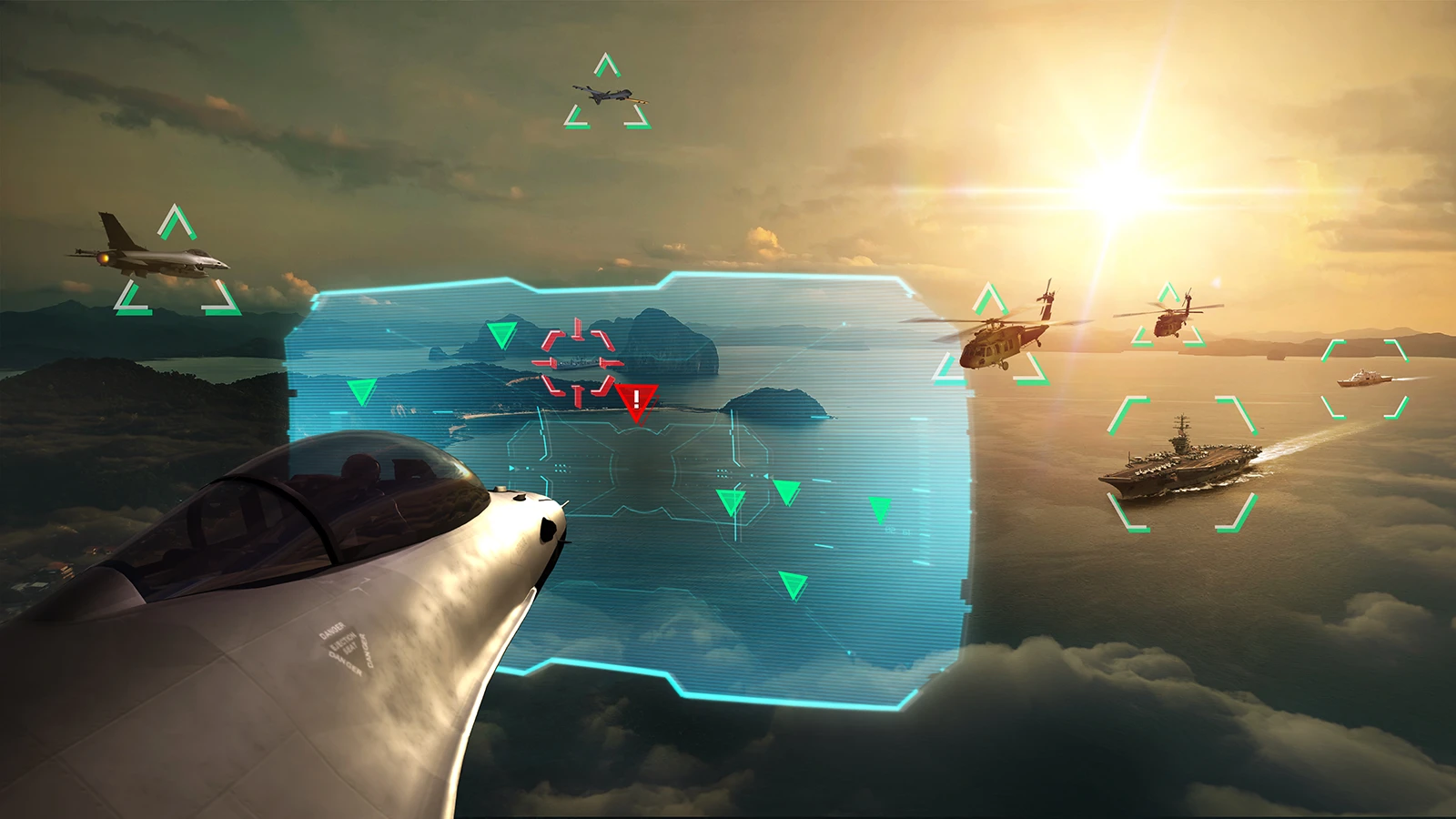
BAE Systems has received AIMS certification for a new Identification Friend or Foe unit fitted to the United States Air Force F-16 Fighting Falcon, clearing the equipment for use on a standard shared across American and NATO forces, according to the company.
The AN/APX-127(V)1 Combined Interrogator Transponder consolidates the interrogator and transponder functions into a single box, an arrangement the company says suits highly manoeuvrable aircraft where space is at a premium. It keeps the same form factor as the units it replaces, making it a drop-in substitute for the AN/APX-113(V), AN/APX-125(V) and AN/APX-126(V), which are in service on a range of American and international platforms.
Seth Guanu, combat identification products program area director at BAE Systems, said: “We are investing in the next generation of our IFF technology to support our customers’ missions for today and tomorrow. Our multi-domain systems are designed for high-performance; easily upgradeable; and meet size, weight, and power objectives for existing and emerging platforms. This solution provides added security and real-time information pilots need in a variety of threat environments.”
According to BAE Systems, the unit is AIMS Mark XIIB certified with Mode S and Mode 5 for secure and encrypted exchange, and carries additional receive channels for passive acquisition of Mode 5 Level 2 and Automatic Dependent Surveillance Broadcast In. The open systems architecture is intended to allow capability to be added through software rather than hardware changes, which the company says reduces the risk and cost of keeping the equipment current.
Identification Friend or Foe is the means by which an aircraft or ship establishes whether a contact is friendly before a weapon is released, and the consequences of getting it wrong are the reason the field attracts the attention it does. Mode 5 is the current encrypted NATO standard, introduced to replace the older Mode 4 across the alliance, and it uses cryptographic keys that have to be loaded and managed rather than a simple coded reply.
Work on the unit is carried out at BAE Systems facilities at Greenlawn in New York and in Austin, Texas, through the company’s American business rather than its British operations. Deliveries against an initial production lot of 90 units are expected to begin this year.








OT, but perhaps somewhat intriguing: Boeing formally awarded a $20Bn development contract for F/A-XX. Would have wagered that Northrop-Grumman had the inside track, therefore, have decided to postpone the next gambling junket to Las Vegas. 🤔😉😁