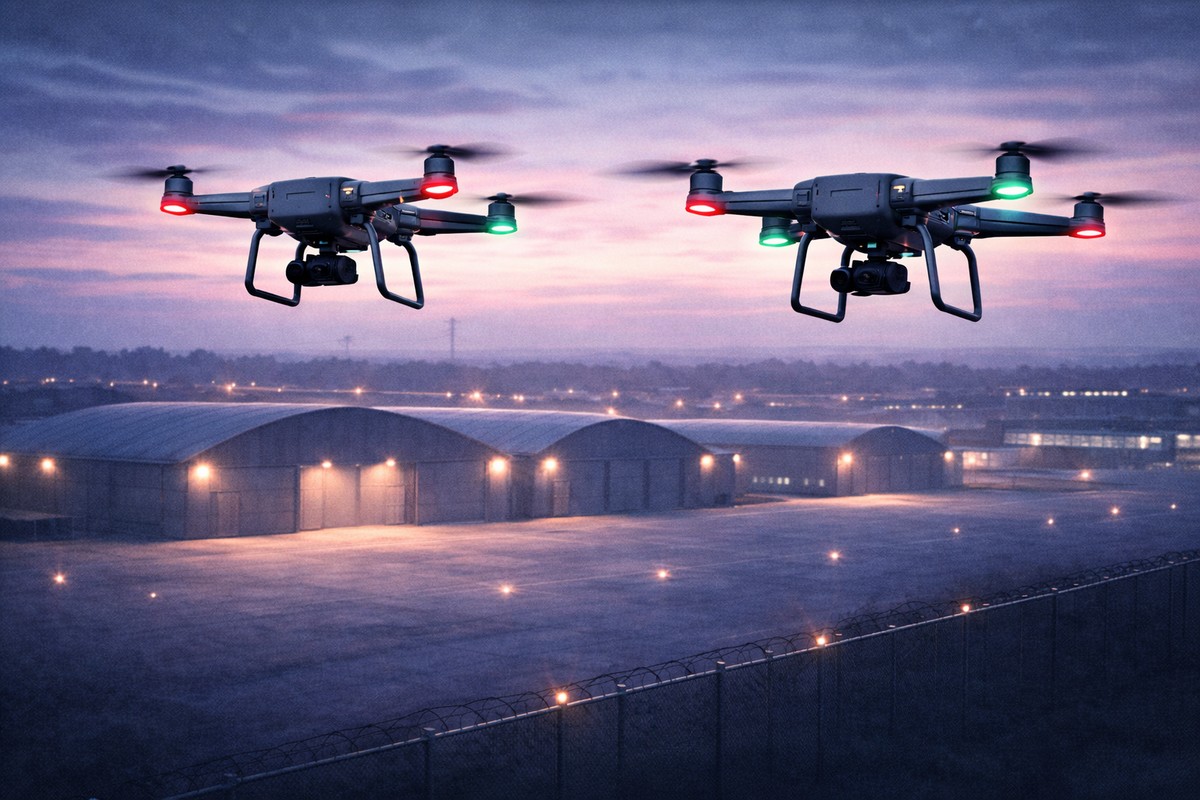
Restricted airspace has been applied over fifty defence sites and a further one hundred and seventy are expected to follow in December, part of a wider effort to harden British military bases against drones, according to an answer given in Parliament.
Mark Pritchard, the Conservative member for The Wrekin, asked what additional support is being given to Guardian, the protective security element of Standing Joint Command, in light of increased threats to British military bases.
Louise Sandher-Jones, Parliamentary Under-Secretary and Minister for the Armed Forces, said: “The Defence Investment Plan provides an additional £470 million over four years for security technology and infrastructure. Restricted Airspace has been applied to 50 Defence sites, with a further 170 expected in December 2026, while £15 million has been invested in remotely piloted and counter-uncrewed aerial systems and training over the past 18 months.”
Restricted airspace makes flying a drone over a site unlawful without permission. That does not stop anyone flying, but it gives the police and the Ministry of Defence Police an offence to act on, and it removes the argument that an operator did not know where they were.
The department has set out £240 million for Project PRESAGIUM, an enhanced counter-drone system intended to detect and defeat emerging threats, and the Army is running Project Halo Shield to examine what commercially available counter-drone technology could do for site protection. The £15 million figure for remotely piloted and counter-drone systems and training over the past eighteen months is small compared with those programmes and covers work done while they are being stood up.