


Ned Baker, UK managing director of Helsing, has said intelligence suggests Russia produces about four thousand jet-powered long-range strike munitions a month, according to remarks made at the Atlantic Future Forum in Oslo.
Asked on board HMS Prince of Wales what lessons from Ukraine transfer to the High North, Baker named asymmetry, speed of iteration and cost. He said: “Intelligence suggests that Russian output of jet powered long range strike munitions is about 4000 per month and increasing.” He added: “We simply cannot afford to fire million-pound interceptors” at that sort of mass.
He said Ukraine has moved from needing one or more operators per platform to a single operator for many platforms, and that this is how a smaller force can hold off a larger one. He said capabilities now need updating within hours and days instead of years and decades.
Baker said the High North is far larger and more hostile than the Donbas, so detecting the adversary and sharing attribution with allies matter even more.
He said autonomy changes the risk calculus, because when two crewed platforms meet each side must weigh the risk to its crew, but an uncrewed platform meeting a crewed Russian vessel means “you’ve basically given your government and your military more options and more latitude to actually take different types of effect”. On the mix of high-end and low-cost kit, he said: “You can have high end software on a low end airframe. You can have a high end sensor on a low end hull.”
Asked what the Lunna House agreement should do next, Baker said: “I’d love it if we could skip the interoperability bit and just get straight to the interchangeable bit.” On imposing costs on Russia without escalation, he said: “We don’t need to telegraph exactly how we will have the effect. We just need them to believe we will have an effect, and by doing that, we’ll have credible deterrence.”
Baker, a former British diplomat whose postings included Afghanistan and Denmark, leads Helsing in Britain, where the firm is building a drone submarine factory in Plymouth and its SG-1 gliders are to be trialled under Atlantic Bastion.



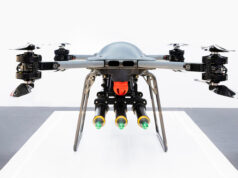
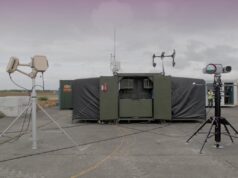







“You can have high end software on a low end airframe. You can have a high end sensor on a low end hull.”
And then it is captured and you loose the technological advantage…
Sidenote: one thing that is quite strange for me is that do not appear to exist any NATO norm for our guided munitions to destroy their must important components when they explode. Due to low western pace i can see an enemy make a copy of an used munition but which some components can be studied and then 6 months later they have 1000s… more than us…