


Project AETHER is planning a multi-payload, long endurance flight in the 2027-28 financial year to demonstrate a broader range of intelligence, surveillance and reconnaissance collection from stratospheric altitudes, according to an answer given in Parliament.
Ben Obese-Jecty, the Conservative member for Huntingdon, asked what progress has been made in delivering the project, following up an answer given in October last year.
Luke Pollard, the Minister of State for Defence, said: “Project AETHER capability development is progressing under the sponsorship of the Cyber and Specialist Operations Command. Planning is currently ongoing for the delivery of a multi-payload, long endurance flight in financial year 2027-28. This will seek to build upon the previous trial events by demonstrating a broader range of Intelligence, Surveillance and Reconnaissance collection techniques from stratospheric altitudes.”
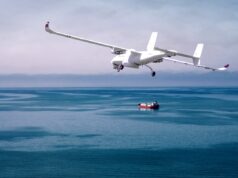
AETHER covers uncrewed aircraft operating in the stratosphere, above conventional air traffic and below orbit, where solar powered platforms can stay aloft for weeks or months and provide persistent coverage of an area at a fraction of the cost of a satellite. Earlier trials have flown from the Hebrides range, and the Ministry of Defence has worked with several manufacturers of high altitude platforms.
Cyber and Specialist Operations Command was created under the restructuring that followed the Strategic Defence Review, bringing together cyber, electromagnetic activities, intelligence and specialist capabilities under a single command.




Cyber and Specialist Operations Command was not so much “created” after the SDR, rather it was rebranded.
Years ago it was Joint Forces Command.
Then it was Strategic Command.
Now CSOC.
Same assets, different name, and “new” so HMG can highlight something.
Some details:
The joint forces of a specialist nature already existed within it.
JFIG. Joint Forces Intelligence Group, so SIGINT and the JSSUs, Humint, Wyton, Pathfinder, and other groups.
Defence Intelligence, the overall command of the above.
JCG. Joint Forces Cyber Group, so the Joint Cyber Units, renamed themselves.
The NCF, which handles offensive Cyber and already existed.
UKSF.
Defence Medical Services, themselves rebranded.
The Defence Academy.
JCEAG at Digby.
And other bits and pieces.
No increase in mass, just moving the deckchairs and re brigading assets while giving greater emphasis with Cyber.
I have followed these organisations and ORBATS for years and this “created” and “new” nonsense isn’t true.
The previous 3 high altitude Zepher Drones were themselves operated by Strategic Command.
Yeah but Danielle , what has replaced Zephyr or are they still up there and does it work – more importantly can they go any way toward providing our 🇺🇦 allies with the vital deep strike targeting info or anything similar to that once provided by our former trans Atlantic friends ? 🇺🇸👎 Not my field of expertise , would very much welcome your view. . Slava !
Hi mate.
Not my area of knowledge either.
I added Zepher as a precedecesor to the Drones in the article, trying to stay on topic after one of my rants!
No idea on their capabilities, I had wanted to know who in StratCom ( what unit ) actually operated them, maybe no one did, but contractors.
I read they were tested in Australia, maybe now stored there.
After Zepher, I’m sure I recall one of the reviews, maybe 2021, confirming 3 of another high altitude type had been bought, again no details on who or what.
The government placed a UOR last January for three (HAPS) but it was not announced if it was Airbus Zephyr or Potentially BAE PHASA-35 who both have fixed wing solar powered drones or Sierra Nevada that offers a high altitude untethered ballon.
All the platforms are slated to provide persistent ISR and Communications.
Would it be useful for Ukraine, yes very much so as a replacement for Starlink it can provide direct divice communications out to 140km from around 70,000 fleet. However to be much use it would have to fly inside Ukraine and it would be very vulnerable to Russian S400 or air to air missiles.
For a mission like Afghanistan with limited SAM threat these would be incredibly useful.
It’s probably much more useful as a SIGNIT/ELINT platform where it can use radiation bounced around the ionosphere and pick up singles from 500km away then it could operate inside friendly airspace.
Ah yes, it was you who mentioned those 3 new unidentified Drones.
All started going slow on news after Zephyr was sold to airbus. However, Airbus are currently progressing a concept of a simultaneous constellation of hundreds of aircraft providing a variety of capabilities including 4g 5g . Fleet is quietly growing. Not sure if UK testing is planned using a late rev zephyr or a contemporary UK alternative such ss Phasa 35