NATO has published a public summary of a quantum technology roadmap intended to speed up the adoption of quantum computing, communication and sensing across the alliance and allied armed forces, and to guard against the disruption those technologies could cause in the hands of others, according to NATO.
Allies approved the roadmap on 30 July, with the summary released on Tuesday. It builds on the alliance’s Quantum Strategy of 2023 and concentrates on the three branches of the field, alongside how each interacts with other dual-use technologies including artificial intelligence, space and next generation communication networks.
Delivery runs through the Transatlantic Quantum Community and its industry network, working with industry and academia. That body met in Washington on 24 and 25 September, where according to NATO the discussion covered how advances in quantum computing could affect secure communications, critical infrastructure, intelligence, strategic stability and decision making in a crisis, along with what the convergence of artificial intelligence and quantum means for defence.
The same meeting looked at positioning, navigation and timing, and at sensing, in light of the Questor 26 experimentation campaign run earlier this month at La Spezia by the NATO Centre for Maritime Research and Experimentation together with the industry network.
A sufficiently capable quantum computer would break the public key cryptography that protects most military and civil communications, which is why encrypted traffic intercepted today is worth storing against the day it can be read, and why allied governments have been migrating towards post-quantum algorithms. Quantum sensing runs the other way, offering navigation that does not depend on satellite signals at all, which matters a great deal to forces operating where those signals are jammed or spoofed as a matter of routine, as they now are across the Baltic and the Black Sea.
The Transatlantic Quantum Community welcomed Belgium and Bulgaria at the Washington meeting, bringing it to 24 allies alongside six partner nations. The Netherlands took the chair in May for a year with Canada as vice-chair, and the body, established in 2024, is an informal and non-binding grouping of experts drawn from national governments, industry, academia, funding bodies and research institutions rather than a decision-making forum.
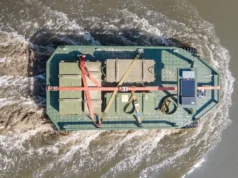
Britain has been working the same ground nationally for some years, and the Ministry of Defence and the Defence Science and Technology Laboratory have run quantum navigation trials at sea and in the air over recent years, and the National Quantum Strategy commits public funding across the decade with defence as one of the intended beneficiaries. The Royal Navy’s experimentation vessel XV Patrick Blackett has been used for trials of this kind.
The full roadmap summary is published on the NATO site alongside the announcement, and the alliance gives no figures for what the work will cost or timescales for when any of the capability is expected to reach the field.