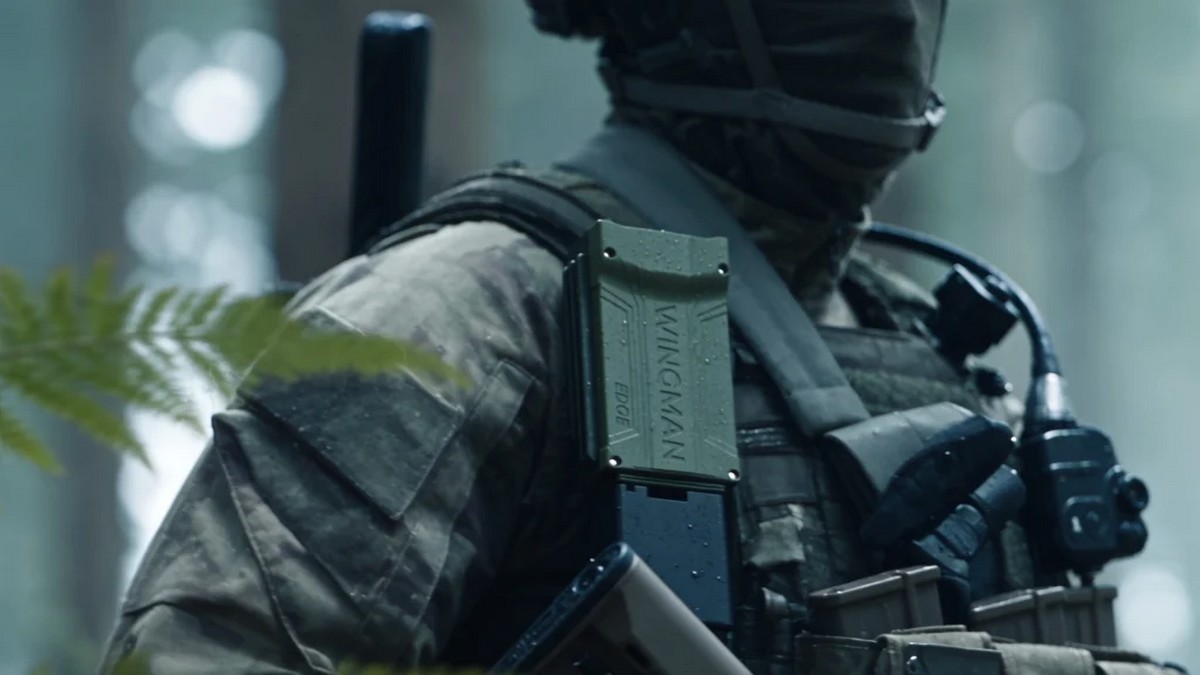
A drone detector light enough to be worn by a single soldier, and able to analyse the radio spectrum for threats that are not yet in any threat library, has been launched by the Swindon-based company MyDefence, the firm stated.
The device, called Wingman Edge, weighs under a kilogram, which the company puts at 17 per cent lighter than the generation it replaces. It combines signature-based detection, meaning it recognises signals already catalogued, with continuous artificial intelligence analysis of the spectrum running on the device at the same time.
That second capability is the part of the device the company is selling hardest. Rather than only matching against a stored library, the system is designed to identify and classify a wider range of activity including drone signals, controllers, communications links, Wi-Fi, analogue video and signals it has never seen before.
Dan Hermansen, chief executive of MyDefence, said: “The evolving drone threat does not wait for a database to be updated. For more than a decade, we have put wearable drone detection into the hands of soldiers. Wingman Edge builds on that foundation by giving the individual soldier a much deeper understanding of what is happening in the spectrum around them, including activity that does not match an existing signature.”
Processing on the device rather than in a remote system matters in the places this equipment is meant to work, since a soldier in a jammed or disconnected environment cannot wait for a server somewhere else to tell him what he is listening to. The system is passive, monitoring the electromagnetic environment without radiating anything itself, which keeps the wearer from becoming a target for the sort of equipment that homes on emissions.
Individual units can share detections with other soldiers, vehicles and connected systems, so that what one man picks up feeds a wider picture. Underlying all of it is what the company calls MyDefence Spectrum Intelligence, its software layer combining radio frequency data, threat knowledge and machine learning.
MyDefence says the United States Army has bought its wearable drone detection systems to a cumulative value of 77 million dollars over the past eighteen months, which is a considerable sum for equipment carried on a soldier’s body armour.
Wingman Edge is the first of what the company is calling its Edge Generation, a family of products intended to push sensing and processing out to deployed platforms rather than back to headquarters. The direction of travel matches what has been learned in Ukraine, where small drones have made the ability to detect an approaching threat in the last few seconds a matter of individual survival rather than a staff function.