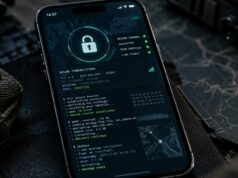
Police officers are to be given a way of checking a seized phone or computer against a library of more than a million files produced by recognised terrorist organisations, returning an answer in minutes rather than weeks, according to Cyacomb, the Edinburgh firm behind it.
The company has developed the capability with Human Cognition, using that firm’s Terrorist Authored Material Contraband Filter. The filter draws on a curated dataset of modern and historical terrorist material which has been checked by people rather than only by machines, and verified as having been produced by recognised terrorist groups.
Behind it sits an archive of more than 3.3 million files that have circulated in terrorist online ecosystems over the past three decades, of which more than a million have been identified as terrorist-authored. A suspect device is checked against that material using secure matching technology, with the stated aim of supporting faster action against people moving towards violence.
Chris Johnson, chief executive of Cyacomb, said: “Technology has completely changed the environment in which radicalisation can take place. Traditionally becoming involved with an extremist organisation would require physical contact, but today an individual can access huge volumes of extremist material without leaving their bedroom.”
Dr Ali Fisher, co-founder at Human Cognition, said: “The speed, agility and resilience of the terrorist networks that share content online, and the mobility of potential terrorists in the physical world, requires tools that enable law enforcement to rapidly identify content on digital devices.”
The companies say the process does not expose unrelated personal information held on the device, since it matches only against material already in the dataset rather than reading everything stored. That distinction is the one that usually decides whether a tool of this kind survives contact with the courts, and it is the same approach Cyacomb has taken in its existing work on child abuse imagery, where the firm built its reputation.
A full forensic examination of a modern phone can take weeks, and a backlog of devices waiting for examination has been a recurring theme in inspectorate reports on counter-terrorism and serious crime investigation. A triage tool that tells an officer within minutes whether a device holds known material lets investigators decide where to put the specialist effort. Language is the other claimed advantage, with the companies saying the matching works whatever the nature or language of the content, because it compares files rather than reading them.