

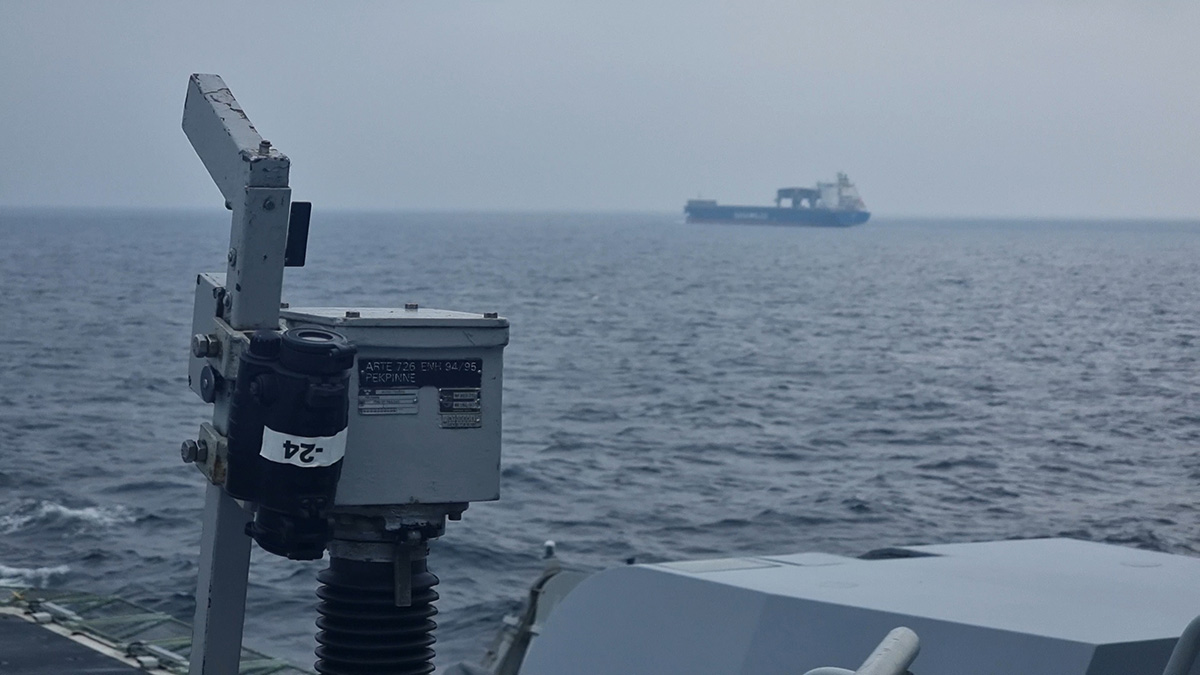
Sanctioned vessels sailing in and out of the Russian Arctic now account for nearly a third of all cargo traffic along the Northern Sea Route, and pose what the government describes as a potentially serious threat to British interests, according to the updated Arctic Policy Framework.
The document, published by the government and signed by Uma Kumaran, the Minister for the Polar Regions, sets out the first full revision of British Arctic policy since 2023.
On the shipping route itself, the framework said: “The commercial use of the Northern Sea Route (NSR) between Asia and Europe has slowly been developing, notwithstanding that many operators judge this sea route to be operationally risky and environmentally precarious. We have also seen the growth of the shadow fleet, with sanctioned vessels sailing in and out of the Russian Arctic now accounting for nearly a third of all cargo traffic along the NSR and posing a potentially serious threat to UK interests.”
It set out the wider risk the fleet carries. “Russia has also dramatically expanded its use of shadow fleet vessels in an attempt to circumvent sanctions on its energy exports. The use of these vessels poses a systemic risk to international maritime safety and standards, in addition to increasing the potential for serious environmental damage in a highly sensitive region.”
Deterring and disrupting the shadow fleet is named in the framework as a British priority, pursued through the Nordic Baltic 8++ partnership. The document also records that Britain took command of NATO’s Joint Force Command Norfolk in September, and names the Lunna House Agreement with Norway, under which the two navies will operate side by side in the North Atlantic protecting critical national infrastructure from malign activity.
The shadow fleet is the collection of ageing tankers, typically operating under flags of convenience with opaque ownership and uncertain insurance, that Russia has assembled to keep its oil moving past the price cap imposed after the invasion of Ukraine. Hundreds have been designated by Britain, the European Union and the United States, and the vessels have been linked to dark fleet transfers, falsified tracking data and a string of incidents involving undersea cables in the Baltic.


The only thing this shows is how weak and vulnerable Russia has become, with the black sea all but closed off to it the UK has the ability to blockade virtually all commercial shipping bound for European Russia.
Pretty easy way for the UK to take action against Russia if hostilities ever break out. Given the Russian navy’s inability to support even a single surface combatant in the North Sea even under peace time conditions there would be little they could do about it and for a country that’s completely dependent on oil exports and manufacturing imports it would be quite devastating on the Russia economy if we closed the North Sea to them.
Putin has really backed Russia into such a weak position Geo strategically, compared to the Soviet days they are a joke.
They are now having to threaten NATO with nuclear weapons should Kaliningrad be cut off as opposed to a few years ago when Kaliningrad was seen as the threat to NATO.