

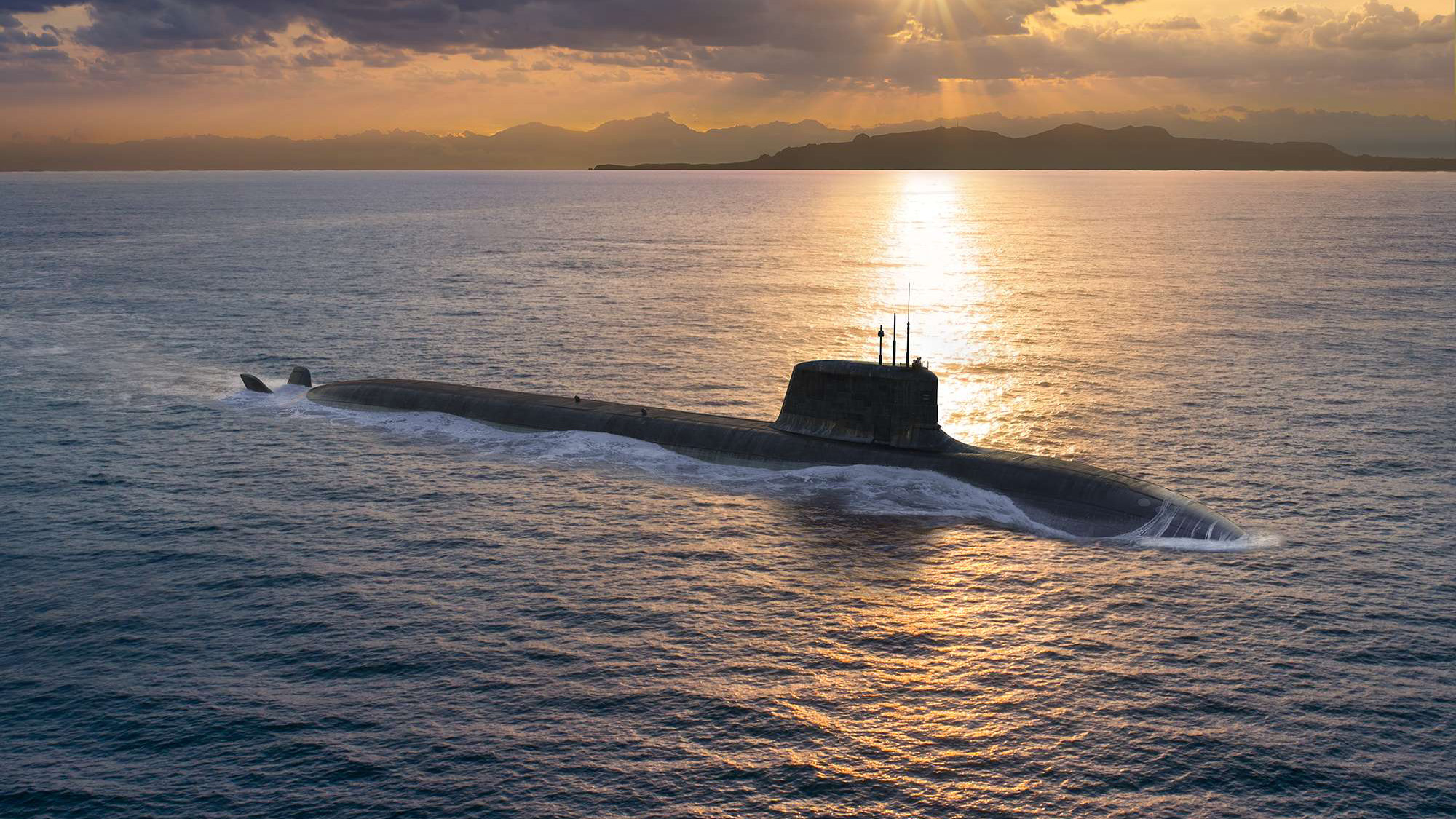
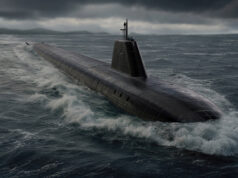
The Ministry of Defence has again said that it intends to procure up to twelve SSN-AUKUS submarines, according to an answer given in Parliament.
Ben Obese-Jecty, the Conservative member for Huntingdon, asked the Secretary of State to set out the number planned following the 2027 spending review.
Luke Pollard, the Minister for Defence Readiness and Industry, answered in one sentence: “As set out in the Defence Investment Plan, we intend to procure up to 12 SSN AUKUS submarines.”
The question asked what the plan would be after the next spending review, and the answer restates the existing intention without saying whether the figure is secure against it. Up to twelve is a ceiling, not a commitment to a number.
SSN-AUKUS is the next generation nuclear powered attack submarine, designed in Britain around a British reactor and incorporating American technology under the first pillar of the AUKUS agreement. It will replace the seven boat Astute class, and will be built by BAE Systems at Barrow-in-Furness, with Rolls-Royce supplying the propulsion plant from Derby.
Australia is to build its own boats to the same design at Osborne in South Australia. The first British boat is expected to enter service in the late 2030s.



‘up to’ 12. So anywhere from 0 to 12.
A good rule of thumb is to halve the “up to” number to get the actual number that will be ordered. Replacing 7 Astute’s with 6 SSN-A’s would actually be phenomenal based on the experience of the last 40 years.
It’s far and away the best thing we can bring to NATO.
The minimum should be 10 SSN, and 5 SSBN, though I don’t think we’ll get more than four SSBN.
No point in messing around with SSK. It’s not as though Europe is short on littoral conventional submarines.
100% completely agree…
The littoral conventional submarine could well be made obsolete by the use of drones, certainly in the North Sea/Baltic Sea.
I reckon a good chunk of their roles definitely will be, though for nations without the budget to dedicate to nuclear boats, there will likely always be a draw.
However, I think there’ll be a nuke boat proliferation rush.
Currently, SSN operators are:
1) USA
2) USSR
3) UK
4) China
5) France
That’s the order that they gained an operational SSN capability chronologically.
Since then, we’ve seen India lease an SSN capability from Russia, but apart from that, no nation has made the push.
North Korea and India have both invested in SSBN capability, but for some time now, SSN capability, whilst being developed, has not yet culminated in another nation joining the ‘club’.
Yet, in the past decade, that’s gone out the window. Now, five new nations are looking to secure SSN capability going forward, those being:
1) Brazil
2) Australia
3) India
4) Japan
5) South Korea
Of these, Brazil has an SSN under construction. Australia has LLTI for an SSN under construction. I’m unsure of India’s progress; I believe there is a domestic programme, and given their SSBN experience, the hurdles are shorter for them. South Korea has confirmed an SSN programme. Japan is debating one, though it seems likely that they’ll eventually join the group as well.
It seems likely that North Korea will also rush for this capability as well, though there’s not been confirmation of a programme there as of yet.
By 2040, the number of SSN-operating nations will have doubled. Every populated continent (save Africa) will have at least one SSN-operating nation.
Since their introduction, SSN have marked out the ‘great powers’, so to speak, more so than nuclear weapons. They’re the modern capital ships, and in an era of saturation, will be relied upon ever more to deliver combat capability, perhaps more so than the visually dominant aircraft carriers.
I don’t see a ‘nuclear-weapons rush’ as particularly likely. I do think that we’re already in the middle of a ‘nuclear-submarine rush’, and for the RN, a navy used to operating over the last two decades with impunity on a global scale, it’ll be a bit of jarring change.
It’s strange to imagine that a nation like Brazil would have the capability to operate off the British Isles, but that’s the world we’re entering.
Nuclear submarines have limited use in shallow seas; they are best used in deep water. So a mid power proliferation of SSN boats makes sense for nations bordering deep seas and worried about their neighbours. For nations in enclosed seas where waters are shallow and operating close to base it changes. There the need is for coastal defences – a large number of surface and submarine drones kept under tight control from the mainland would be a cheaper, more efficient and cost effective option. (Not: cheaper and cost effective are not the same. )
I wouldn’t write off SSKs just yet. What about Canada’s large purchase of the 212CD, why didn’t they consider SSNs or a mix?
Sub drones still need to demonstrate their autonomy, reliability and effectiveness. I think a small fleet of SSKs could still fit in usefully between a SSN fleet and XLUUVs.
I’m not. They share the same slot as SSNs for countries that don’t want or can’t can’t afford te nuclear option, plus they are more versatile than drones. A mix in shallow seas would make sense.
Canada aren’t generally ‘allowed’ by the USA to possess nuclear submarines, due to their conflicting claims on the various North American waterways, and operational issues under the ice.
In the 1980s/90s, Thatcher’s government attempted to arrange a sale of T-boats to Canada, but this was shelved following fiscal issues in Canada, and worries around the transmission of SSN20 (W-boats) technology to Canada, which was regarded as being on-par or potentially superior to the American technology in the fleet at the time.
Since then, Canada has stayed clear of SSN.
You can add Italy to the list of those debating entering the nuclear submarine world, using their own reactor technology.
Is that an official programme, or more sort of hinting towards long-term ambitions?
It makes sense, to be honest. Italy has been sending carrier strike groups around the world of late.
I think they’re in a similar position to Japan, where they think it would be helpful but haven’t committed yet.
In unrelated news, Hybrid Air Vehicles are planning to step straight up to 250T payload with Airlander so that will be fun 🙂
Leh, Im interested too see why 5 SSBNs? Since the late 60’s 4 has been the number to maintain 1 boat on permanent deternt patrol
Back when Polaris was being negotiated, the order was actually for five Resolution-class SSBN: Resolution, Repulse, Renown, Revenge (the four that were built), and a fifth boat, Ramillies, that was cancelled as a cost-saving measure.
The French built six Redoubtable-class SSBN, before coming down to four Triomphant-class boats when they were replaced.
So, four can be managed as the bare minimum, with one boat out, one working-up, one in maintenance, and one in deep-maintenance. However, five boats would give better resilience to the entire structure, and reduce patrol times, thus boosting crew retention. It also makes it far easier to surge a second boat to sea in an emergency.
thx for the insights Leh – a good read on the 5th planned R class SSBN – I had no idea about that
It also gives an option for 2 boats to be sorties in times of very high tension, which gives you far wider options as well as makes it even harder for the enemy to counter and 28 missiles full of warheads is a whole additional layer.
The problem is you would essentially need 4 warloads of missiles and warheads.. so for a full set of loads you need 56 missiles active and say 280 active warheads… then a load that goes into maintenance..
The Treasury argues that only 3 SSBN’s are needed (1 on patrol, 1 regenerating, 1 in refit), the MOD argues that 5 SSBNs are needed (1 on patrol, 1-2 regenerating/training, 1-2 in refit, 0-1 unexpectedly out of service), in practice we get 4 (1 on patrol, 1 regenerating, 1 in refit, 1 non-operational). 0 Rarely mentioned is that 5 SSBN’s gives a potential surge capacity, i.e. the UK could occasionally have two bombers at sea if the world situation warranted it, a not to be sniffed at capability.
Yeah but they aren’t known for common sense are they out government.
“our government”
The R class SSBN was originally planned for 5, that was based on the operational info provided by the USN based on the experience of their first 2 SSBN classes, the George Washington and Ethan Allen classes both consisted of 5 boats. That was and still is the optimum number required for an effective force.
However Economics and Politics got in the way and in the mid 60’s the Polaris programme was sucking the life out of the RN budget, it wasn’t just the cost of the boats but also the entire set of facilities needed to design, build, support and maintain the boats, crews, warheads and missiles. Spookily 60 years later replacing, enlarging or modernising those are now doing exactly the same.
The one big omission from that list is the same one that still haunts us, no thought was given to the disposal of the old boats of the long term storage of the waste. I actually asked an older colleague why that was omitted, his answer was the Treasury did an cost / benefit ñanalysis and came to the conclusion that it was pretty pointless as they expected a nuclear war to obliterate us anyway.
The Treasury wanted to cut the numbers from 5 to just 3 (which is the absolute minimum with zero wiggle room) and this was supported by the Defence Secretary (Dennis Healey). The RN had to cut elsewhere to fund a 4th, and those cuts were at the same time as retreat from East of Suez, they account for the Cancelation of CVA01 (end of CATOBAR) and reduction from 8 T83 DDG to just one (HMS Bristol).
The stupid thing was the long lead items were already on order and in build but most of that was repurposed into SSN work.
On the separate subject of “up to 12 SSNs” it’s a deliberately vague statement but the sheer amount of work and money going on in the DNE infrastructure does support the idea of an enlarged fleet (3 Floating Drydocks and Synchro lift at Faslane plus 5 Drydocks at Devonport that’s a lot of docks for just 11 boats.
I wouldn’t be too surprised to see some of the Astutes go through LOP(R) to run on to 35 years in order to add mass whilst more SSN-A are built. Just because it’s been announced that the intention is for Core Life determines the life of the boat doesn’t mean it can’t be done.
My bet is on 10 !
In these days of no anti-ballistic missile treaties, there’s another reason – to have two boats capable of firing at once. If Russia is of the opinion it could intercept one boatload of maybe 8 missiles bound for Moscow, a second boatload available at the right time could increase the deterrent effect of a second strike.
Our deterrent system has always been based as a minimum credible deterrent with the expectation that the US arsenal would be engaging Russia/soviets in a major conflict. However that can no longer be relied upon.
If Russia fired one nuclear weapon on faslane and took out three of our four boats what would we do?
We might retaliate in kind by taking out Murmansk but we wouldn’t go full on war and with 75% of our nuclear weapon capability gone and no way to replace it would we rapidly cease to be a nuclear power.
The UK needs to develop a full nuclear triad and provide ENATO with the nuclear backstop it needs.
That probably means an air launched nuclear capable cruise missile and an MRBM that can be launched from SSN AUKUS or road mobile launchers.
Your scenario in which a preemptive strike destroys 3 of our 4 SSBNs removes the one advantage CASD is supposed to have- full second strike capability. That advantage has been argued to justify UK having only one element of the nuclear triad and by far the most expensive.
The other main argument in favour of this decision is that anything else requires a fire on warning posture, greatly raising the risk of a mistake.
Expanding the deterrent by deploying long range nuclear armed cruise missiles on SSNs would preserve second strike capability without necessarily raising the risks of error that would come with a land based fire on warning system.
I believe the US is still debating whether to fund a new SSN launched tactical nuke (to replace the Tomahawks removed in 1991) with most observers arguing that the high cost would deliver only a marginal effect.
With DNE now accounting for 40% of the equipment budget, I don’t think any additional weapon is affordable. Ensuring our SSBNs carry the maximum missile and warhead load might be the best way to ensure the UK deterrent remains credible.
As everyone on this site knows, ‘up to 12’ is a useless statement. We’ll be lucky if we end up with any sort of uplift from the current 7.
The reality is it’s only going to be up to 12, because the government can never give a firm number even if it wants to… the US is meant to have 66, that’s what the USN is mandated to have.. but by 2035 it will likely be down to 40-43 depending on if they hand over some to Australia..and they are trying their best and throwing money like Confetti, same with Russia it’s only go 5 modern SSN but wants 12. This is because in the end you must utterly focus on your SSBN programme first.. so the SSBN programme is the one that always slots in between the resources required for your SSBN builds.
Not to throw a bucket of sick over 12, but the big question is not will they buy them it’s actually can we build them..So if we look at the UK.. it with it’s extended capabilities it’s now probably getting to a point it can lay down 3 SSNs at a time, and actually build them, the maximum capacity for Devonshire dock hall is 3 hulls laid down..with one being fitted out and steel cutting for say 2.
So let’s have a look we know from pictures 3 Asute hulls were tight as Devonshire dock hall is 58 meters wide.. with the sides taken up by workshops ect and an astute is 11.3 meters with all the requirements to support construction they were essentially crammed side by side.. the dreadnoughts are 12.8 meters, but they laid 3 valiant class so assuming they can.
Now first BAE have to clear out 2 of the SSBNs before it can lay down its first new SSN. So that is the first benchmark when will the last astute launch and dreadnought and Co be launched.. we have to be a bit honest with ourselves here and not take the spin.. the quickest BAE have managed to launch a nuclear sub from keel laying has been about 7 year and as long as 11 years.. so if BAE does it’s very best dreadnought is not being launched until 2032 if we then follow a time for the other 3 SSBNs we can see when each of the first 4 SSNs will likely be laid down..
If we look at a tight and very optimistic launch scheduled with all SSBNs launching 7 years after being laid down, essentially BAE matching its very best performance in the last 26 years on every boat ( and I think this will be hard to impossible) and if the new SSNBs have a 35 year life it’s replacement will need to be launched in 2067 so laid down by 2060 at the very latest we get the following:
Asute 7 launched 2028 and SSBN 3 laid down 28
SSBN one launched 2032, SSBN 4 laid down 32
SSBN two launched 2034, ASSN 1 laid down 34
SSBN three launched 2036, ASSN 2 laid down 36
SSBN four launched 2039, ASSN 3 laid down 39
ASSN 1 launched 2041, ASSN 4 Laid down 41
ASSN 2 launched 2043, ASSN 5 laid down 43
ASSN 3 launched 2046 ASSN 6 laid down 46
ASSN 4 launched 2048, ASSN 7 laid down 48
ASSN 5 launched 2050, ASSN 8 laid down 50
ASSN 6 launched 2053, ASSN 9 laid down 53
ASSN 7 launched 2055 ASSN 10 laid down 55
ASSN 8 launched 2057 ASSN 11 laid down 57
ASSN 9 launched 2060, SSBN laid down 2060
So if from now on BAE has a blinding build on every boat and knocks it out from keel laying to launch in 7 years and is ready to put down each boat as the new one is launched we get 11 Aukus SSNs if we push out the laying down of a new SSBN to 2060, which is itself risky…
So personally I would not even bother with the arguments of how many boats will the government fund.. the questions are when will the last astute clear out the hall.. and when will the first 2 SSBNs clear out so the first Aukus SSN can be laid down in 2034 and after that can BAE maintain its best every build rate..
Personally I think we will be very lucky to get 10 build and give ourselves time to not risk the same fuck-up we have presently done with the deterrent.
That’s why it’s UP to 12 boats because 12 will mean BAE pulls some form of miracle out of its arse and get all the SSBNs cleared out at planned schedule and the fact Russia firebombed our SSNs in construction has fucked that already as well as get the lay down to launch time in under 6 years.. so 12 is a miracle, 10 is very lucky.. 8-9 is probably doable..7 and under is a fuck up.
So the take home.. don’t sweat the government not saying they will confirm 12 because nobody will really know if it’s even possible until the mid 2040s… anyone who confirmed 12 is lying to themselves and you.. because the SSBNs MUST always come first. And the final take home is one fire sponsored by Russia in the mid 2020s will mean that even in the 2070s and 80s ( when the last Aukus boats will be retiring ) we may have a one less boat than we could have had, a 50-60 year impact on our national security. So if anyone dares to tell you Russia is not at war with us, just treat their comment as it is, a foolish lie. geopolitics is fun…..until you look at china and it’s 24 building bays, that seems like it may move to 32-36 with another new hall it’s building, then it gets depressing ( especially if your the USN or japan).
Hi Jonathan,
Interesting bit of analysis but unfortunately you have based it on you using artificially skewed data, the figures of the BAe produced boats are skewed by circumstances. Those figures had more to do with how long they “had” to take rather than how long it “could” have taken if BAe had more orders and didn’t need to regenerate the entire industry. They took the workload and spread it out to fit the gap between Vanguard and Dreadnought minus the gap in orders. In addition to that you have to remember that the entire supply chain and Barrow was in its knees due to no work for nearly a decade.
For non skewed figures you would have been better to consider the production of the Vickers S and T class. Which was the last time Barrow was actually building at capacity (Vickers, Marconi, VSEL, BAe same shit just different names). Funnily enough those boats may have been smaller but in many ways were far more complex and difficult to actually build.
Between March 1973 and October 1991 industry delivered 6 Swiftsures and 7 Trafalgar class boats, so 13 boats commissioned in 18 years and 6 months, which is roughly 1 delivered every 17 months. The time between “Laid down” and commissioning was roughly 4 years (Splendid was 3 years 6 months). FYI at that point RR&A was on average delivering a PWR 1 every 14 months so everything was in sync.
I don’t know if you have ever visited Barrow but you seem to think the production is all done in the Hall, but it isn’t as the DDH is just the final assembly Hall. The hull sections are all built up the road (with a lot of pre outfitting in them), then brought in for final assembly / outfitting. That’s just the final bit of a long process that stretches right back through the supply chain. So just focusing on that and assuming that the time in the shed is the OA build time is way off the mark.
You aren’t comparing like for like figure, after the Vanguards were delivered we had the Peace dividend. So the Politicians had more boats than they needed, started to smoke pot and sing “Give Peace a chance”. So they just didn’t order any boats for a while, and when eventually they did those were built at a deliberate snails pace due to 3 over riding, very annoying, but actually completely compatible driving forces. Hence those figures are skewed from what is possible.
1. HMG had to learn a very expensive lesson as a result of not ordering any boats for 7 years, the cost of getting industry back up and running was extraordinarily high. But other than abandon CASD they had zero choice but to do so, and it isn’t something they ever want to repeat.
2. HMT wanted to spread the cost pa out via staged payments over as long as it could so the annual budget could pay for other projects whilst not risking point 1.
3. BAe, RR etc aren’t a charity and do need to stay in business so building faster without being paid to do so is a no no, and running out of work is self defeating.
You really can’t assume that will be the case with SSN-A given the above info from a non skewed set of figures plus the massive amounts of money being spent to ensure we can deliver for both customers.
I can over emphasise the importance of delivering Aukus so IMHO a better base point for your analysis would probably be the later part of the Cold War when we were building as fast as possible.
These days tech and production processes are more advanced, there is far more pre outfitting of the hull sections before they get anywhere near the DDH and CAD driven production and outfitting ensures greater consistency in pre build (so less need to de snag).
I will just finish off and say I believe an 18 month Drumbeat is perfectly doable and that is what is being planned for. The workload and delivery schedules further back in the supply chain for the cling lead items certainly support that figure. You must also take into account the Australian factor which depends on us delivering the necessary parts for their SSN-A as well as our own so not working at an optimum rate increases the costs oa and gets passed onto them.
Do I think we will get 12 ? Honestly no. But given the huge investment in expanding / renewing the support infrastructure (3 Floating Drydocks, 1 Syncrolift at HMNB Clyde, 4 refit / maintenance Drydocks at Devonport plus 1 for defueling) we will look bloody stupid if it’s just 7 boats, so I’d bet on it being 10
I think I would have a bit more faith if we did not have the US example, the truth is it seems SSNs made a bit of a turning point in the 1990s, the US was happily banging out LA class a very swift rate.. 2 years from keel laying to launch, 3-4 to commissioning, they then moved to seawolf and it all went to south and it was taking them 6 years keel to launch and 7-8 years to commissioning, and that was all boat complexity and systems intergration.. they simplified down the Virginias a bit, but then ramped up the complexity and bottlenecks started to hit the programme again as well as the age old balance with the SSBN..and the Virginias are back to 6-7 years….
I honestly think BAE are being wildly optimistic on a 18 drumbeats and an average 2-3 drum beat is the more realistic… as long as it’s not hashed in any way.. so 10 if BAE do everything right.
18 month drum beat.. and 2-3 year drumbeat.. can’t type
Yes both were in the groove up till the early / mid 90’s and then both did pretty well the same and completely mucked it up. We just didn’t order anything after the Vanguards as we had enough boats, however as the numbers fell they realised they had to order some new ones and shock horror the industry had damn well nearly collapsed and had to rebuild itself.
The Americans did order Seawolfs but as they were expensive they cancelled the orders and had to start a new design, so similar contraction in industry however being Americans it was even more drastic. But in their case the Political masters just assumed all was well and US industry had the same capacity as before. What made matters worse was the Navy continued to add more complexity whilst still struggling to get a drum beat going. TBH they should have just kept going with the Seawolf’s as it would have actually been cheaper in the long run.
At least we aren’t stupid enough to then have to try and build SSBNs at the same time and then realise the infrastructure just wasn’t up to it.
In a way the lessons learnt have done us a favour just for once we are taking an Industry led approach to the planning production process and investing in expanded / modernised facilities and training and recruiting before we actually need them.
Which TBH is little short of a bloody miracle !
If you want to take a trip up to Derby, Sheffield or Barrow you just get some idea of what’s being put in place, it’s mind boggling. The Derby site is not only being rebuilt and modernised it’s doubling in size and the spooky thing is this all started several years before AUKUS was signed off (and before all the spending was announced).
It isn’t being done just to build 4 SSBN and 7 SSNs, for that we would have just had to modernise / enlarge the existing facilities and not double up.
Same for Recruitment and Training it’s doubled up as well and has been for the last 3 years.
I think that we may well get an announcement next year as to the numbers and how they will get up to that mass. My hunch is a LOP(R) for some of the Astutes and then introduce SSN(A) alongside them until they get to the required force level. Hence why Devonport is getting all its Ducks in a row.
In addition they will have no option as they will need to increase the headcount / training for crewing well before they actually start the build process. Who knows we may even go for a temporary 2 Crew system for the Astutes 🤷🏻
Even if they did not LOP(R) the astutes they have actually used very little reactor fuel on most of them because they have been very late or spent years tied up
Artful will have spent 4 years tied up Ambush probably 8 years..
So effectively by 2030 Ambush will have only used 8-9 years of that 25 year life. So even without LOP(R) we are going to have an asute fleet running out into the 2050s
So I suspect the Asutes and AUKUS boats have a 15 year cross over without any refuel..if a refuel is done possibly even longer.
Triumph was commissioned for 34 years and worked hard.. so no reason why the A boats that have been less worked could not each manage 35 years moving the last A boat out to almost 2070…
In the end if they keep Asute out to 45 they could bounce to 8 boats for 2042 even with the 2.5 year drumbeat.
For me personally, I would absolutely love 12 SSN’s don’t get me wrong, however, I wouldn’t be angry against having only 6-9 subs, to follow the rule of three, but then bolster the rest of the sub fleet with SSK’s. I would therefore have between 6-15 SSK’s similar to the German 212 class (correct me if I’m wrong) bjt slightly bigger to allow more flexibility within the sub fleet. These subs are then ideal for close coastal sneaky jobs, and are highly manoeuvrable for tight spaces perfect for the high north or Deep South. I would also design these subs with the ability to leave the port by itself so isn’t reliant on tugs or other vessels, increasing the flexibility and secrecy of when it’s leaving or entering Faslane.
This may be a push but for this imaginary future SSK fleet if we had up to 15 of these and 9xSSN’s could basing 6xSSK’s in Plymouth or Portsmouth (at the old blockhouse) to then allow more space for the nuclear subs at Faslane.
Let me know thoughts please even if they are bad.
You are perfectly correct the reasons for not doing this are bad, really really bad. There are very good reasons that no Navy that has gone all in on Nuclear Boats has gone back wards.
1. Even the latest AIP or Lithium SSKs have nowhere near the speed, weapons / sensor capacity / dive depth or endurance of an SSN.
2. Based on what Poland, Netherlands, Canada are Paying for the longer range German 212CD there isn’t much difference in cost.
Poland 3 boats cost €4.6 Billion so €1.53 Billion each (roughly £1.3 Billion)
Canada 12 boats at somewhere between €20 to €30 Billion (depending on where they get built) so €1.6 to €2.5 Billion (so £1.34 to £2.1 Billion).
By comparison the average across the 7 Astutes is £1.65 Billion so you would only get 5 SSK for 4 SSN ! And you then need to set up a 2nd training programme and maintenance facility. That’s a lot of money for a very bad idea !
Which spookily is exactly why we cut the Upholders from 12 to 4 and then mothballed them before selling the to Canada.
And if you think that’s bad it gets even worse.
1. If you stop building the SSNs to build SSKs you kill off the Nuclear supply chain which means no future SSBN’s, so bye bye to CASD.
FYI the cost of regenerating that supply chain after the order gap was Eye Watering !
2. To complicate matters even more, by cutting the numbers to be built you lose the cost benefit of bulk buying which jacks up the price of each SSN and their parts. And now we have the AUKUS treaty it jacks up the price the RAN have to pay for the bits we build so they would probably stick 2 fingers up at us and then demand their Billions of investment in our DNE back !
Bad enough ? ☹️