

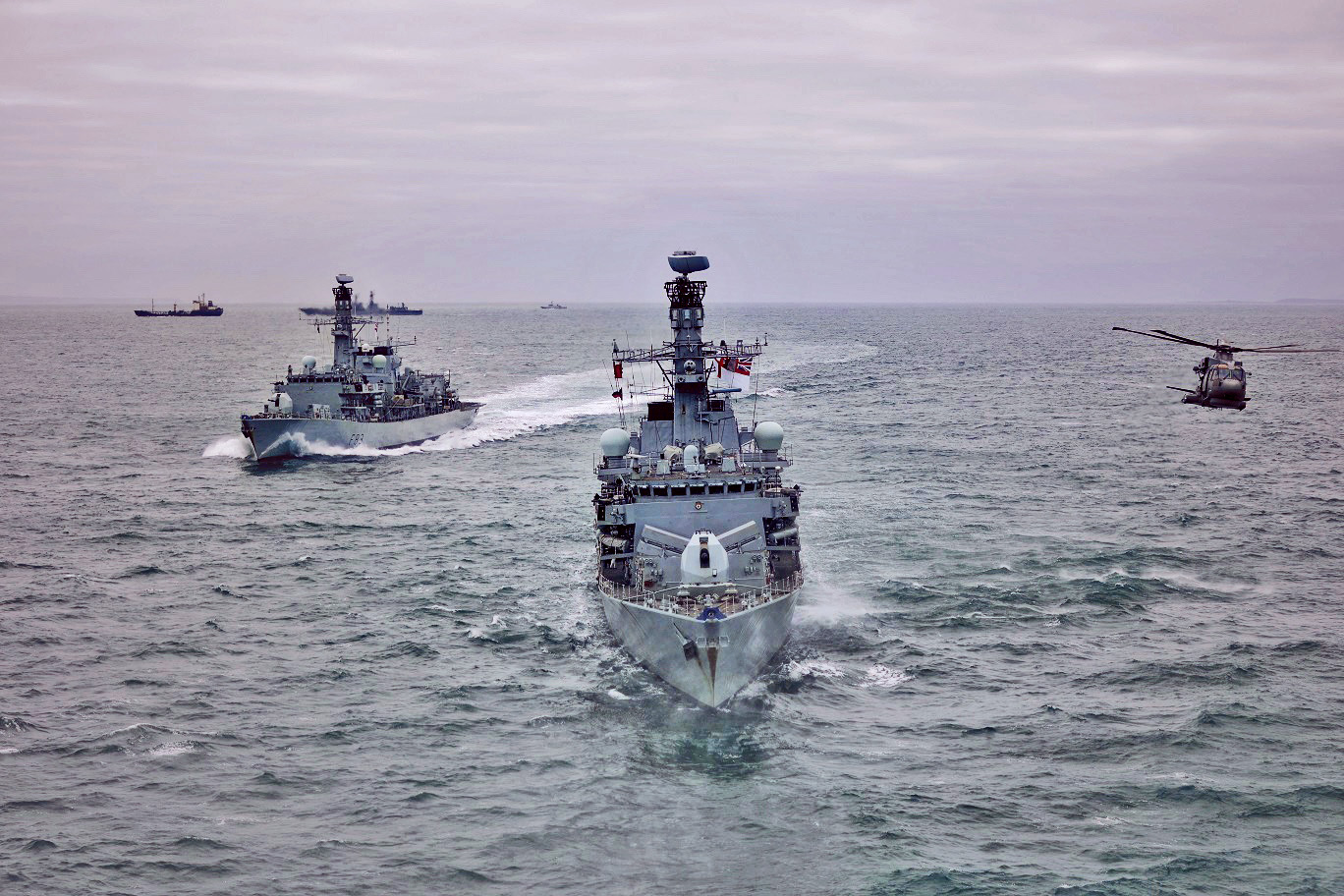
EXCLUSIVE – An independent Scotland would, the Scottish National Party believe, have a legitimate claim on its proportionate share of British military equipment but would decline to exercise it if taking the kit caused serious problems for what remained of the United Kingdom, the SNP Westminster leader told me when I sat down with him to chat all things defence.
Dave Doogan, the member for Angus and Perthshire Glens, said the ownership position is clear even if the practical answer is not: “It’s important to remember that we own the assets, all of them proportionately, at the disposal of the UK defence forces, and so we’ve got a call on them. But why would we make problems for the UK by taking our share?”
He set that against the state of the British inventory, where he argues the margin for giving anything away has long since gone: “You know as well as I do that there is very little redundancy in any platform in the United Kingdom. You know, just look at what they were trying to do to get a functioning Type 45 out to the Mediterranean recently. If we think that there are squadrons of Typhoons up and down these islands ready to go at a moment’s notice, that’s not how it is.”
On that basis he ruled out pressing a claim that damaged the rest of the UK, telling me “So if we were to claim our share of eight per cent or whatever of UK assets, and that caused major difficulties for the UK, well, we just wouldn’t do it because it’s not intelligent.”
Division of assets has been one of the hardest parts of the independence argument to pin down since 2014, when the Scottish Government’s white paper assumed Scotland would inherit a share of equipment and the then British government declined to negotiate before a vote. The eight per cent figure Doogan uses reflects Scotland’s rough share of the British population, which was the basis the 2014 prospectus worked from.
Indeed, his point about redundancy lands on a fleet that has been audited repeatedly on exactly that question. The Royal Navy’s six Type 45 destroyers have spent much of the past decade affected by the propulsion problems now addressed through the Power Improvement Project.
Doogan expects the negotiation to be conducted without rancour once the constitutional question is settled, and said the hostility between the two governments is a product of the constitutional argument itself: “That’s the world that we will actually enter after independence. It will be about constructive and mature discussion about here’s where we were, here’s where we are, where do we want to get to, and how do we do that in the best interests of an independent Scotland and the rest of the UK. Because this enmity that exists just now is a function of trying to keep the UK together. Once Scotland’s out of the UK, that enmity has no purpose anymore, and we’ll work together like grown-up and respectful states.”
He argued that cooperation would follow from self-interest on both sides, and that the rest of the UK would deal with Scotland as it deals with everywhere else it once governed: “Let’s not pretend for one minute that the United Kingdom, once all the heat has gone out of an independence debate and Scotland has chosen to be independent, the rest of the UK will cooperate with Scotland just in the same way it cooperates with every other entity and jurisdiction that used to be governed from London. It’s entirely predictable, because it’s to England’s and the rest of the UK’s self interest to cooperate with Scotland, and it’s in Scotland’s interest to cooperate with the rest of the UK.”
The loss of jurisdiction over the northern half of the island would present a problem, he accepted, and one he does not expect to be handled adversarially: “If the SNP or I have got anything to do with that, that won’t be a challenge because we’ll approach it in a cooperative way. How we do that is up for discussion. A brand new independent Scotland would not want to be undefended, but the rest of the UK would not wish a brand new independent Scotland to be undefended either.”
On the deterrent, Doogan said an independent Scotland would have no further locus once the system left Scottish waters, and would take no view on what Westminster did with it afterwards: “It’s not a Scottish asset or system, it’s a UK asset or system. And so what they choose to do with it, where they choose to berth it, whether they choose to sustain and renew it going forward into the future, that’s entirely up to the rest of the UK. Scotland will have no role in that. We’ll respect their sovereignty and their freedom of decision, and they’ll respect ours.”
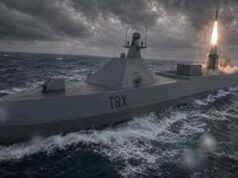
The kit Scotland would be declining to take is itself under question in his view, and he turned to the surface fleet while discussing the Type 32 frigate, the conceptual class folded into the Future Cruiser Combat Vessel programme without a commitment on where it would be built: “If I’m being honest and being fair, there is now a serious question mark about how many big grey ships you put on the surface of the sea, and how expensive and challenging it is to defend these assets now.”
He went on to set out the arithmetic that worries him, with the air defence destroyers tied to the carriers and the frigates left to look after themselves: “I don’t doubt the capabilities of Type 45, old as it is. It’s still a very potent warship, assuming it’s actually able to move itself, which is not guaranteed with 45. But it’s going to be busy defending two hulking great aircraft carriers, and so 31 and 26 are going to have to do a job defending themselves. That looks increasingly expensive against a volley, literally volley, of inexpensive, very hard to intercept drones.”
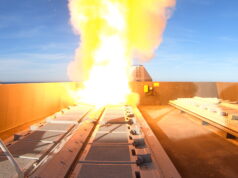
That point about escorts protecting themselves runs into an arithmetic problem the whole alliance is grappling with, because a Sea Ceptor round costs a great deal more than the one-way attack drones now being fired in salvoes at ships in the Red Sea and the Black Sea, and the Royal Navy has been working through directed energy and gun-based answers, including DragonFire, for exactly that reason. The Type 45s carry Sea Viper and Aster for area air defence, the capability the carriers depend on, and the fleet has six of them.
Doogan was also blunt about the policy architecture that was supposed to keep the yards busy into the next decade, recalling the ministerial appointments and slogans that have come and gone during his time in the Commons: “I’ve only been in Parliament seven years, and I remember when there was a shipbuilding czar. It was actually Ben Wallace, the Secretary of State for Defence. Not heard much about a shipbuilding czar recently. I remember when it was all about a shipbuilding pipeline. It was an end to boom and bust was what it was going to be. Well, it just goes to show you that those words are easy. What’s difficult is putting the resource in place to make sure that that happens.”
Doogan accepted that competing orders internationally is the straightforward part of the problem, “An anti-boom and bust and an actual pipeline of work, especially when you’re building grey ships, you have to compete it. Unfortunately, you have to compete it internationally. That’s easy. Let’s have, like, a no-brainer. What’s harder is to find the budget.”
On the wider state of conventional forces, he described a force he believes is being hollowed out around the edges, and listed what he sees when he looks at it: “If our soldiers were delighted, if our airmen felt that they had a purpose and that they could get more than a couple of flying hours a month, if our combat aircraft were properly armed, if we stopped buying systems that are fitted for but not with, because we can’t afford to put the missiles in the launch tubes that these systems have, if we weren’t practising launching artillery with two shells a day or a session, because there isn’t enough.”
He acknowledged where some of the ammunition has gone, while arguing that the replenishment should have followed: “Some of that, of course, is because we’ve sent so much artillery to Ukraine. But shells aren’t complex. We should be replenishing them, and it’s unfortunate that that money is just not there.”
Doogan put a figure on the shortfall he believes the Chancellor is facing, and drew a line around the nuclear enterprise while doing it: “You’ll need to find an extra fifteen to twenty billion for defence, and that’s going to be a real challenge. And that’s fifteen, twenty billion for the whole of defence outside the nuclear enterprise.”
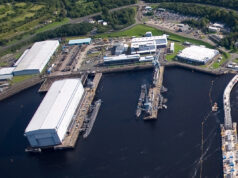
The Type 32 was announced by Boris Johnson in November 2020 as a fifth-generation class of general purpose frigates intended to follow Type 31, and it never progressed beyond concept before being absorbed into the Future Cruiser Combat Vessel work that is now running alongside the Type 83 destroyer replacement for Type 45. Rosyth has gone from assembling the Queen Elizabeth class carriers to building the five Type 31 frigates in the Venturer Building, and the sustainability of that drumbeat after the Type 31 order runs out has been a persistent concern in Fife.
Talking about British kit and Scottish yards at this length is itself a change, and Doogan has been pushing his own party in that direction for years against a habit he describes as widespread across Scotland: “Within the SNP more generally, there is a kind of tacit reluctance to engage with defence issues, for a lot of people in Scotland, not just in the SNP. Defence in Scotland begins and ends with the deterrent. There’s an awful lot more to defence in Scotland than the deterrent. But conventional defence is really important, and I’ve worked really hard to try and get that up the SNP’s agenda.”
He called the shift a positive thing and cited the First Minister’s recent visit to Babcock at Rosyth, along with a run of further visits by SNP elected members to defence establishments in Scotland, both completed and upcoming. He traced the argument back to the party’s NATO policy and what he thinks it obliges a government to do: “SNP policy is to be part of NATO. If you want to be part of NATO, you have to accept that peace and security doesn’t land at your feet. And if you don’t ensure by your own words, deeds and resources that you can do everything you possibly can to secure your peace and security, well then you’re not much use as a government to your people, and you’re not much use to your allies as a partner in peace and security.”
He said the case lands with colleagues when it is put to them directly, and that it follows from something the party already accepts about the armed forces: “When you speak to people about it, that’s not a controversial view in the SNP, and I think that’s a good thing, and it’s a work in progress, and people I think are accepting of it because actually it’s an extrapolation of, if we hold our men and women in uniform in the highest of regard, then we must hold what they do in the highest of regard, and if we do that, then we have to accept that they need to be equipped, and that allows us to hold defence manufacturers in high regard too.”
Doogan spent his career in defence engineering, working on Ministry of Defence helicopters, before entering Parliament in 2019. Asked what he would say to a young person in Scotland weighing up a career in the sector, he was unequivocal: “Any young person looking at possibly taking a job in engineering, do it. And getting a job in engineering and defence, do it, because if for no other reason, in defence you’re operating to the highest of standards in the best of conditions often, and those skills are in huge demand globally and domestically. So it’s a very good employment opportunity.”
He had made a related point at an industry event the previous evening, taking issue with the way politicians talk about employment: “Politicians have a habit of just talking about jobs in abstract, as though all jobs are equal. All jobs are not equal. Engineering jobs are an extremely attractive career proposition, and defence engineering jobs in particular are an extremely attractive employment proposition. So anybody thinking about that, I would say go on ahead and do it, because the more people that repopulate our defence sector in Scotland, the better.”
The same session covered the sub-threshold threats facing Britain and Scotland, which he put in terms of the damage they do to ordinary economic life: “Talking about the range of sub-threshold grey zone threats that we face, which aren’t in themselves the end of the world, but are a serious impediment. See Jaguar Land Rover, serious impediment to our freedom and liberty and our economy and people’s jobs.”
Doogan’s comments come a day after the Scottish Government confirmed it will match the ten million pounds offered by the Ministry of Defence to establish two Defence Technical Excellence Colleges in Scotland, ending a wait of seven months since the offer was made in March. Alyn Smith, the Innovation Minister, wrote jointly with Economy Secretary Stephen Flynn to confirm the money, with sites to be allocated in the east and west of the country covering defence engineering, advanced manufacturing and maritime technology.
The sector Doogan wants repopulated employs a substantial number of people across Scotland. BAE Systems builds the Type 26 frigates at Govan and Scotstoun, Babcock assembles the Type 31 at Rosyth, Leonardo produces radar and electronic warfare equipment in Edinburgh, Thales builds optronics and missile systems at Govan, and Raytheon operates at Glenrothes. All of them compete for the same welders, electrical technicians and systems engineers, and all of them have warned about the pipeline.
The SNP’s position on defence has moved considerably over the past two years, with the Programme for Government committing to a responsible defence industrial growth programme, a formulation that keeps public money away from munitions while backing the wider sector. Doogan describes the shift inside his own party as unfinished work.






What he means is – they could not afford to run or replace that kit.
SNP has a 10 year plan, post Independence, for a re-established Scottish Military.
In the 10 years between they expect to negotiate the withdrawal of all nuclear from Scotland, establish a headquarters at Faslane and allow the UK to continue to use Scotland as a UK training base.
So in short, no money for defence of Scotland (2% of GDP) but to rely wholly on UK until NATO membership is achieved.
I would love to hear John Swinney be as clear in his support of Scottish non-nuclear Defence as Dougan seems to be.
Their whole independence argument makes no sense. They wish to shake off the shackles of London controlling things and immediately embrace shackles from Brussels. Where is the sense in that? If England stay out of the EU there will be customs controls on every border crossing, there is no way on earth they will negotiate some kind of Windsor Framework. They will join NATO with little more to offer than airfields like Iceland.
Just more blah blah blah from the SNP – they know full well they will not be given another independence referendum for decades.
Scotland is remaining in the U.K. for a very long time.
I’m not bothered if they leave and some of what he says makes sense. If they were to design a Scottish defence policy within a wider EU cooperation framework on a small budget, they wouldn’t be looking at expeditionary capability outside the Scandinavian area, North sea.
An Indy Scotland would have a GDP about 30% less then Denmark.
So a defence budget of £5-6b ( welfare would trump defence).
A few light frigates? Could they afford SSK? Possibly not, Some MPA. Air defence such as IRIS or Nasams.
Maybe a squadron of fighters for QRA. Gripen or Rafael. Maybe some army units integrated with Norway or Sweden.
Minimal self defence capability , screened by JEF and rUK Canada,Norway T26s further North.
rUK would cut the cloth accordingly.
The political impact on England would be huge. English Nationalism unleashed and quite rightly so. I would expect a Right wing shift and a reversal of mass immigration from the 3rd world. Even if the deterrent move could be funded , supporting the cost would be a challenge.
I don’t think an English parliament would feel the need to fund the rest of the world and fight wars overseas. Priorities would change.
How that looks for an England defence force would be interesting.
This is a rather superficial assessment by Mr Allison. There is little point in keeping “kit” without the supporting elements of MoD and DE&S. Unless you’re talking about shovels and rope, all kit requires support to remain serviceable and high tech kit requires more support time than usage time. Additionally little works well without training, people need recruiting and long term contracts with UK government provide for both technical support, modifications, in-service support and initial training. Taking equipment is pointless without the above and the small scale for Scotland would be unaffordable. And that’s just Defence. Better for the UK to operate Sovereign Base Areas in Scotland like we do overseas.