

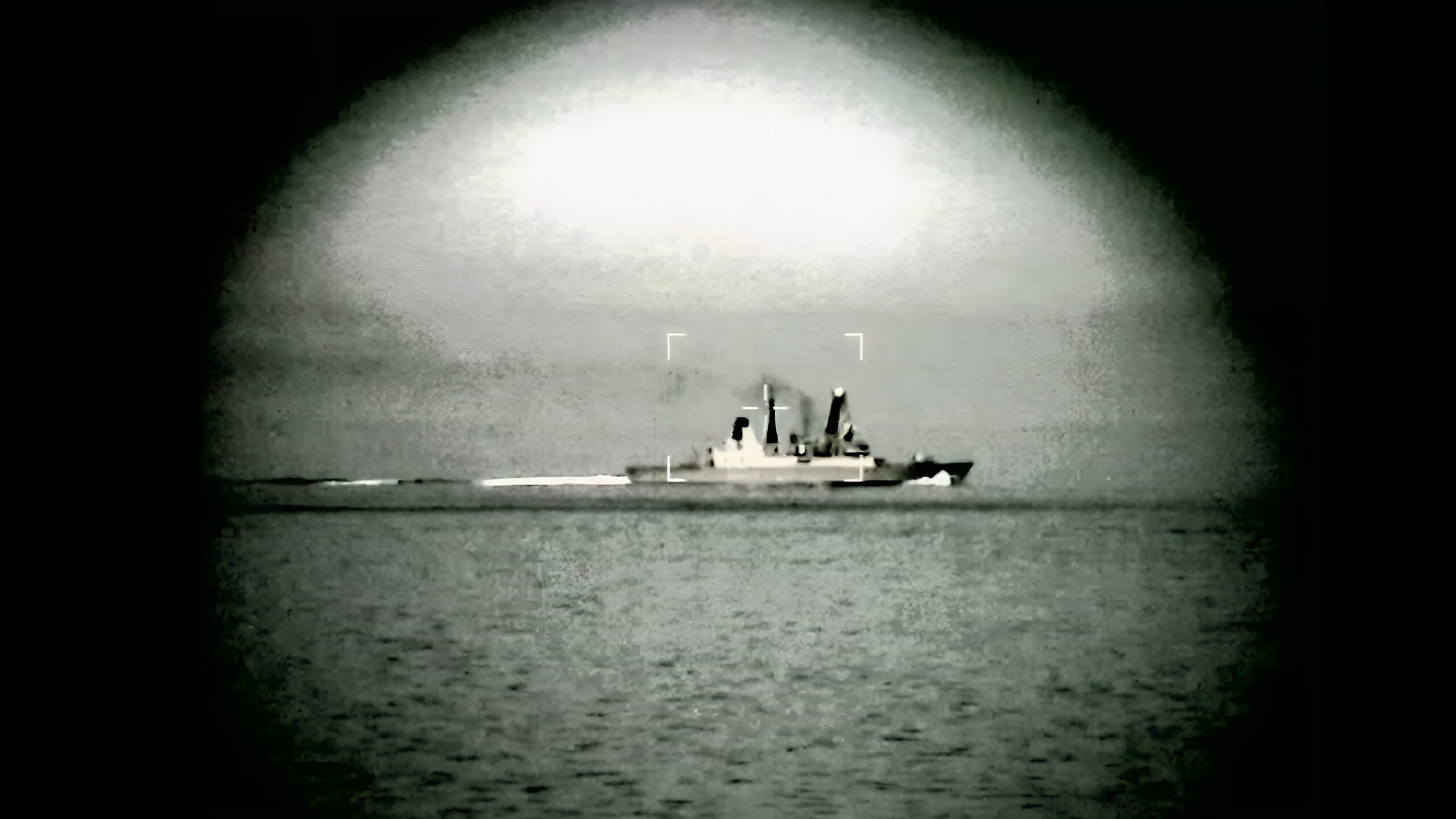
The Ministry of Defence does not want to extend the life of the Type 45 destroyers and would rather spend the money on new technology, with £1.5 billion set aside in this Parliament to initiate hybrid Navy projects, according to evidence given to the Defence Committee.
Air Marshal Tim Jones, Deputy Chief of the Defence Staff for Force Development, was giving evidence alongside Wes Streeting, the Secretary of State for Defence.
Jesse Norman, the Conservative member for Hereford and South Herefordshire, asked about the timing of the Type 45 replacement. Jones said: “As you know, the Type 45s are due to start going out of service from 2035. At the moment, we have started investment in a hybrid Navy alternative for that. You probably heard the First Sea Lord talking quite passionately about his vision for a hybrid Navy. The early investment that we are doing is to get those projects up and running so that, by the time the Type 45 starts going out of service, we have a hybrid replacement for that capability coming into service.”
Asked whether the current ships would have their lives extended, Jones said: “We don’t want to extend the Type 45. Rather than extending older platforms that cost a lot of money to run, we would rather spend the money focusing on new technology. That is what the First Sea Lord wants, and that is what we are aiming to do.”
Pressed on whether a capability gap could open before the hybrid Navy is established, Jones said: “We have almost 10 years to get the Type 45 replacement up and running. We are in a world where we are seeing innovation moving quickly and the market being disrupted by start-ups and new tech companies.”
Norman asked for reassurance that adequate capability would cover the gap and more by the time the class is retired, and Jones said: “We will.” Asked whether the replacement would be comparable or better, he said: “It should be better, because new technology will come online, and the aim is to do that in a more effective way. As to when the transition happens in detail, that is what we are working through at the moment. We do not want to extend Type 45. It is clearly an option, but it is not part of our plan.”
Luke Pollard, the Minister for Defence Readiness and Industry, told Andrew Bowie, the Conservative member for West Aberdeenshire and Kincardine, in a written answer in July that detailed planning for the transition between Type 45 and the hybrid Navy maritime air defence capability would be done with industry, “which will determine whether a Type 45 extension is implemented”, and that “a final decision is not expected until 2027-28.”
Answering James Cartlidge, the Conservative member for South Suffolk, in August, Pollard said the Defence Investment Plan contains “a specific funding line within this parliament to conduct a study” covering “whether a life extension will be required”, and that this “will be assessed in 2027-28”, as this publication reported at the time. Jones did not mention the study to the committee, and Norman was pressing on exactly the transition it exists to examine.
On funding, Jones said: “We have £1.5 billion in this Parliament set aside for initiating hybrid Navy projects, and that project team is standing up now.” He described it as a start, and said it is by no means the limit of investment.
He told the committee that the Royal Navy is “already almost on contract for an uncrewed surface vessel; the competition is in the final stages, and the results of that will be announced soon. That vessel will be in the water next year, so we are getting on with it.”
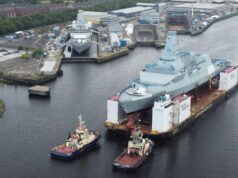
The Royal Navy operates six Type 45 destroyers, which provide the fleet’s area air defence through the Sea Viper system. The Defence Committee reported this week that it is not persuaded the Hybrid Navy allocation will be sufficient to develop, procure and integrate its five planned classes, which include a crewed Common Combat Vessel to replace the Type 45.
Streeting told the committee that innovation always involves risk and that politically “we need to be more comfortable than we sometimes are with carrying risk.” He described the First Sea Lord’s hybrid Navy concept as “genuinely world-leading” and said counterparts are actively tracking it.





There’s a plan???
Why do we seem to be the only NATO country that does not seem to see the need to invest in AAW destroyers (that has them)? Are we taking too much risk on a unproven technology that other more prudent countries are not prepared to make. Seems the MOD is playing at a high stakes table when it comes to our security. What do we do when we have bet all our money on red and it comes up black. Surely we need to have a working proof of concept before taking such a risk. Seems politicians are happy to gamble with the country’s security and money that is not theirs. Something’s never change!
Passion is what matters…
I don’t think France is planning a dedicated Horizon replacement yet but a MLU? But them they have Aster 30 on more platforms , including the FDI, much wider landscaping based GBAD and a carrier with Hawkeye.
Others are those. I think unmanned will be add ons to big Air defence vessels.
No one believes this is choice, not budget driven though. The RN chose 2 large carriers over escort numbers. The SSN dock modernisation is a vastly expensive project, let alone Dreadnought. They now have to sing the tune.
Seems to be a massive rush to hybrid and what about all the millions being.spent currently on the T45s? Doesn’t seem like they’re getting good value if just for next 10 years. Why not have a mixed fleet of T83s and complementary T91/T94s? Is the hybrid fleet going to be as effective over longer deployments and if they also need a tender/mothership is that going to be a hindrance to ops? Can you imagine port visits and having to park all these bits and pieces of a hybrid fleet. And if one piece breaks down will that reduce the effectiveness of the whole?
The new hybrid fleet AD system absolutely must start to be fielded in 2035 then. I doubt it will be!
Maybe the inbuild T31s could also get a bit of a AAW upgrade to their capabilities for bit of a gap filler?
So Brazil has a requirement for some Type 45s from 2035? Suppose we could get a couple of million each for them and Brazil should get a few years service.
In 10 years the UK has just about built one Type 26 anti-submarine platform largely based on existing technology. To suggest we will develop the new Hybrid Navy using wholly new technology based around multiple new platforms in the same timescale is absurd. What is really scary is the people in charge will hamstring the limited remaining capability. This guarantees the loss of one of the few remaining ‘real’ capabilities starting in 9 years, unbelievable. The alarm bells are ringing, but no one, bar the Defence Select Committee, notices.
Move along there. Nothing to see; just the RAF doing what it does best, try and sink the Royal Navy. I’d actually forgotten the RAF had a man in charge at present.
This sounds less like new information, and more akin to a repetition of the ‘Hybrid Navy’ mission.