

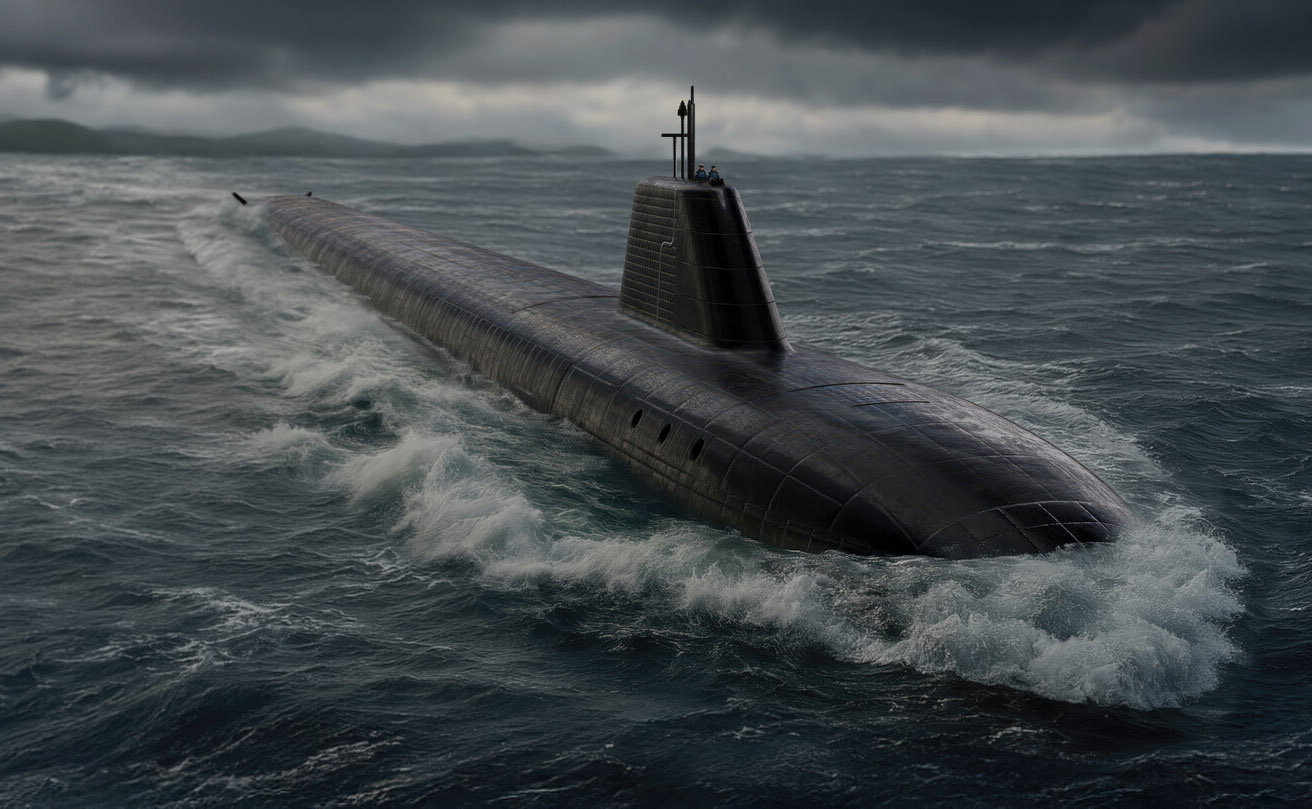
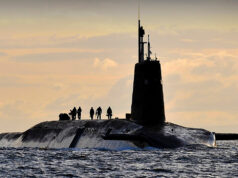
Ministers have confirmed that good progress is being made in developing and manufacturing the Rolls-Royce PWR3 reactor for the Dreadnought class submarines, and that reactor components remain on course to support the first boat entering service in the early 2030s as planned, according to an answer given in Parliament.
Ben Obese-Jecty, the Conservative member for Huntingdon, asked the Secretary of State for Defence what progress he had made on delivering the Rolls Royce PWR3 reactor for Dreadnought.
Luke Pollard replied: “Good progress is being made in developing and manufacturing the PWR3 reactor for the Dreadnought Class submarines. The Ministry of Defence continues to work closely with Rolls-Royce Submarines to ensure delivery of the reactor components in time to support Dreadnought entering service in the early 2030s as planned.”
PWR3 is the first wholly new British submarine reactor design since PWR2 entered service in the Vanguard class in the 1990s, developed by Rolls-Royce Submarines at Derby with design input drawn from American practice under the Mutual Defence Agreement. The plant is intended to run for the life of the boat without refuelling, which removes the mid-life refuelling docking that Vanguard required and changes the availability arithmetic across a four boat force.
Rolls-Royce has doubled its Derby site under a contract worth around nine billion pounds covering reactors for both Dreadnought and SSN-AUKUS, and has been recruiting at a rate the company has not managed since the Cold War. Reactor components are among the longest lead items on any submarine, so they drive the build schedule at Barrow.
Dreadnought replaces the Vanguard class on continuous at-sea deterrent patrol, four boats carrying Trident D5 missiles, with the first entering service in the early 2030s after a programme the National Audit Office has repeatedly flagged for schedule and cost pressure. The Vanguards are already serving well beyond their design lives, and patrol lengths have stretched past six months as a result.



Good. At last we are focusing on producing quality at speed.
Factual error in the article. Core H as installed in V and A boats was designed for no refuelling for the life of a boat, and that is still the case for both classes. Vanguard’s core was electively replaced after a potential cladding issue with her core was noticed at the Core H test facility at HMS Vulcan.
I think you will find he is referring to Vanguard as a class rather than as a singular Boat, all 4 had the mid life LOP(R) with new Core H’s, HMS Vanguard was the only one that required a 2nd unscheduled LOP(R) and that really put a spanner in the refit / maixtenance schedule.
How odd, I know he likes asking questions but all he had to do was ask the last 2 Conservative Defence Secretaries. After all it was them that had oversight of the Dreadnought project and ordering the long-lead bits for SSN-A.
I’d just draw attention to the word “intended” in reference to the need for a future LOP(R), same thing was said about the Astutes, and just because it shouldn’t be needed doesn’t mean it can’t actually be done.
It’s an interesting contrast that France uses LEU and requires scheduled refuelling during the vessels lifetime and they design their boats specifically to enable that to be done reasonably quickly. We however use HEU and the modern cores (Type H onwards) shouldn’t need to be refuelled at all. So we don’t go to the lengths the French do to make it easier or quicker but it can still be done.