

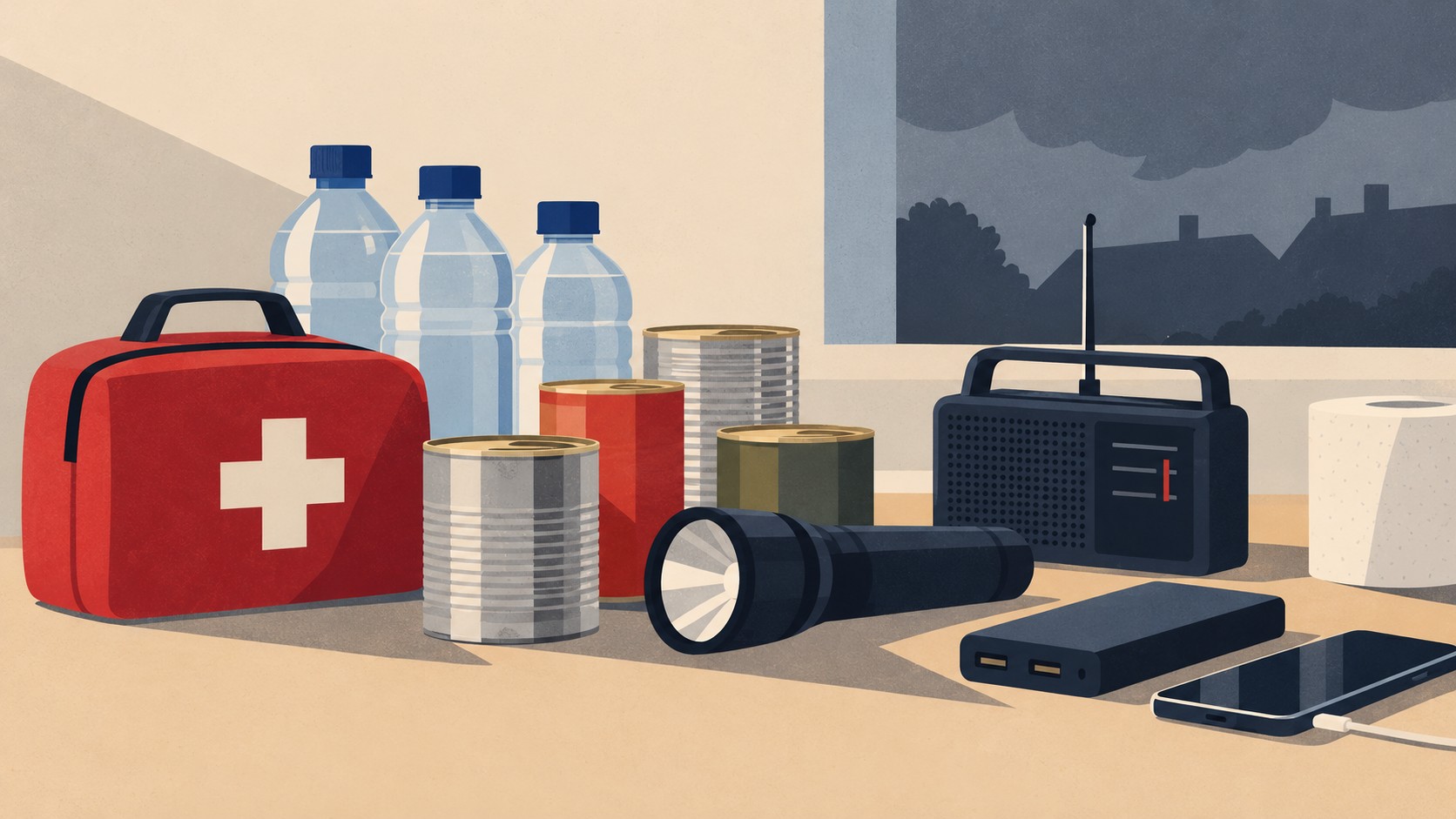
Households across Britain are being asked to keep enough supplies to manage three days of disruption to power, water, phones and the internet, under a campaign launched today that forms the first stage of a three-year programme, according to the government.
The Be Ready campaign is run by the Cabinet Office and published alongside a campaign website and a downloadable checklist. More than five hundred organisations across the United Kingdom have signed up to share the materials.
Dan Jarvis, the Security Minister, said: “Those who can follow this advice should follow this advice.” He said the campaign would bring Britain into line with European counterparts where such advice is part of everyday life, and added: “This is just the sort of community-focused campaign the UK needs to improve our resilience as a nation.”
The three-day figure matches the guidance used in France, Ireland and the Netherlands.
The checklist covers nine categories, and on water it asks for bottled water for three days at three litres per person per day for drinking, noting more would be needed for cooking and washing. On food it asks for non-perishable items with a long shelf life that need no refrigeration or cooking, such as tinned meat, fish or vegetables, dried fruit and nuts, and advises buying food people would usually eat.
Other categories cover hygiene products, a torch with spare batteries, blankets, sleeping bags and warm clothing, a battery or wind-up FM radio and a charged power bank, cash in a mix of coins and notes alongside cards, copies of identity documents, important phone numbers including regular medication and doses, a first aid kit, essential medication, baby formula and nappies, and pet food.
On formula the checklist specifies ready-made or ready-to-feed products, because households may not be able to boil water safely to make up powdered formula.
The guidance tells people to check cupboards first, build the kit gradually during regular shopping trips to spread the cost, set a reminder every six months to check expiry dates, and talk to neighbours about what support they could share during an outage. It also suggests donating spare items to others who might not have the means to prepare, or printing documents for them.
Laura Scott, British Red Cross Director for UK Resilience, said: “We can’t control when emergencies happen, but we can all take some simple steps to be prepared.” She said local people know their communities best and want to play a part when a crisis happens, and that clear and trusted advice, especially for those more at risk, could reduce the impact of crises and save lives.
The campaign also directs people to the Priority Services Register, a free scheme that helps utility companies identify customers who may need extra support during an outage, and to Met Office weather warnings. Scotland and Northern Ireland have their own versions of the advice. Social media and radio advertising over the coming weeks and months will target families with young children and older people.
The campaign arrives alongside a substantial body of government work on resilience, and ministers confirmed this month that a Defence Readiness Bill will be brought forward before the end of this Parliament to give government the powers it needs to respond during escalation towards war, and that government messaging on defence and security will continue to build ahead of Exercise ALBISTON SHADOW, a major British home defence exercise, and NATO’s Crisis Management Exercise in spring 2027.











Preparing us for a tactical nuke in the event our Govts policy of welfare before defence doesn’t actually deter Putin?
Or perhaps in case our diverse and strong communities start looting and setting fire to stuff?
Or they know wind turbines and solar doesn’t produce enough energy, lack of back up sources crash the grid and prove that net zero is a farce?
AI cyber attack crashes the benefit system and there are angry mobs of the anxious, ADHD and bad back claimants?
If things are looking that serious shouldn’t the Gov stop cutting defence capability?
17,000 toilet rolls.
I saw that at the beginning of COVID.