

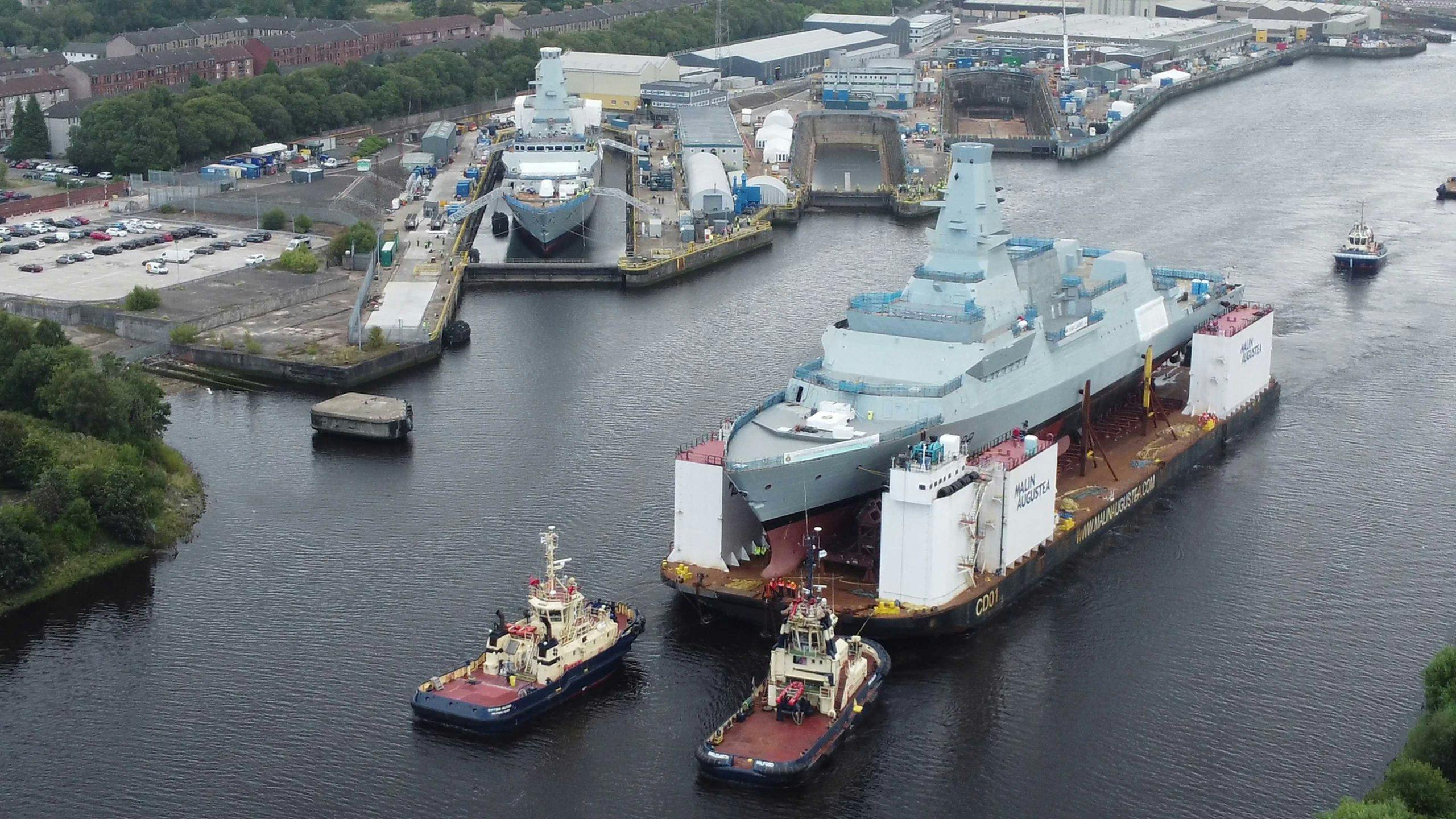
The Liberal Democrats have proposed ordering six additional Royal Navy frigates and expanding British shipbuilding capacity as part of a defence package aimed at responding to the threat from Russia, according to plans published by the party.
Under the proposal, three additional Type 26 anti-submarine warfare frigates and three additional Type 31 general-purpose frigates would be ordered for delivery by the mid-2030s.
If added to existing government plans, the proposal would increase the planned Type 26 fleet from eight ships to 11 and the Type 31 fleet from five to eight. The government currently intends the two classes to form the core of the Royal Navy’s future frigate force alongside at least six Common Combat Vessels replacing the Type 45 destroyers.
The Liberal Democrats estimate that three additional Type 31 frigates would cost around £1.2 billion, based on an assumed unit cost of approximately £400 million in 2025/26 prices. The party puts the cost of three additional Type 26 frigates at £2.85 billion, using an estimated cost of around £950 million per ship.
A further £370 million would be allocated from the party’s proposed Defence Bonds scheme towards additional shipbuilding infrastructure.
The party describes the policy as providing funding for four new shipyards, although the detailed costing accompanying the announcement says the £370 million figure is based on constructing two further facilities at approximately £185 million each, using BAE Systems’ Janet Harvey Hall on the Clyde as its benchmark.
The frigate orders and shipbuilding allocation amount to approximately £4.42 billion of capital spending under the party’s published assumptions.
The Liberal Democrats also propose increasing the Digital Services Tax from 2 per cent to 10 per cent and using part of the additional revenue to meet personnel and maintenance costs associated with the expanded fleet.
The party says there are no current official estimates available for the through-life operating costs of the Type 26 and Type 31 fleets. Its own calculations assume annual running costs of £20 million for each additional ship by 2034/35, producing an estimated £120 million annual cost for the six vessels.
Liberal Democrat Defence Spokesperson James MacCleary MP said: “We cannot afford to sit on our hands while Putin’s aggression intensifies and our national security weakens. We need a plan which gives confidence to British industry and allows our manufacturers to get on with delivering for Britain’s long-term security.
“By investing now in six new warships and by expanding our ship-building capacity with four new British shipyards, we can regenerate our fleet, protect our vital underwater infrastructure, and ensure Britain has the defence capabilities we need to stand up to the Kremlin.”
The announcement follows a Defence Committee report published on 22 October which warned of serious capability gaps affecting British operations in the High North.
The committee said publicly available evidence of low availability among frigates, destroyers and attack submarines raised questions about the UK’s ability to meet its commitments in the region, while warning that Russian submarine and sabotage activity presents risks to undersea infrastructure and North Atlantic reinforcement routes.
The Liberal Democrats also cited polling conducted by Savanta between 29 May and 1 June 2026 involving 2,234 UK adults. According to the results commissioned by the party, 60 per cent said the government was either probably or definitely not doing enough to protect critical infrastructure from Russian attacks, compared with 26 per cent who believed it was doing enough. Fourteen per cent answered that they did not know.
The party argues that additional orders would also provide a longer and more predictable workload for British shipbuilding, allowing yards and suppliers to invest in workforce and infrastructure with greater confidence.
The government’s existing shipbuilding programme includes eight Type 26 frigates and five Type 31 frigates, while the wider Hybrid Navy plan also envisages new crewed and uncrewed vessels operating together. The 2025 Strategic Defence Review placed particular emphasis on the Type 26 as part of Atlantic Bastion, the Royal Navy’s approach to countering the growing submarine threat in the North Atlantic.
The Liberal Democrat proposal would go beyond those numbers by adding six crewed frigates to the planned force, with the party arguing that the additional hulls should be ordered during the next Parliament and delivered by the mid-2030s.





A pity they are entirely irrelevant, and we all know what would happen the moment they got in.
“New ships? What new ships? We never said anything about new ships.”
No danger they will get in.
Odd thing is where did they come up with the figure of six. A bit random.
Now if they said we will give the armed forces everything they need – I would have been more impressed.
Doesn’t invalidate your second sentence though.
It’s a cop-out. Oh, you need six hulls to replace those T45? Six frigates, easy, manifesto fulfilled, money saved.
Yes, becuase we are looking at six CVVs, and sounds like they will just buy the arrowhead 140. Basically, they will buy something that is already planned. I doubt they will buy anymore Type 26, other than replace the the ones we have promised Norway. Basically, bait and switch and then call it a win for frigate numbers. Yes, a cop out.
When I say planned for ccv, I mean the current outline for replacing the Type 45.
I would go 6 x T31 to polish spec plus the abilty to command the envisaged drone fleet. If that drone concept proves a step too far you still have 6 very capable frigates. At that point you commit to a t83 concept and eventually sell on the batch 1 T31. Should drone command concept prove robust then commit to those command ships, retain t31 batch 2 and again..on sell T31 batch 1
Meani gless gesture politics.The Libdems are never going to get anywhere near power.
Well, they did in 2010 and if they had exercised that power more responsibly they would have taken a chunk of votes away from Starmer.
No, thanks to them for trying.
3 more rafted T31s with bow sonar and TAPs
However, 4 more T26.
That would have brought us to 26 Escorts, add in 12 Standed Norwegian vessels and the RN would have been in a much better shape.
Now, where are the crew coming from? I ask because, last week there was an article that stated that the retired SSN and SSBN all had to be manned in the nuclear safeguarding role and I can’t help thinking there must be a fair few bods for 19(?) boats.
We need razor blades people, not decommissioned boats sat alongside.
Well going back to the real world a minute unmanned seems to be what the RN is asking for not T26 or T31.
In which case people are not going to be the issue.
Shows a lack of understanding. Buying 3 more, essentially useless, T31 which are obsolete before they have entered service is clueless.
It’s obviously not a serous proposal that has any chance of happening. But when even the LibDems are proposing a boost to the RN you know: (1) things are really really bad; and (2) there a cross-party consensus for the first time in many many decades (1950?) that increasing rather than cutting UK defence spending is a real priority. The big question now is will Healey deliver on defence spending in his first budget since resigning as Defence Secretary and then becoming Chancellor.
There are few if any votes in defence. It would make sense for a cross party ( excluding the lunatic fringe) committee to take a bigger role in defence decisions. It might,just, help to avoid the short termism that has harmed defence planning for years.
But increasing escort numbers from 19 to 25 is pretty unrealistic and perhaps unnecessary.