
The Ministry of Defence intends to raise the maximum take-off weight allowed under the British Army’s mini drone contract from twenty kilograms to fifty, and to confirm that the contract covers flights beyond visual line of sight, without running a new competition, according to a transparency notice published by the department.
The TIQUILA contract was awarded to Lockheed Martin UK on 7 December 2022 and is worth £129,350,000 excluding VAT. It runs for one hundred and twenty months, with options to extend by up to a further twenty four months and to vary the volume of goods and services delivered.
The notice says the department proposes “to broaden the contractual technical envelope so that TIQUILA can continue to procure and integrate relevant UAS capability as technology and operational demands evolve”, and that the change will “confirm the inclusion of VLOS and BVLOS Packable MUAS capability” and “increase the platform take-off weight from a maximum of 20kg to 50kg”.
Arguing that it can make the change without a fresh procurement, the department says: “The modification does not change the contract into a requirement for a different category of capability. The requirement remains focused on UAS capability supporting field operations through the existing SI-led model, while accommodating unanticipated technological advancement beyond the parameters originally defined.”
It goes on: “It preserves the commercial model, of engagement with the wider UAS market and new entrants through flexible supply-chain arrangements; supports the same field-operational purposes and retains the same SI-led integration, modular architecture and through-life delivery model, while responding to technological advancement and developing operational demands in the manner contemplated by the original procurement, and is therefore considered a vertical evolution of the existing UAS capability, rather than horizontal expansion.”
The department says all pricing mechanisms stay the same, that it considers the change a permissible non-material modification under the principles established in the Pressetext case and the Defence and Security Public Contracts Regulations 2011, and that it published the notice voluntarily to provide transparency.
TIQUILA delivers mini uncrewed air systems for intelligence, surveillance, target acquisition and reconnaissance in packable and portable loads, with Lockheed Martin UK acting as systems integrator and bringing in other suppliers through enabling arrangements intended to reach new entrants, industry and academia. The original scope required a modular technical and digital architecture built on open-standard interfaces so that new capabilities could be integrated as they emerged.
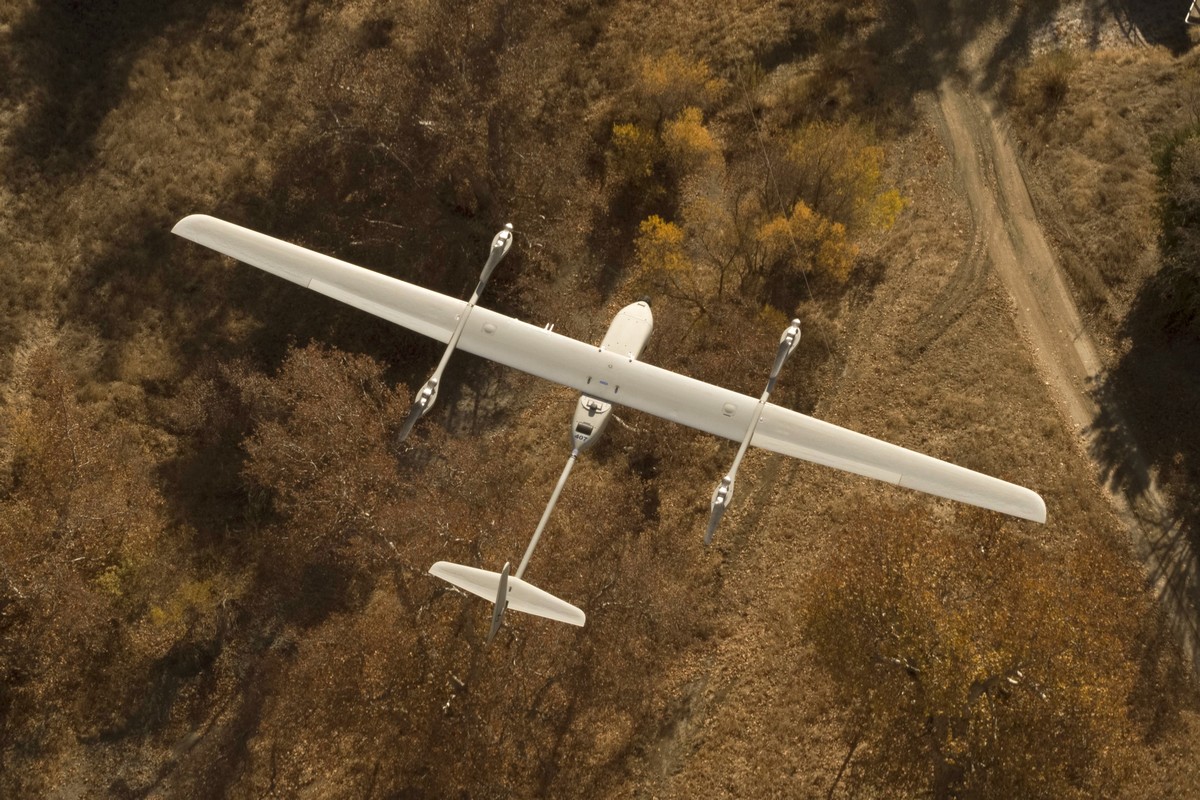
The aircraft bought under the programme so far are the Stalker VXE 30, a near-silent long-endurance machine weighing under twenty kilograms, and the Indago, a backpack-sized aircraft under eight kilograms that can be put in the air in around two minutes. Ninety nine Stalkers and fifteen Indagos were ordered, deliveries began in March 2023, and full operational capability for four Future Soldier batteries was expected this year, as this publication reported when the contract was signed.
Brigadier Pete Drew, the Army’s senior responsible owner for the programme, said at the time that “TIQUILA will bring the next generation of remotely piloted air systems into service in the Army”, and that it would speed up decision making and make the force more lethal, responsive and resilient.
Raising the ceiling to fifty kilograms takes the contract past the weight of anything currently flying under it and into a class of aircraft carrying heavier sensors and flying longer. Louise Sandher-Jones, the Minister for the Armed Forces, told Parliament this week that military flights beyond visual line of sight use temporary segregated airspace notified through the warning system pilots check before flying, or permanent segregated airspace such as danger areas, with the Civil Aviation Authority responsible for United Kingdom airspace throughout.