


The Ministry of Defence intends to raise the maximum take-off weight allowed under the British Army’s mini drone contract from twenty kilograms to fifty, and to confirm that the contract covers flights beyond visual line of sight, without running a new competition, according to a transparency notice published by the department.
The TIQUILA contract was awarded to Lockheed Martin UK on 7 December 2022 and is worth £129,350,000 excluding VAT. It runs for one hundred and twenty months, with options to extend by up to a further twenty four months and to vary the volume of goods and services delivered.
The notice says the department proposes “to broaden the contractual technical envelope so that TIQUILA can continue to procure and integrate relevant UAS capability as technology and operational demands evolve”, and that the change will “confirm the inclusion of VLOS and BVLOS Packable MUAS capability” and “increase the platform take-off weight from a maximum of 20kg to 50kg”.
Arguing that it can make the change without a fresh procurement, the department says: “The modification does not change the contract into a requirement for a different category of capability. The requirement remains focused on UAS capability supporting field operations through the existing SI-led model, while accommodating unanticipated technological advancement beyond the parameters originally defined.”
It goes on: “It preserves the commercial model, of engagement with the wider UAS market and new entrants through flexible supply-chain arrangements; supports the same field-operational purposes and retains the same SI-led integration, modular architecture and through-life delivery model, while responding to technological advancement and developing operational demands in the manner contemplated by the original procurement, and is therefore considered a vertical evolution of the existing UAS capability, rather than horizontal expansion.”
The department says all pricing mechanisms stay the same, that it considers the change a permissible non-material modification under the principles established in the Pressetext case and the Defence and Security Public Contracts Regulations 2011, and that it published the notice voluntarily to provide transparency.
TIQUILA delivers mini uncrewed air systems for intelligence, surveillance, target acquisition and reconnaissance in packable and portable loads, with Lockheed Martin UK acting as systems integrator and bringing in other suppliers through enabling arrangements intended to reach new entrants, industry and academia. The original scope required a modular technical and digital architecture built on open-standard interfaces so that new capabilities could be integrated as they emerged.
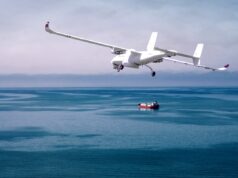
The aircraft bought under the programme so far are the Stalker VXE 30, a near-silent long-endurance machine weighing under twenty kilograms, and the Indago, a backpack-sized aircraft under eight kilograms that can be put in the air in around two minutes. Ninety nine Stalkers and fifteen Indagos were ordered, deliveries began in March 2023, and full operational capability for four Future Soldier batteries was expected this year, as this publication reported when the contract was signed.
Brigadier Pete Drew, the Army’s senior responsible owner for the programme, said at the time that “TIQUILA will bring the next generation of remotely piloted air systems into service in the Army”, and that it would speed up decision making and make the force more lethal, responsive and resilient.
Raising the ceiling to fifty kilograms takes the contract past the weight of anything currently flying under it and into a class of aircraft carrying heavier sensors and flying longer. Louise Sandher-Jones, the Minister for the Armed Forces, told Parliament this week that military flights beyond visual line of sight use temporary segregated airspace notified through the warning system pilots check before flying, or permanent segregated airspace such as danger areas, with the Civil Aviation Authority responsible for United Kingdom airspace throughout.



I have always thought it perverse that the govt taxes us (Vat) to defend ourselves from attack.
It doesn’t Richard.
Suppliers are Vat registered and required to charge vat. The suppliers (in the UK) that supply the supplier will charge them VAT.
Each company must charge Vat (and pay it to HMG) but will be able to recover any Vat it pays out.
As all Vat is paid into HM Treasury and all Government bills are paid by HM Treasury (including Vat) you will see that the Vat charged and recovered will cancel itself out.
Incestuous!
We are not a serious military
Lol. Where did that come from. Having a bad day?
Just me, our military is as good as any other country I would imagine. However, not all European governments are taking the Russian threat seriously enough. As for the UK, we talk big but kick important issues down the road; hence yet another defence investment reveal next year and all the time, the tumour grows and grows.
The UK armed forces are living on the last fumes of what they were more than a generation ago.
Go compare 1990 with today.
Just me; you are correct about any comparison with 1990, as the Military Balance of that time will testify, but the current state decline is at last being addressed. Sadly, our current foe is not so much Russia but a battle in Whitehall between defence, welfare and national debt. Unless Russian tanks are charging down the Mall, nothing will really change. The current riots in Europe prove that welfare is the stronger political persuasion right now.
Every military has shrunk in physical size since 1990. The cold war ended.
Personally I think the tech has improved massively especially among western Countries.
You are just being negative.
Really?
We have almost no tubed artillery, not enough MRLR by a country mile.
Tanks? Yeah, mech armour? Yeah.
We lost all our mass and pretty much all our lethality. The British army is little better than a constabulary force.
The Navy? OFFS! One operational Submarine, one operational Frigate, one operational Destroyer, one operational tanker.
Not all the shrinking has been a reduction in capability. 90s bombers would need to drop cluster ammo to have a hope of hitting a target, whilst modern guided missiles will hit the target with one bomb. Resulting in needing one jet instead of a dozen to hit the target. Obviously it’s not quiet that simple as the opposition has also moved forward but direct comparisons to past periods doesn’t tell the whole story.
Well yes, cluster munitions – we were very big users and very fond of them.
MLRS – Grid Square Removal Tool. Not no more, we use Saint Diana friendly unitary warheads. Alas, the bad people still use steel rain.
Bombers? We don’t do bombers no more – Typhoon is not the long ranged heavy hitter Tornado and Buccaneer was.
Across all services we totally lack mass and lethality.
All this talk of fighting Russia?
What was it WORF used to say? Ah yes – ‘Today is a good day to die’ – and UK forces would die fast – bravery but fast.
Its hard to tell with Russia. The UK wouldn’t be alone as we are several counties apart and combine a few NATO European countries and we would rapidly achieve air dominance above the drone threat and then could start wiping out Russia logistics and storage sites. Pure mass of troops would be an issue, but at this point Russia doesn’t have a trained army and potentially could be out manuvored to make up for the lack of mass and don’t forget Russia is using concripts and so would NATO and the numbers could be achieved fast. The big question though is the drone threat, NATO just isn’t ready to deal with it. Russia tactics these days are small ambush units rather than large numbers combined with large volumes of drones and that would still be an issue.
I don’t think Russia is the big threat people make out it is, as long as Europe acts semi together. Fully together will never happen. For example turkey has close to 500k troops.
Plus don’t write off Ukraine. They have held off Russia alone and I’m sure if the war ever ended up Russia attacked Europe, they would be there to help. Im sure they won’t have forgotten the support provided by Europe in their hour of need.
That is I’m sure consolation of the week for the front line units that get wiped out in an hour of it all kicking off.
That wouldn’t happen. The numbers would massive out number Russia. Russia is a shadow of it’s former self.
What a naive chap you are
Based on what. Ukraine doesn’t have nearly the tech of NATO and isn’t suffering major losses. Russia on the other hand is
Russia – population 145 million – 1 million active duty, 2 million reserves – can afford loses.
At the attrition rates in Ukraine, the entire British army would be wiped out in a matter of weeks.
Nato counties population 624m with 2.3m service personnel incl reserves. That’s before any call up.
You have to remember Russia’s pre war army is gone almost fully and it’s struggling to fill numbers and not doing so faster than it’s losing troops. That’s again only Ukraine. A war with Europe would be ukraine plus 20-30 other counties. That haven’t even started calling up people. Russia can’t beat Ukraine do you really think they would stand a chance against Ukraine plus a dozen or more NATO countries.
We do lack mass and lethality, you are correct in that, but that’s about the only thing you are correct in. Yes we had more kit in the 90s, so did everyone else, but you cannot compare a Bucc to a Typhoon, a Chieftain to a Chally 2, even the personal kit per person, 58 pattern to todays kit! Unitary warheads (for example GLMRS) are a more efficient use of destructive power fire mission than cluster (different target uses). Yes the military is neglected but your appraisal and comparison is so far out of date and mostly irrelevant to todays combat. Numbers do count, and HMG needs to get its arse in gear to increase mass and depth, but 90s comparisons are no longer relevant. Cheers.
Meanwhile, the Russians and Ukrainians are knocking lumps out of each other with very destructive 90’s kit. Steel rain is still unmatched for making infantry go away.
Not quite, the most effective way to remove infantry from a position is er, more infantry, as Ukraine has shown. Artillery has shown to cause the most casualties in all arms of service, and much is of (upgraded) 90s stock, but the targeting and observation systems are not, and those are modern western systems. War is never quite as simple as you may perceive.
Just Me….why? Because the army want a drone woth a bigger payload?
We buy penny packets of equipment – numbers so small, they would be used up in hours of fighting. Not months, not weeks, not days – hours.
“Ninety nine Stalkers and fifteen Indagos were ordered, deliveries began in March 2023, and full operational capability for four Future Soldier batteries was expected this year, as this publication reported when the contract was signed.”
Hmm. It was reported that the original order was for 106 Stalker and 159 Indago 4, not just 15!?
Stalker is known as Eagle in the British Army, Indago 4 as Kestrel.
I have the the 4 Batteries mentioned as:
22 ( Gibraltar 1779 – 1783 ) Battery.
18 ( Quebec 1759 ) Battery.
21 ( Gibraltar 1779-83 ) Air Assault Battery.
42 ( Alem Hamza ) Battery.
32 RA also operate the Tekever AR3 EVO, number bought not disclosed AFAIK.
Assume making them heavier will include ability to drop ordnance like seen in Ukraine.
The British army really needs to start buying large numbers of cheap FPV drones and start widespread practicing expending those to develop its doctrine.. both offensively and defensively.
I understand it has, and is. Several thousands I believe, unsure on which types.
Chicken feed, but still.
Unfortunately, due to this governments continuing defence cuts and smoke and mirrors, ably assisted by the military not publishinh data, it’s very hard to keep track.
I’m with you, deterrence demands you wave your big stick and show exactly what an enemy has in store.
We do the reverse to hide what HMG is doing.