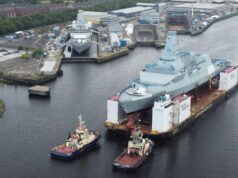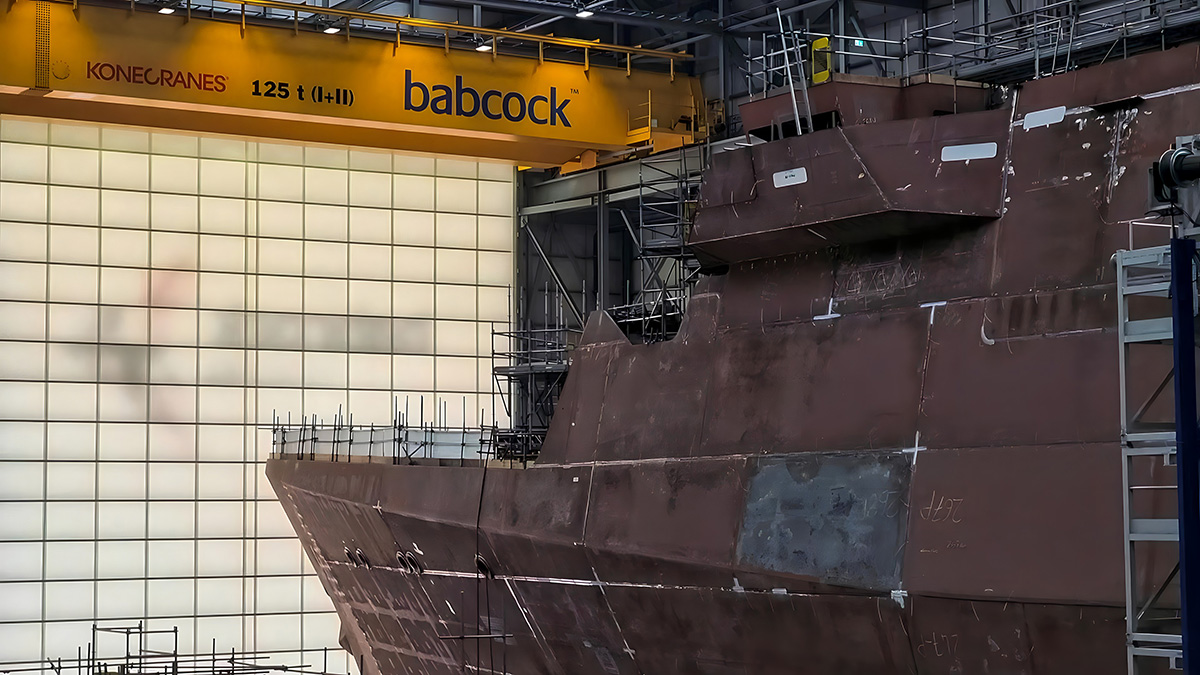
Three more Type 31 frigates, three more Type 26 frigates and four new shipyards should be funded through defence bonds and delivered by the mid-2030s to counter the threat from Russia, according to the Liberal Democrats.
The party published the proposal alongside polling it commissioned, which found that sixty per cent of people think the government is not doing enough to protect Britain’s critical infrastructure, including undersea cables, from Russian attack.
James MacCleary, the Liberal Democrat defence spokesperson, said: “After years of the Conservative Party underinvesting in our military, we are now dangerously exposed and woefully unprepared. Russia is actively, and brazenly, testing the limits of our naval defence capabilities – but Labour has dragged its feet on investing properly in our defence.
“We cannot afford to sit on our hands while Putin’s aggression intensifies and our national security weakens. We need a plan which gives confidence to British industry and allows our manufacturers to get on with delivering for Britain’s long-term security.
“By investing now in six new warships and by expanding our ship-building capacity with four new British shipyards, we can regenerate our fleet, protect our vital underwater infrastructure, and ensure Britain has the defence capabilities we need to stand up to the Kremlin.”
The party said it would raise the Digital Services Tax from two per cent to ten per cent and use part of the proceeds to cover crewing and maintenance. It acknowledged that no estimates exist for the in-service costs of either the Type 31 or the Type 26, despite parliamentary questions pressing the government for them, and extrapolated an assumed £20 million a year for each ship from 2018 estimates for the Type 23 and Type 45, giving £120 million a year for six ships in 2034/35 terms.
On the threat, the party cited the Royal Navy spending twenty five per cent more time monitoring Russian vessels around British waters, a Russian warship firing warning shots at a yacht off the Isle of Wight in June, and a Russian attack submarine and two intelligence submarines loitering over critical undersea cables in the North Atlantic for a month in May. It also raised Russian escorts for sanctions-busting tankers passing through the Channel.
The polling was carried out by Savanta, which interviewed 2,234 United Kingdom adults online between 29 May and 1 June this year, weighted to be representative by age, sex, region and social grade. Respondents were told that the head of the United Kingdom’s intelligence and security agency has warned of relentless attacks from Russia on critical infrastructure, and asked whether the government is doing enough to protect it. Five per cent said definitely, twenty two per cent probably, thirty nine per cent probably not and twenty one per cent definitely not, with fourteen per cent unsure. Concern ran highest among older respondents, at sixty seven per cent of those aged fifty five and over against fifty one per cent of those aged eighteen to thirty four.
The Defence Committee reported last week that dramatic progress is needed in building up British forces and ships for the High North, and the Liberal Democrats argued that the Strategic Defence Review set a compelling vision for the hybrid Navy while the Defence Investment Plan failed to provide the resources to rebuild the fleet.