Canadian warship crews have had “a lot” of input into the design of the Royal Canadian Navy’s new River-class destroyers, according to the commanding officer of one of the frigates they will replace.
Commander Jason Knowles commands HMCS Ville de Québec, a Halifax-class frigate now more than 30 years old. Speaking to the UK Defence Journal on board in Stockholm, ahead of NATO’s Exercise Dynamic Merlin in the Baltic, he said serving crews had been closely involved in shaping her successor.
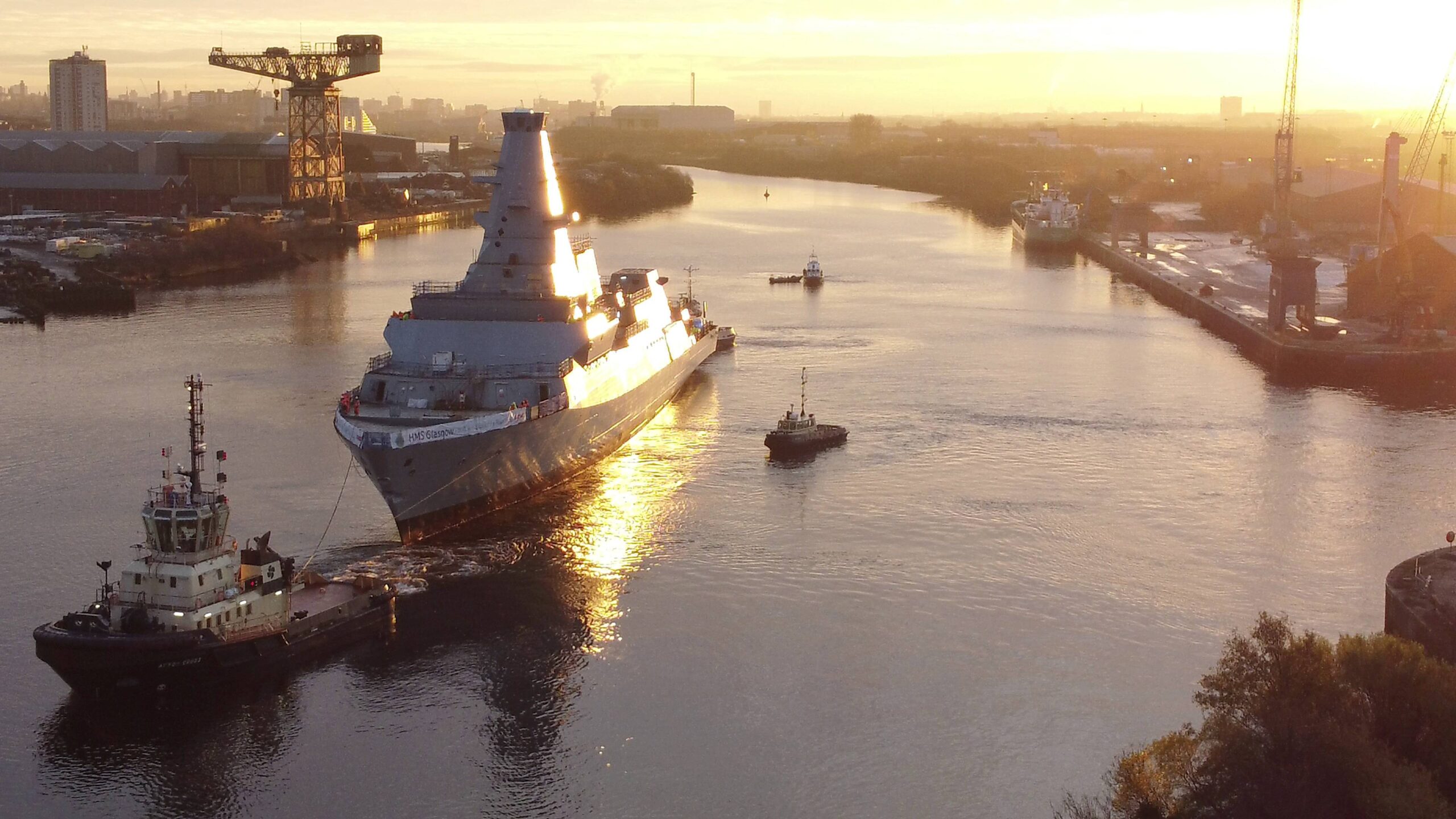
“Short answer is a lot,” he said. “We’ve had people working on the River Class Destroyer, which is [the] Type 26 [design], just like HMS Glasgow, being constructed in the great city of Glasgow, for years now.”
“They’ve been focusing on not just how we want to make it feel like our ships and live like our ships, [and] make sure the equipment and the day-to-day stuff [is right]. We’ve also been asking ourselves, what are the systems that we want, so that the ship can remain operationally relevant [for a] long time, [and] work and integrate closely with our allies.”
The River-class will be fitted with the US Aegis combat system, paired with the AN/SPY-7 radar. Knowles said Canadian sailors were already training on it at US Navy facilities, well before the first ship is delivered.
“Our River class destroyers will be fitted with Aegis, which is I think similar to the Australian design, which means that we’ve now embedded sailors at the U.S. Navy’s Aegis schools and training facilities, so that they can themselves understand and learn the system years before it’s delivered,” he said.
“They will then move from that understanding to contributing to the overall design and input to make sure it’s the system and the ships that they need them to be for the future.”
Canada plans to buy up to 15 River-class destroyers to replace both its retired Iroquois-class destroyers and its 12 Halifax-class frigates, including Ville de Québec. The ships are being built by Irving Shipbuilding in Halifax, Nova Scotia, to a version of the BAE Systems Type 26 design selected in 2018.
The keel of the first ship, HMCS Fraser, was laid in Halifax in June 2026. The first ship is expected in the early 2030s, with nine planned by 2040 and the full class by 2050.
The Type 26 design is also the basis of the Royal Navy’s City-class frigates and Australia’s Hunter-class frigates. Norway selected the Type 26 for its next generation of frigates in 2025.
The Royal Navy is buying eight, and five are under construction at once on the Clyde. The first, HMS Glasgow, was built by BAE Systems at Govan and is being fitted out at Scotstoun, with sea trials expected in late 2026 or early 2027 and operational capability in 2028.
The British ships are 149.9 metres long and displace more than 8,000 tonnes, with the Sonar 2087 towed array and 48 Sea Ceptor missiles. The Canadian ships share the hull but differ above the waterline, with Aegis and the SPY-7 radar in place of the British combat system.
Like the frigates they replace, the River-class are designed with anti-submarine warfare at their core. Ville de Québec herself is one of only two Canadian frigates fitted with an upgraded sonar, and Knowles described submarine hunting as “really our bread and butter”.