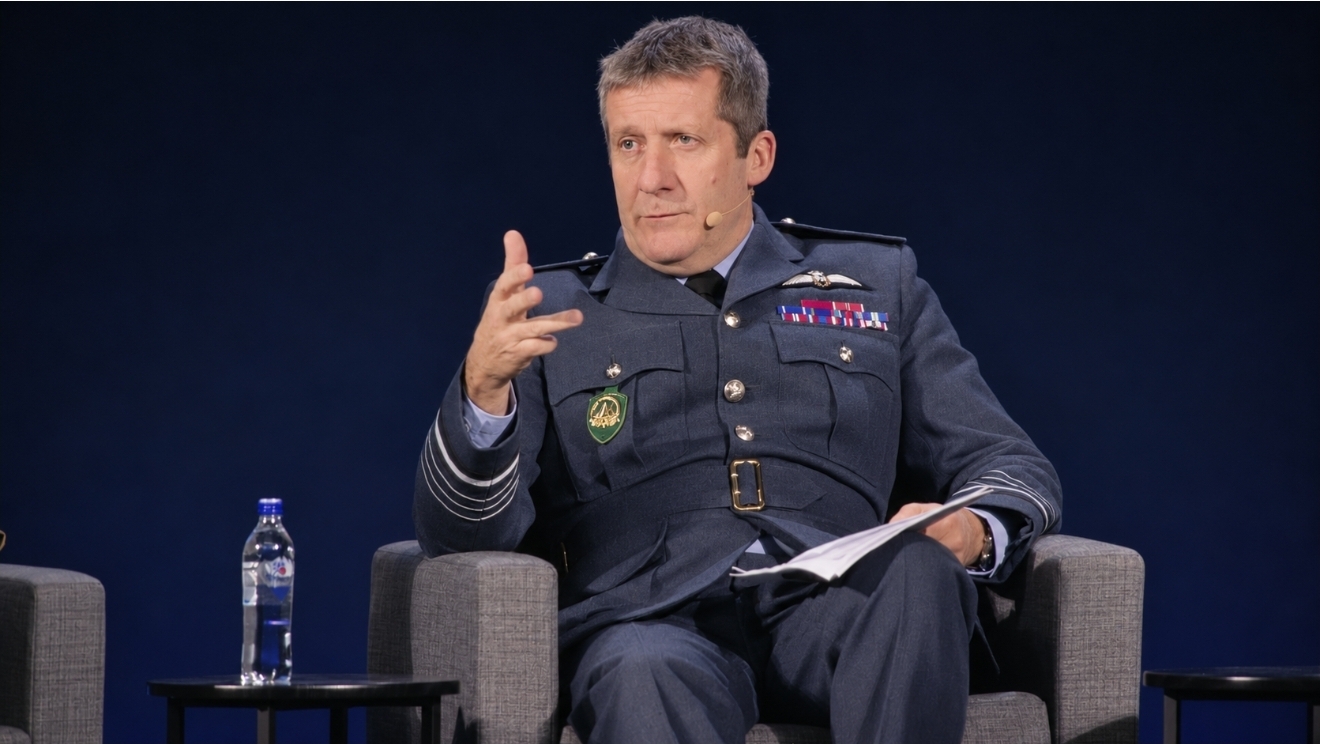
Europe is “not at war, but it’s not at peace either”, NATO’s Deputy Supreme Allied Commander Europe has said, describing the pressure on the continent as “a very hard edge of contested” while warning against blaming every incident on Russia.
Air Chief Marshal Sir Johnny Stringer, the most senior British officer in NATO’s military command structure, was speaking to the UK Defence Journal in a sit-down interview at NATO Edge 26 in İzmir. Earlier in the day, on a panel about readiness, he had argued that digital capability was foundational to NATO’s plans, particularly for a defensive alliance that will only ever move second and “is going to have to take a first blow”.
That raises an obvious question, though, as allies have spent the past few years dealing with sabotage, arson, cyber attacks, damage to undersea cables and drones crossing into their airspace, much of it blamed on Moscow. Asked whether that already amounted to the first blow, and what Russia would have to do to cross the threshold, Stringer declined to draw a line in public, telling me “You’ll forgive me if I don’t say what Russia needs [to do],” he said, adding that what Europe was seeing was a very hard edge of contested.
He was careful, too, on blame. Not everything that happens in Europe is done by Russia, he said, and NATO has to be “very careful on attribution”. What he did see was a familiar playbook with new tools. Moscow was pursuing methods similar to those of the Soviet Union during the Cold War, he said, aimed at dividing populations and ultimately trying to fracture the Alliance, but with “myriad new ways and means that were not available to their forebears”.
His advice to allies was not to do their opponents’ work for them, by keeping a sense of calm while staying very alert.
Beyond the military
Stringer was keen to stress that the response did not have to be military as nations, alone or together, have diplomatic, economic and information levers as well, and he pointed to Britain’s handling of the Salisbury poisonings as an example of what could be done. “Look at what the UK government at the time was able to bring together, and then apply well beyond the military instrument,” he said.
After the 2018 Novichok attack on Sergei and Yulia Skripal, Britain expelled 23 Russian diplomats and led a coordinated response in which allies and partners expelled more than 150 Russian officials, one of the largest collective expulsions of Russian diplomats.
Asked the question NATO commanders hear most often, whether the Alliance is ready to fight tonight if an adversary tests Article 5, Stringer said it was, and would be better tomorrow and better still in the weeks and months after. “In terms of reassuring the one billion people in 32 nations that the men and women of NATO are on guard for them, absolutely,” he said.
Winning the digital fight
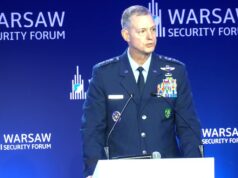
Speaking earlier in the day on NATO Edge’s leaders’ fireside panel on readiness, Stringer set out how he sees digital fitting into NATO’s plans to deter and, if necessary, defeat an attack. He tied it to the theory of victory set out by NATO’s Supreme Allied Commander Europe, General Alexus Grynkewich, at the Warsaw Security Forum in October, built around blocking, blunting and breaking an attack, and to NATO’s family of regional defence plans, which he described as a commander’s intent.
Beyond that, he said, NATO had to win four battles in every domain, including cyber: for access, for denial, for protection and for sustainment. Digital capability was the glue that knits together everything NATO has across all five domains, and he wanted the Alliance to be able to “over-match any adversary” in that space. Industry underpinned credible deterrence in digital just as much as in shipbuilding, aircraft or tanks.
He also said he could see future exercises bringing industry in to test whether networks would stand up, and where NATO might need to change its operational design “so I do things that protect critical infrastructure rather than just going after a classically military objective”, a point that speaks directly to the kind of grey-zone pressure he described in the interview.
Sitting down with UKDJ, NATO’s second most senior commander in Europe warns of a “very hard edge of contested” and points to Salisbury as a model for response.