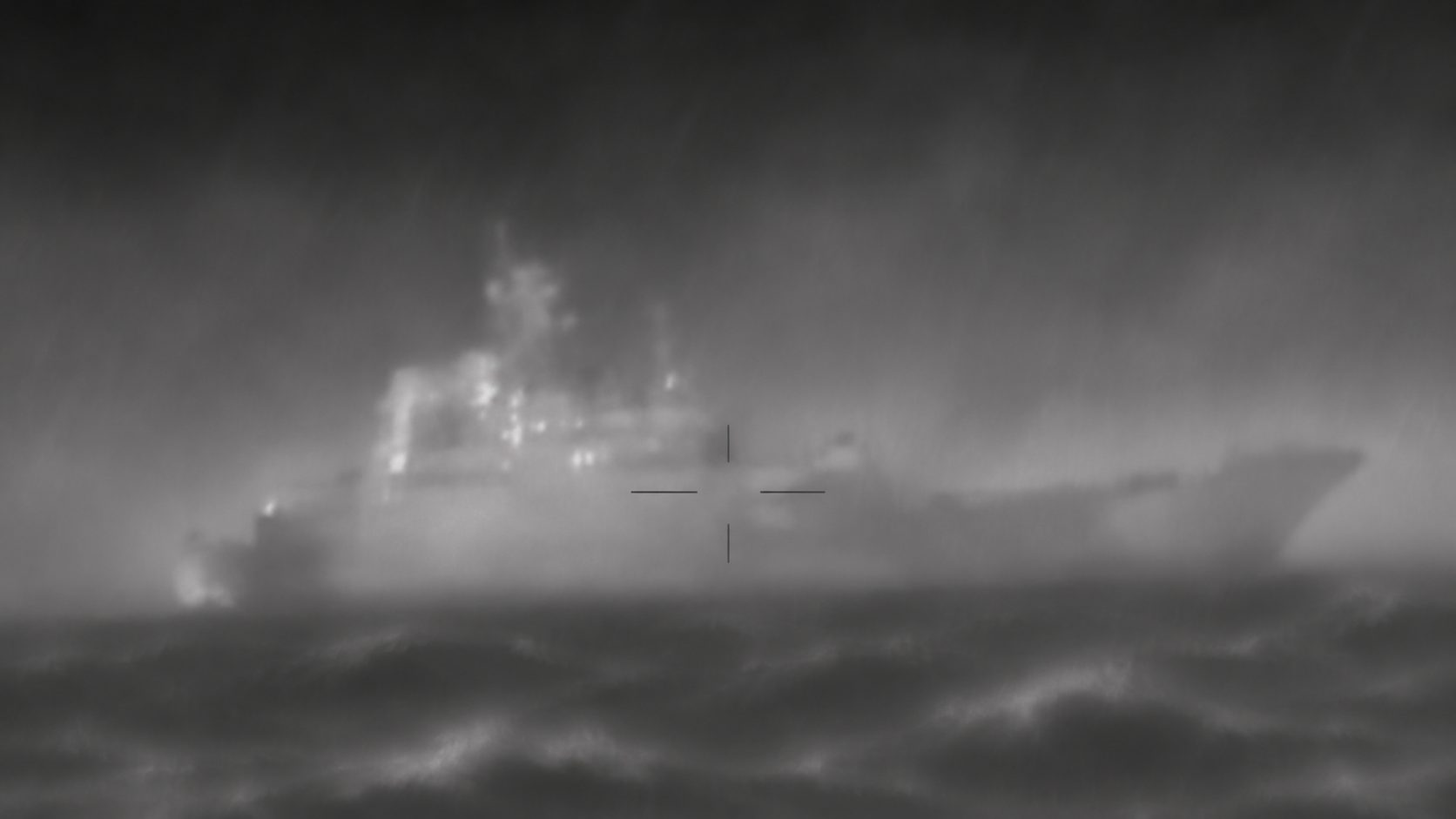
NATO must train its forces to be surprised and stop waiting for real losses before it adapts, the Alliance’s Supreme Allied Commander Transformation has said, explaining the thinking behind what has been described as NATO’s “Fight Club”, in which Ukrainian forces and their sea drones take on allied forces as the enemy.
Speaking to the UK Defence Journal in a sit-down interview in İzmir on the opening morning of NATO Edge 26, Admiral Pierre Vandier, a former fighter pilot and Chief of the French Naval Staff who now leads Allied Command Transformation, said conventional training had too often been like preparing for the Olympic Games in the gym, trying to be the best without knowing who the opponent would be.
That was no longer good enough, he said, because “the war in Ukraine has made Russia a learning machine”. Every military system has weaknesses, and no force can protect itself in every dimension, so if NATO did not train to be surprised, to adapt and to find its own weak points, “then we have a problem”.
Troops still need to be trained to do their jobs as well as they can, he said, but they also need to be trained to adapt when things go wrong: to replan, to change how they use their technology, and to ask industry to solve problems at speed. “Fight Club is an area where we accept to see these problems, and not wait for disaster and losses to adapt,” he said.
An enemy that wants you to lose
Ukraine’s role is central. Asked what Ukrainian forces gain from playing the enemy, Vandier focused on what they bring. Russia’s way of fighting is changing fast, he said, and today’s enemy is not necessarily well understood. “They bring the knowledge of what the Russians are, what they do, how they fight, and where they are,” he said. “The ones that know them best at the tactical edge are the Ukrainians.”
That matters at sea in particular. Vandier pointed to the Black Sea, where Ukraine, left short of warships early in the war, refused to let it become “a Russian sea” and turned to drones instead. A Ukrainian sea drone costs roughly $500,000, he said, against more than $1 billion for a major warship, giving “fantastic” leverage. Uncrewed systems would not solve every mission, he said, but a large share of them.
Asked what single change allied navies should make to how they train, Vandier said exercises had been too virtual and too disconnected from reality, including on ammunition stockpiles, now “a very important concern”. As head of the French Navy, he had introduced exercises run under “war rules”: “No regen, no reload, no extra life, no magic move, no magic logistics. And then you see the real military you have.” The second change was the enemy itself. In conventional training, he said, the red team was little more than a source of stress rather than a fully enabled opponent. “Having in front of you a team which just wants you to lose and works hard on that makes the training more interesting.”
Admitting when it goes wrong
Asked how allied forces had fared, Vandier did not go into results at sea, but said NATO had to get used to admitting when training went badly. He pointed to the Hedgehog exercise in Estonia, which was widely reported, as the first time NATO had publicly acknowledged that some training had not gone well. The Alliance, he said, had been “very reluctant” to talk about failures for political reasons, but from a military standpoint, knowing where the weaknesses are is exactly what training is for.
He drew on his own career to make the point. “I’ve been trained as a fighter pilot. I can tell you, I’ve died maybe thousands of times to learn what the limits of the missile envelope are, and that is how you become good.” The programme of what he called “audacious training”, run with Allied Command Operations over the past two years, was already “giving some very good results in the way our commanders now train and adapt”, he said.
A member of his staff stressed that Fight Club sits at the top of a ladder of training. Forces still need regular training to common NATO standards so allies can operate together, and Fight Club is used to push them hard once they reach a certain level of readiness, complementing rather than replacing that work.