Defence companies must learn to cooperate rather than simply compete, NATO’s Supreme Allied Commander Transformation has said, warning that no single firm can deliver the digital systems the Alliance now depends on.
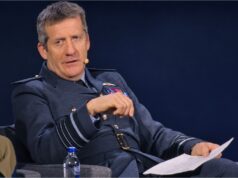
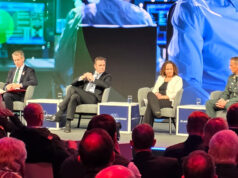
Speaking to the UK Defence Journal in a sit-down interview in İzmir on the opening morning of NATO Edge 26, Admiral Pierre Vandier was asked what he would tell every company gathered at the event, and across the Alliance, about what NATO needs from them. His answer was one word: “Cooperation.”
Industry, he said, had grown used to competition. “We have been accustomed to competition. I think cooperation now is mandatory, given what happens in the AI world,” he said. The speed of change, and the depth and complexity of the problems NATO now has to solve at a geopolitical level, made working together more valuable than competing. The reason was partly technical. Modern military systems are built in layers, from networks and cloud to data, applications and AI, and NATO needs different layers from different companies. “None of them has the full stack on these digital-centric systems,” he said.
He saw a second benefit in that mix of suppliers. “This biodiversity is something we need,” he said. “It gives us more resilience in case of hacking in the cyber domain.” An alliance that relies on many companies, rather than one, is harder to knock out with a single attack.
Fuse and the speed of light
Vandier pointed to Fuse, a recent NATO experimentation event in Latvia, as a model. Around 70 companies took part, and Allied Command Transformation deliberately built a scenario in which they could only succeed by working together. Speaking at a joint press engagement later in the day, he said AI agents and large language models were used as a layer on top of the companies’ systems to make them work together. Connecting different systems had once taken around six weeks, he said, but agents were now solving those problems in around two hours, which he said showed NATO was “an adaptable species” rather than one of “the dinosaurs”.
That need for speed also runs through NATO’s new approach to training. In what has been called NATO’s “Fight Club”, Ukrainian forces and their sea drones play the enemy against allied forces so commanders can find weaknesses before an adversary does. When something goes wrong, Vandier said, commanders have to ask how they replan, how they adapt their technology, and “how we ask industry to solve a problem at the speed of light”. With Russia, in his words, now “a learning machine”, industry has to be ready to respond to what those exercises reveal, not wait for a formal requirement years later.
Fit for the fight
At the press engagement, Vandier set out how NATO wants to help companies get there. Allied Command Transformation runs a growing series of experiments and problem-solving events, some involving thousands of people over several weeks, where companies test products, get military judgement on them and adapt to military needs before they ever reach procurement. The aim, he said, is to help firms cross the valley of death between a promising idea and a contract, so that when they do compete for business, they are already fitted for the fight.
But the ultimate test, he said, was Ukraine. Most of the companies exhibiting at NATO Edge had a touch point there and had tested their products in real conditions, something allies could not replicate at home.
On NATO Edge itself, Vandier said the event sent “a very powerful message” to nations and industry about the Alliance’s focus on data and digital technology. NATO brings together 32 nations, each with its own systems and platforms, and making them work around shared data and connectivity was, he said, what NATO was for. “No war is possible today without a data layer, which is at the core of the decision-making and action process,” he said. That, he added, was why cooperation was “the core of the event”.