

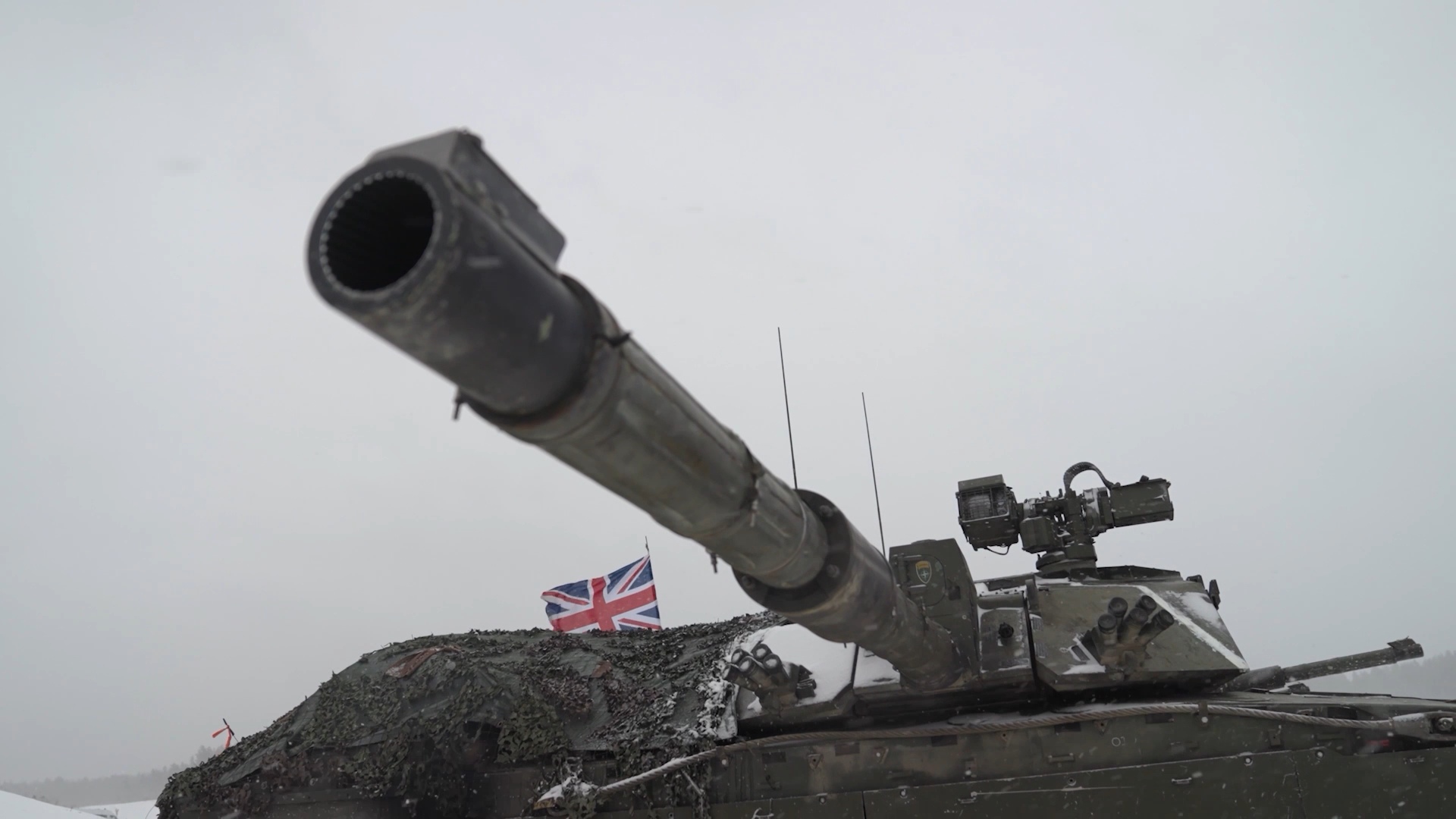
Britain must convince Europe it is spending at least what NATO allies pledged on defence if it wants a relationship with the EU built on security, Polish Deputy Prime Minister and Foreign Minister Radek Sikorski has said, in an interview with BBC Newsnight.
Asked by Victoria Derbyshire whether the UK was taking the Russian threat seriously enough, Sikorski said: “Well, there is always a choice between guns and butter. And if the UK wants to impress the EU with its security, defense assets, and build a relationship based on its reputation as a provider, as a contributor to European security, then you have to have a credible security apparatus. You have respectable security services. But, you know, you have to convince us that at least you are spending what we’ve all pledged ourselves to do at successive NATO summits.”
Derbyshire put to him that the Chancellor has yet to set out how the UK will reach 3% of GDP on defence by 2030, let alone 3.5% by 2035. Sikorski contrasted Britain’s position with Poland’s: “Well, you are an island, lucky you, and you have the bomb, and so you are entitled to feel less threatened than we do, which is why we spent, as I’ve mentioned, 4.8 percent of our GDP on hard defence, and 7 percent if you count civil protection and dual-use stuff, including strategic highways and that sort of thing.” He added: “Look, over 500 years, we’ve learned that when the Russians threaten you… You should take it seriously.”
Pressed again, he listed Russian actions against Britain. “You know, you’ve had the assassinations of Mr. Litvinenko, of Mr Skripal, an arson attack on the former prime minister’s home, the mapping of your undersea critical infrastructure. I mean, as an island, you depend on pipelines, energy lines, on data, cables. Those are unfriendly gestures.” Wes Streeting, the Defence Secretary, said last week that Russian activity in UK waters is up two fifths this year.
Sikorski also said the UK could not expect its old EU membership terms back, after Andy Burnham, the Prime Minister, said the UK would “initiate a discussion with our EU partners about options for our long-term relationship”. Burnham said in September that Britain should weigh its options, including rejoining. Asked whether the UK could regain the rebate and stay out of the euro and Schengen, Sikorski said: “I don’t think so. I think that would be a new situation. And as I’ve mentioned, security is one thing. In Poland, we also think that the EU would be better with Britain in it, because you have a sensible approach to economic management, to the building of institutions, a sort of pragmatism which we like. In dealing with the UK, but the à la carte membership that you used to have is probably not doable this time.”
On Ukraine, Sikorski called the damage to the Kerch Bridge “an important symbolic breakthrough because this was a symbol of Russia’s “Anschluss” of Crimea, if you remember, opened personally by Vladimir Putin, and it’s also a huge blow to Russian logistics.” He said supplies to Crimea would be much harder and that wreckage was blocking the Kerch Strait, cutting off Russian-controlled ports on the Sea of Azov including Mariupol and Taganrog. “So I imagine it’s quite a blow to not only Russian pride, but Russia’s ability to prosecute the war.”
Asked whether Ukraine should consider withdrawing from the rest of the Donbas in exchange for NATO membership, an idea President Zelensky has said US negotiators raised, Sikorski said: “I’m not going to comment on that. You know, there is never a shortage of pocket Chamberlains willing to trade other people’s land and freedom for their own convenience. Those are decisions for Ukraine, and we will sustain Ukraine for as long as it takes.” He added: “Ukraine knows best what is in its interest, and it turns out that it has cards. It’s not just the Kerch Bridge. It’s also successful hits against major air bases and refineries.”







Compare and contrast:
Poland
‘…we spent, as I’ve mentioned, 4.8 percent of our GDP on hard defence, and 7 percent if you count civil protection and dual-use stuff’
Britain
‘After delivering his first Budget, it was revealed the Chancellor will hand the Ministry of Defence (MoD) £72.8billion in 2027/28 and £75.5billion in 2028/29.
His predecessor, Rachel Reeves, set the MoD’s budget as £73.8billion in 2027/28 and £76.5billion in 2028/29 in Labour’s defence investment plan.’