A hostile state could destroy one of its own satellites to shower debris on Western constellations without it counting as an armed attack, Dr Adam Bower of the University of St Andrews has told Parliament’s Joint Committee on the National Security Strategy.
Bower, a senior lecturer in international relations and a fellow of the Outer Space Institute, said:
“One is that, as we have seen in the past, a number of Governments have tested destructive anti-satellite systems—they have deliberately destroyed one of their own satellites. Four countries have done this since 2007. One could envision a scenario where an adversary deliberately destroys one of its own satellites—so this is not a hostile attack and would not be seen as a resort to armed violence by the affected party, but in destroying one of its own satellites, it generates debris that then imposes costs on other operators, including, potentially, the loss of satellites, certainly making the operations of large constellations more difficult. Alternatively, we could envision this as part of a hostile attack, which would probably be a larger part of an armed conflict.”
He questioned the assumption that spreading capability across large constellations brings resilience on its own, saying that taken together such constellations are “proportionally much more vulnerable to the risks of debris strikes.” He said SpaceX’s Starlink had, by his last count, more than 12,000 satellites in orbit, adding: “So one way I would attempt to square that circle is to think about what the upper limits actually need to be for the use cases.”
Bower said the United States voluntarily agreed in 2022 to forgo destructive anti-satellite tests and that the UK and others had followed, describing a ban on such tests as one area where “there actually could be some room for progressive development.”
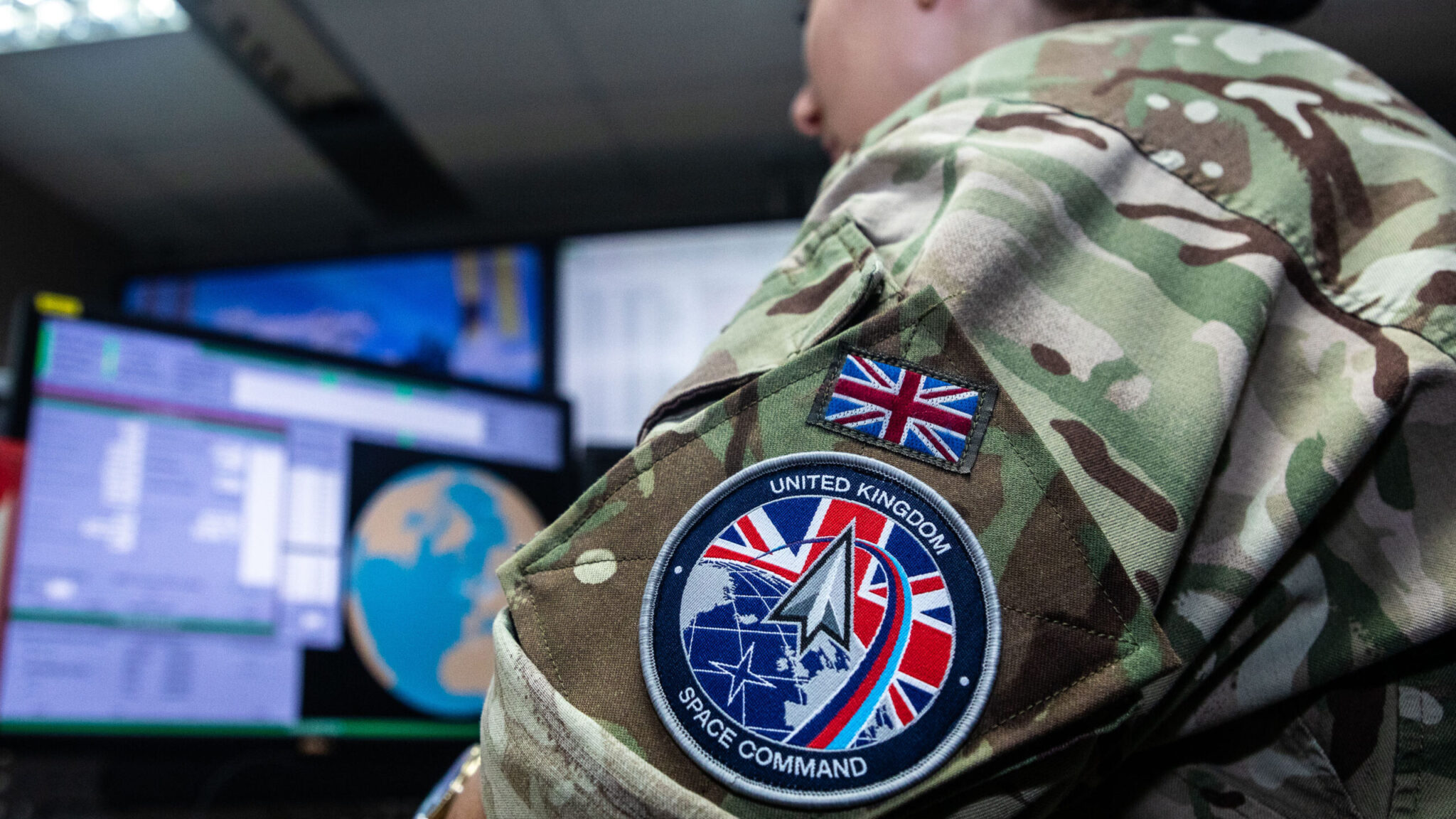
Major General Paul Tedman, the former commander of UK Space Command, told a later panel that Russia destroyed one of its own satellites in orbit three months before invading Ukraine, which he said could be taken as a demonstration of capability. He also said Russia has stated an intent to put a nuclear weapon in orbit.
The Ministry of Defence is building its own ISTARI constellation of military satellites, with Titania launched this month as the second after Tyche, while the Royal Navy’s hybrid fleet and the Digital Targeting Web both rely heavily on space-based links.