

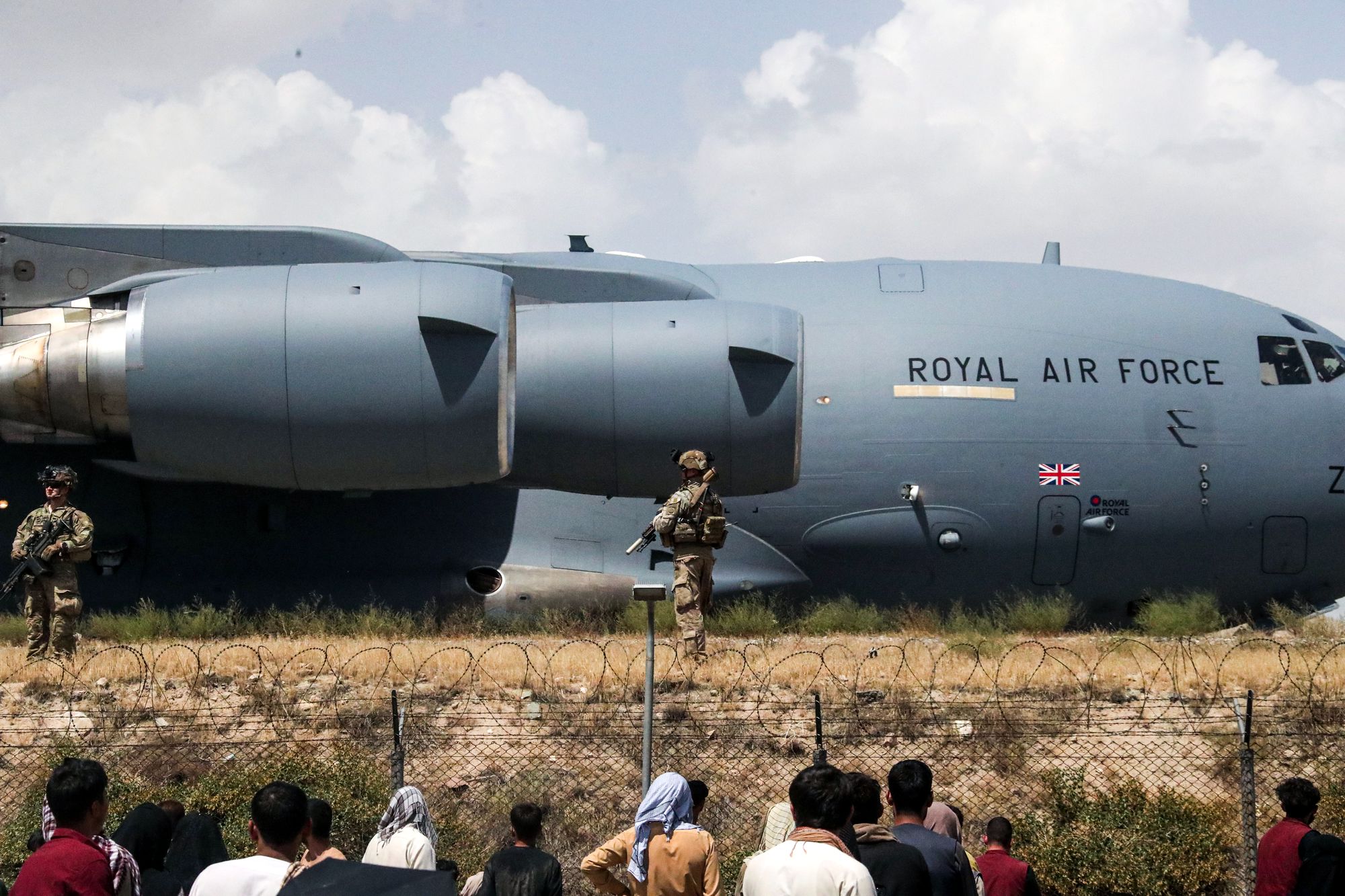
Afghans who worked with UK forces were wrongly refused relocation and left facing years of danger, delay and uncertainty, with a Ministry of Defence data breach described as a foreseeable systemic failure that became part of a wider failure of governance, accountability and public trust.
The findings come in a major report by the House of Commons Defence Committee, titled Shifting heaven and earth? The Afghan data breach and resettlement schemes, published on 30 July, five years after the fall of Kabul and one year after public disclosure of the breach.
The February 2022 incident saw a member of MOD personnel send a spreadsheet outside government which appeared to contain information on around 150 applicants to the Afghan Relocations and Assistance Policy, but in fact included detailed personal information relating to more than 18,500 applications. The breach was not discovered until August 2023, when part of the dataset appeared in a Facebook group. The government then managed its response under an unprecedented superinjunction, which prevented public reporting of both the breach and the response for nearly two years.
The committee is unequivocal that the breach was avoidable. Its formal conclusion states:
“The breach was not simply an individual mistake, but a foreseeable systemic failure. It arose from the combination of inappropriate tools, weak operating procedures, insufficient training, poor organisational continuity, and an inadequate culture of data protection and accountability. The pressures of the fall of Kabul in 2021 help to explain how these weaknesses developed; they do not excuse their continuation into 2022. The MOD handled sensitive immigration casework using tools and controls not appropriate for a life-endangering dataset at any scale.”
The report traces how the department came to be running the scheme at all. Sir Ben Wallace, who set up the policy as Defence Secretary, told the committee he had deliberately kept eligibility decisions separate from the Home Office, quoted as saying: “ARAP was for our people who had helped us and saved lives… The Home Office was always very keen to blur the two, and I did not want to blur the two.” He admitted this required the MOD essentially “to design and make immigration databases from scratch”. The Permanent Secretary at the time, David Williams, described the initial system to the committee as “essentially a combination of the ad hoc use of spreadsheets on SharePoint sites”.
Wallace also told the committee the breach could only have occurred if operating procedures had been ignored, adding that “someone definitely did not do their job”. The MOD’s written evidence stated, by contrast, that the breach took place “while officials were following agreed processes”, a discrepancy the committee characterises as a stark admission of continuing cultural failure.
Accountability and secrecy
On who was answerable, the committee found that no individual appears to have been held personally accountable. Its conclusion sets out why it regards the episode as a failure of governance:
“Describing the breach as a systemic failure does not mean that responsibility lay nowhere. Institutional accountability requires clear lines of responsibility. Where a department takes on unfamiliar responsibilities involving life-endangering data, clear senior ownership of risk, assurance and data protection becomes more important. The evidence suggests that this ownership was inadequate before the breach; the injunction then made ordinary political accountability for the response largely impossible for nearly two years.”
The report also finds that the government’s prolonged use of legal secrecy displaced normal public, parliamentary and audit scrutiny while major decisions affecting thousands of Afghans and substantial public spending were taken behind closed doors, and that the government did not maintain adequate visibility of the direct financial consequences of the breach response.
Committee chair Tan Dhesi MP said, as quoted in the press release accompanying the report: “This inquiry began with a data breach, but became about the real lives affected by delay, secrecy and flawed decision-making. The government must now explain how it will protect eligible Afghans who cannot safely, lawfully or affordably reach a third country for UK entry-clearance checks. Otherwise, the latest ‘self-move’ policy risks excluding people the UK has promised to help, including some who should have been brought here years ago.”
He added: “The broader picture is deeply troubling. The Ministry of Defence should stick to defence – it should never have been left to run immigration casework schemes. Secrecy has been too easily used as a shield against proper accountability in areas far removed from sensitive operations. The government needs to be more open to scrutiny and challenge, including where Special Forces are involved, and must account for administrative failures that have affected lives, damaged trust, and carried significant cost to the British taxpayer.”
What the committee wants
Among its recommendations, the committee calls for enforceable minimum standards and renewed answers on senior accountability:
“Government should mandate and enforce minimum standards for skills, process, tools, controls, independent assurance and testing for datasets where compromise could plausibly risk life. The MOD should also explain who held senior official responsibility for data-protection risk in ARAP before the February 2022 breach, whether any disciplinary, performance-management or other accountability processes followed, and how individual senior accountability is now assigned in comparable high-risk operations. The government should also review how ministerial accountability can be preserved where major decisions are taken under legal secrecy and cannot be scrutinised by Parliament or the public until after the responsible ministers may have left office.”
The government has two months to respond. The committee has asked it to publish a single action plan covering lessons from the breach and the resettlement response, “with each action assigned a named owner, timetable for completion, intended outcome and means of reporting progress”, and to report progress against each action every six months.
The overarching conclusion returns to the human dimension of the episode:
“But the central lesson of this episode is that a foreseeable MOD data failure became a wider failure of governance. A breach that should have been prevented was followed by a response shaped by prolonged secrecy, weak accountability, fragmented delivery and inadequate challenge. The consequences were operational, financial and constitutional, but also, first and foremost, human. High-risk, secret, rapidly scaled operations require stronger systems, clearer ownership, earlier external challenge and firmer accountability from the outset.”








Probably went wrong around 2002 when we got involved with nation building in Afghanistan for the 5th time in support of an Allie with a spotty record on nation building in Asia.
That being said the British government needs to come to terms with the current Afghan regime whether we like it or not. We need to have a way to return people to Afghanistan who didn’t actually fight for the British army and if not then to re settle in Pakistan or another neighbouring country. Even if that means paying the governments to take them. If we paid $10,000 for every person we sent it would be a minor cost vs housing and life time benefits in the UK. The cost of sending back every Afghanistan refugee would be $50 million per annum. You can offer people voluntary to return and take the cash or forced return and pay the cash to the government.
It’s the only way we will stop them coming in boats.
Agreed, mate.
As for stopping them coming, a simple legal change which is then publicised clearly that if one enters the UK illegally, one automatically cannot claim asylum or ILR. You then have 2 choices. Sit in limbo or voluntarily return.
There is no deterrent. Therefore, the issue will continue as the world, including smuggling gangs, sees the UK as a soft touch and thus an easy target.
In the real world, much of that is going to be sabotaged by all the HR groups, lawyers making money out of it, refugee charities who deliberately treat refugee, illegal, economic migrant as the same thing, supported of course by the far left MPs in Labour and the Greens, and THAT is where much of the problem also lies.
On the Afghans, interpreters, Triples, with immediate family should be the only eligible candidates. Of course, with every Auntie, Uncle, Brother and Sister, and Grand parent and cousin twice removed thrown in, just how else have the numbers reached what they are?
Unless there were 10 interpreters for every solider in Helmand?
Finally. Defence sticking to Defence. Wondeful!!! Doesn’t stop HMG shoving non Defence related expense into the budget, including the billions being spent on this.
I hope some of the Triples at least have been put to good use.
Problem with this is that, outside of some programmes such as those for Ukrainian refugees, there is no way for a lot of people to claim asylum without physically entering the UK, and that cannot be done legally without a British passport or valid Visa.
I have no issue with guides and interpreters claiming asylum here – they put their lives on the line to assist our troops, but as you said it needs to be immediate family only: spouse and immediate children and that’s it.
I think what happens a lot is people will come over here, either through an asylum scheme or get here and then claim and be awarded asylum, then they’ll contact their wider family to come over as well, and that’s when you get cousins, 2nd-3rd cousins, aunts, uncles, grandparents etc who come over illegally and then cite that they have family here, and then it goes on.
Should be spouse and immediate children, and that’s it, and future family coming over have no guarantee of asylum just because their 3rd cousin twice removed, whom they’ve never even met, was an an Afghan interpreter for the British Army.
All sensible.
And looking at the sheer numbers, that’s exactly what seems to have happened.
And what is being done about it?
To answer your question about what is being done, Daniele, the House of Commons Defence Committee has officially stepped in to force the Ministry of Defence to rectify this.
However, your assumption is based on a complete misunderstanding of the actual data. The crisis surrounding the ARAP scheme right now has absolutely nothing to do with extended families or distant cousins abusing loopholes. The 884 wrongly refused cases that Parliament is demanding the MoD correct are 884 individual, elite Afghan commando veterans from the ‘Triples’ units who fought on the frontline alongside British Special Forces.
The numbers didn’t reach this level because of chain migration; they reached this level because the MoD botched the initial vetting paperwork for the actual combatants. To make matters worse, a subsequent MoD data leak literally handed these individual soldiers’ details to the Taliban. That is what is being investigated—a catastrophic administrative and security failure concerning the primary military personnel, not an influx of aunts and uncles.
Morning BM.
If you read the comment trail between me and Steve you’ll you’ll see that you’ve misunderstood what we were discussing, and it wasn’t the Triples.
I was aware of them, my comments were based on the totals arrived in the schemes entirety, as discussed with Jim and Steve above.
Quick Google, National Audit Office, March 2026, 37950 have arrived between 2021 and December 2025.
I do not believe that there were near 38k interpreters, nor even if you add a wife and a couple of kids, so immediate family, which is sensible and necessary, do you reach that figure.
Triples, quite right, a pity they decided not to form them into their own Regiment, ala Gurkhas, but there were valid reasons.
I understand your point regarding the overall headcount, but referencing the ~38k figure actually highlights the core misunderstanding here. That total conflates two completely distinct government programmes with entirely different criteria: ARAP and ACRS.
The vast majority of those numbers come from the ACRS (Afghan Citizens Resettlement Scheme), which is a broad humanitarian pathway designed for vulnerable civilians, judges, female activists, and journalists at risk from the Taliban. It has nothing to do with military employment.
The military route—ARAP (Afghan Relocations and Assistance Policy)—is strictly capped for eligible staff and their immediate, dependent family. The reason the Triples matter so much in this specific Defence Committee debate is because they were the primary eligible combatants, yet they were blocked under ARAP due to administrative errors.
When discussing Ministry of Defence accountability, blending civilian humanitarian numbers (ACRS) with direct military allies (ARAP) creates an inaccurate picture of who is actually arriving under these defence-led commitments.
Well explained, thank you.
The system is crazy we employed about 3000 people in Afghanistan yet we have bought over about 38000 the whole thing is a joke the taliban has even said they knew about all of them before the data leek and they do not want to harm them providing they show loyalty and remorse I mean how much we can trust them I don’t know but it’s getting beyond a joke now that nearly 40k people have been brought to the uk housed fed etc while our own people who served there in some cases are living on the streets
You need a holiday Jim.
Or at least some time out from posting on here and other places all day and night ?
May I suggest a nice road trip on a motorbike across Europe, you’re still young (mid 40’s) It’ll clear your mind and help you sleep.
I’m still Intrigued by your comment about “Being In the Andrew” on NL, can you tell us a bit about what It was like ?
I’ve only ever been on a few Submarines and they were Museums….. The Andrew must have been rather cramped I guess 🤔
Morning halfwit, your up early 😀
I’m actually on holiday now, been travelling for 8 weeks hence the unusual time postings.
Sorry must have been a different Jim on NL, never had the pleasure of serving in the Andrew unless you include cadets. Just four years in the TA for me in the late 90’s
Morning Jim, I’m always up early, best time of the day watching the Sun rise In different stunning locations.
Oh, sorry, It appears there Is another Jim (yes I’m sure there must be thousands !) It does get confusing at times 😁😁😁
Enjoy your travels.
‘Andrew’ slang for usually serving members of the RN to call the Navy👍don’t know if it’s still used but way back when in the army we used to say ‘in the cake’ when serving! Different language altogether when in the services mate😂
Oh 😁….
Cheers Jacko.
Jacko, I never heard ‘in the cake’ in the army (1975-2009), but often heard ‘in the mob’ usually by those who had left reflecting on ther past service.
How about ‘in the cack’ 👍😂
A lot of Humans died as a result of this mess.
Will we ever learn ?
Probably not, I can imagine the 6th Anglo Afghan war at some point.
What a “Carry On”.
The 3rd Foot and Mouth Regiment?
another report that makes NO difference. there was a massive data breach who disagrees with that. at what point was MoD thinking we allow interpreters to settle in uk, because once that was decided, game over, pull uk forces immediately. were interpreters being promised uk settlement as part of their employment? appreciate difficult times and sacrifices made
You’re missing the core operational reality here, Simon. Resettlement wasn’t some casual benefit written into a contract back in 2002; it became a mandatory security requirement because local service marked these assets for execution upon our withdrawal. Furthermore, this inquiry isn’t just about interpreters. A massive portion of those 884 wrongly refused cases involves the Triples—elite Afghan paramilitary units who were entirely created, funded, and integrated into British Special Forces operations. Disowning the very commandos who ran covert counter-terrorism missions with our troops isn’t just an administrative blunder; it completely destroys the UK’s ability to ever recruit local operational partners in future conflicts.
an awful scenario where those who supported uk military were marked for execution upon uk withdrawal. as a civilian i could not understand the delay in uk withdrawal. the consequences and obligations for going into afghan were heavy.
You are absolutely right about the heavy obligations, Simon. That is precisely why these parliamentary reports are so critical, despite the initial cynicism surrounding them.
The delay and secrecy exposed by the Defence Committee weren’t just bureaucratic slow-rolling; they directly caused the catastrophic situation during the withdrawal. Because the MoD dragged its feet on processing the very people we knew were marked for execution, it created the bottleneck that left our frontline allies trapped.
When the state takes on the heavy burden of intervention, accountability matters. This inquiry is the only mechanism forcing the government to acknowledge that failing our allies during a withdrawal severely damages our strategic credibility on the world stage.
The Defence Committee’s report hits on a structural truth that often gets lost in the noise: the Ministry of Defence should stick to defence. Tasking a military command structure with running highly complex immigration casework and data-sensitive refugee schemes was an institutional mismatch from day one. When you force a department to manage unfamiliar immigration schemes behind a shield of operational secrecy, massive administrative failures and data leaks become practically inevitable. The focus now must be on correcting the 884 wrongly refused Triples cases before those who stood with our forces are completely wiped out
Saw a documentary about all this, many or all have rightly gone into hiding.
So how do you find them? How do you extract them?
Do we even have a diplomatic mission to Kabul?
As usual nobody seems accountable and someone should be and face consequences if elite SF we trained have been left behind.
We could have used them, for a start.
You have raised the most critical practical questions, Daniele. The operational reality of finding and extracting people in hiding is incredibly dangerous, which is exactly why the administrative failure by the MoD is so unforgivable.
To answer your point about how we find them: the issue right now isn’t that these men are untraceable. Many of them have been desperately submitting their biometric data, unique service numbers, and vetted paperwork through secure channels for years. The barrier isn’t that they cannot be found; it is that the UK government legally rejected their applications, meaning they have no valid clearance to be extracted.
As for diplomacy, while our embassy in Kabul is closed, the UK runs its diplomatic ‘Mission to Afghanistan’ out of Doha, Qatar. This is the channel used to coordinate safe passages and processing through third countries like Pakistan.
The immediate priority isn’t launching a covert extraction mission; it is reversing those 884 wrongful rejections. Once the Home Office and MoD grant them the legal right to relocate, the existing diplomatic and third-country networks can finally be used to pull them out of the shadows.