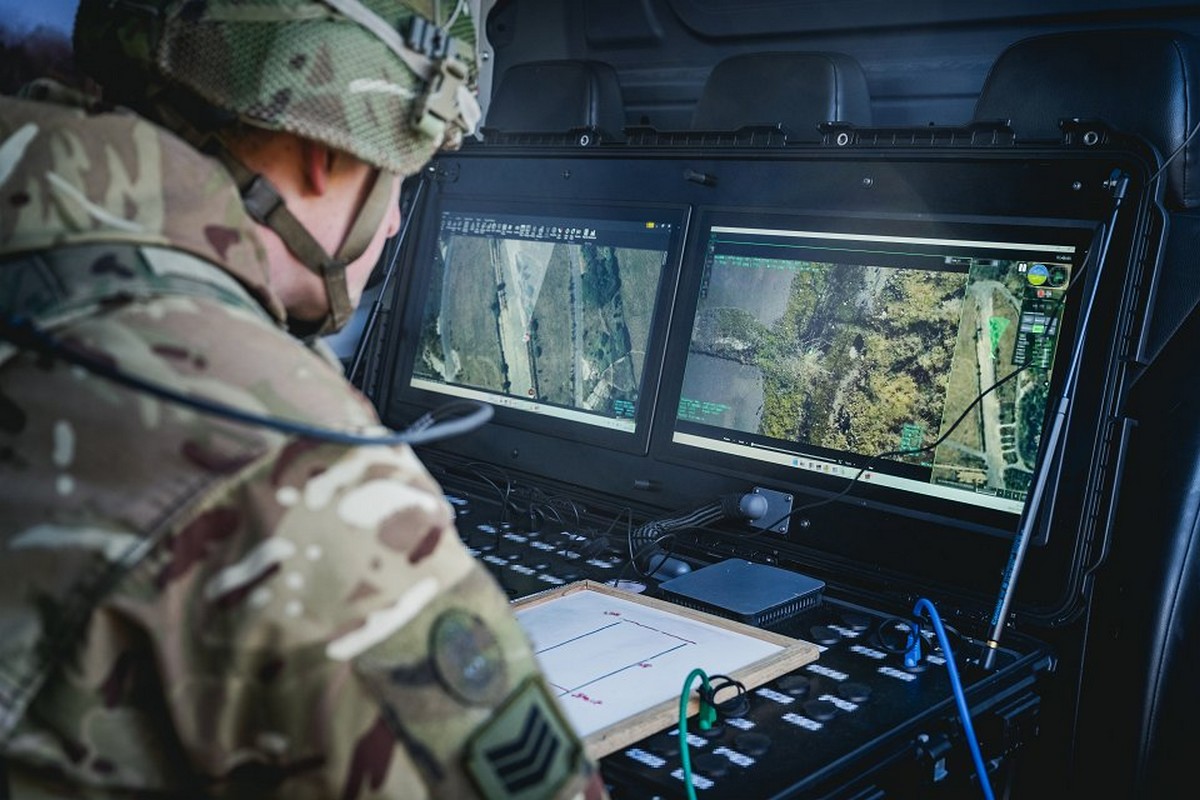
AI-enabled drones have been successfully tested to help British soldiers detect landmines and explosive ordnance more quickly, according to the Ministry of Defence.
The trial, led by the Defence Science and Technology Laboratory on behalf of the British Army, was carried out with 33 Engineer Regiment in Essex over several weeks. Replica mines and other munitions were placed across different types of terrain, with data gathered by sensors on small drones and passed to Army operators using AI tools to locate and identify threats.
The work is aimed at speeding up bomb disposal tasks while reducing the risk to personnel operating in hazardous areas. It also tested how quickly AI models could be retrained to identify new threat types and adapt to changing conditions, something the government says is increasingly important in modern warfare.
“This trial is exactly the kind of innovation the Strategic Defence Review calls for, harnessing AI, drones and autonomous systems to boost deterrence and make our Armed Forces stronger,” said Defence Minister Luke Pollard. He added that the aim is to remove personnel from danger while improving the speed and effectiveness of operations.
A technical lead from Dstl said the threat from explosive ordnance is constantly evolving and that the technology used to counter it must evolve as well. “We are testing, adapting and demonstrating this technology so that, working closely with the end user, we can develop concepts that let our forces compete on the modern battlefield,” they said.
Major Mark Fetters, the Army’s Future Counter-Explosive Ordnance Capability lead, said the system could help EOD teams work faster and more safely. “The equipment being developed by Dstl will allow EOD operators to conduct their mission faster and will remove people from the explosive hazard,” he said.
Further trials are planned later this year, with the results intended to inform procurement of a fielded capability for troops.