

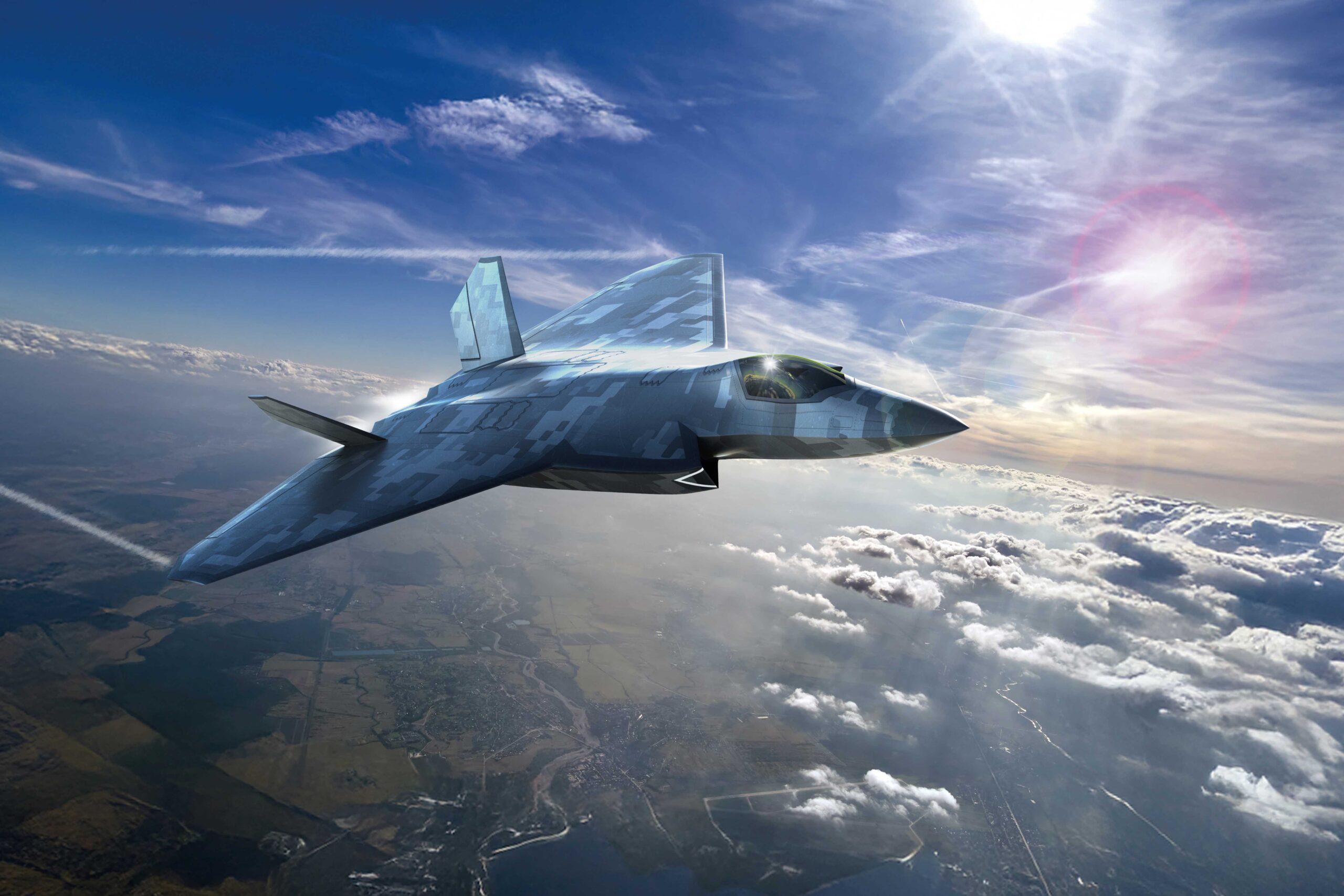
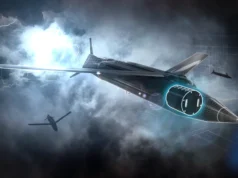
The Global Combat Air Programme (GCAP) has awarded its first joint international contract as an integrated trilateral programme.
The £686 million contract has been placed with Edgewing, the joint venture formed by BAE Systems, Leonardo and Japan Aircraft Industrial Enhancement Co. Ltd., to lead the design and development of the next-generation combat aircraft, according to the programme.
The award covers key design and engineering work and is intended to accelerate delivery as the UK, Italy and Japan deepen cooperation under GCAP, which aims to field a future stealth fighter.
Masami Oka, Chief Executive of the GCAP Agency, said: “This contract is an important moment for GCAP, as activities previously conducted under three nations’ contracts will now be carried out as part of a fully-fledged international programme.”
Marco Zoff, Chief Executive of Edgewing, added: “The pace at which Edgewing and the GCAP Agency have ramped up… has been made possible through our shared purpose and strength of collaboration.”
The contract, awarded on 1 April, runs until 30 June 2026 and reflects the growing role of the GCAP Agency, established to manage and coordinate the programme on behalf of the three partner nations.
Edgewing, headquartered in the UK, will act as the design authority for the aircraft, overseeing engineering, airworthiness and certification across all phases of development.
GCAP, launched in 2022, is intended to deliver a next-generation combat air system to replace current fast jet fleets and sustain sovereign industrial capability across the partner nations.





Sorry, who’s giving money to whom?
The GIGO, an agency of the British, Italian and Japanese governments, is paying Edgewing, a joint venture owned by BAE, Leo and JAIEC (essentially Mitsubishi).
Is this the contract that the Japanese and Italians were getting irate about the UK government dithering over?
Yes. This will fund GCAP for the next year. Then, no doubt, we’ll have the same bun fight again.
Perhaps I am wrong, the article just says to June 26, I misread it as June 27.
At that amount it’s a years funding. Typo I’d guess on 26.
Several sites have posted the June 2026 date so I think this is just an interim contract to tide them over until DIP is published.Then a longer contact will be announced.
Would appear to confirm that the project will not be cancelled by Starmer tho. Phew.
I guess it’s also indicative that the DIP is targeting a June publication date. Depressing.
Or that Defence is so screwed with Nuclear and GCAP eating it alive they can only fund it for 3 months.
That too 🙁
Japanese media is reporting that Canada is about to join GCAP as an observer. It’s interesting that the US has now moved the time line in F47 to the middle of the 2030’s but more likely the end.
ĞCAP has a real chance to be the worlds first 6th generation fighter and if we can stick the landing a major commercial export success.
I do have concerns with the Japanese’s approach however, they are said to be very cool on the idea of collaborative aircraft and drones, the aircraft may also end up being very large to deal with a war over the pacific when, what’s needs is something smaller and cheaper designed to fight over Russia.
There is a danger that we end up going TSR2, building something ground breaking that no one else needs or can afford.
I think the RAF, MoD and the rest know what’s needed, Jim.
It was reported long ago that it’s going to be big.
Big is beautiful mate, I’m all for long range strike and air defence.
Its looking to be slightly larger than F22….
If you make the aircraft smaller, it will be competing with F35 and export potential will be hit hard as a result.
TSR2 was killed before we found out if anyone else wanted or could afford.
The stated extreme long range to negate the need for tanker support will always drive the aircraft to be bigger. Whether this is the right approach and perhaps stealthier tankers is a better option is open to debate. The dawn of very long range air to air missile is definitely impacting design.
Right somone has mentioned TSR2, nobody repond please, Im putting cones around this post, just drive past and no rubber necking…
And TSR2 thread hijacking in 3, 2, 1 go!
I couldn’t resist…..
Ive everything everything written on the subject of TSR2 and have studied OR339, the competing designs, the industrial collaborative efforts, the resulting BAC TSR2 design and it’s systems over a 40 year period.
There is little I don’t know on the subject, so feel qualified to make the statement that TSR2 would sadly have been a very expensive mistake.
Systems reliability would have been appalling, thanks to first generation transistor based avionics. Structural issues would have been an issue, as it became apparent some of the alloys used would have suffered premature structural failing well within its design life.
Weight issues would have reduced both range and max speed, the Olympus 22R engines needed very significant additional work too, work that would have pushed forward way into the 1970s.
It would have cost a fortune to own and operate and required another fortune to update in the 70’s to replace the first generation integrated avionics and Structural upgrades.
Cancellation was very sadly absolutely inevitable.
That said, the big take away from TSR2 were the lessons learned, in advanced alloys, construction techniques, the continued development of high tech avionic systems and complex programme management, that gave BAC a depth of knowledge that directly fed into the successful Jaguar, Tornado and Thypoon projects.
I still think TSR2 was a wonder of advanced engineering, a strikingly beautiful aircraft and always imagine it flying overhead when im driving past Warton or Boscombe Down on occasional visits.
The RAF also wanted it big, they essentially wanted a 2400km combat radius.. essentially an aircraft that could launch a cruise missile attack at Moscow without tanker support. Japan is far closer to its enemy than we are to Russia.
I did read a really interest article that essentially was explaining why small was simply no longer the way combat aircraft need to go as the larger aircraft has better sensors, more power for processing and can carry more and larger effectors.
Yes, but big will be expensive and that will limit export potential and the number we can buy.
That’s not necessarily an issue with ACP/CCA type platforms accompanying it though. It’s also possible if Japan is not big in the drone side that countries like Canada and Poland can be offered places working in those in exchange for buying the manned aircraft.
Indeed there will be three parts to this
1) the crewed aircraft
2) drone companions
3) effectors ( stratus, meteor etc)
I think it is the trend to move away from the need for tanker support, whether this is the right direction is debatable . The vulnerability of airfields must also be considered. Certainly larger aircraft seems to go against the Swedish distributed ops model.
So a smaller aircraft would be cheaper??
Dream on. Size is not the main driver of development or production costs.
You’re like the Treasury insisting on smaller warships which “are cheaper” totally ignoring the costs of maintenance & upgrades. A politicians view.
You make a good point.
Long endurance, high payload and very stealthy is going to be paramount in any conflict region. Lessons learnt from Typhoon is greater endurance on internal fuel is a must. But I agree, it will make it expensive. It is interesting even at this stage of the project, airframe numbers/requirements haven’t been openly discussed yet.
Everything about this will make it expensive, but get the order numbers up there and it should be tolerable. I worry that the engine will be problematic, with a lot of new technologies and materials. I think adaptive bypass giving much of the extra range will be the least of it. So little time to get it sorted.
I wonder if early versions could run on something like EJ230.
I really don’t know what to think about numbers. Could be 150 Could be 90. I really hope the whole project is at a much more advanced stage than they are making out. Because 2035 is not far away, considering a technology demonstrator hasn’t flown yet, let alone a production prototype . Unless they do enter service with more Typhoon tech, and they heavily upgrade over a number of years.
The reality is airframe hours are going to become a big issue for the typhoon fleet.. the tranche 2s were the most heavily used ( the tranche ones never burnt that many flight hours).. they are averaging close to 2500 hours.. tranche 3s are coming up to 2000 hours..
There is now essentially no a sustainment fleet and only about 96 FRG4s.. that will be flying about 25,000 hours a year that’s 1000 hours per aircraft per 4 years.. in 12 years the fleet will have 5000+ hours on each aircraft…a typhoon has a nominal life of 6000 hours.. that means by 2038 the typhoons will have about 16% of their life left.. essentially no war reserve and by 2042 every single typhoon would have burnt through their indicative life…
When you consider the tornado fleet had an indicative life of 8000 hours and were retired at about 4000 hours or less and the tranche ones had all when at about 2100 hours or less.
Disposal of the tranche 1 is a massive fuck up as that was a pool of about 120,000 hours..
The hours aren’t so much the problem. It’s the fatigue index. And the Typhoon was designed for a hard life. Tornados had low-ish hours, but high FI. The airframe wasn’t designed for the punishment it got over years of high tempo operations. The Typhoon airframe was designed to sustain 9G over the full course of its life without overstressing it. But like most equipment we have. We don’t have enough of them.
Lesson from Typhoon is don’t waste money buying American even if you think you are a tier one sucker. Typhoon by now should have been fitted with conformal fuel tanks and upgraded engines to improve its deep strike capabilities and possibly even a carrier capable version making it truly a global strike platform. But no, we are tier one suckers on the f35 Trojan horse whos real target was Britain’s aricraft industry. And the stuffed shirts and all seeing ones fell for it.
Was you on the beer last night when you sent that ramble. The mention of naval Typhoon is clutching at straws
Just reporting brutal reality not what the pension seeking stuffed shorts want us to believe.
Shirts
Typhoon conformal tanks got dropped because of centre of gravity issues during testing. Not because we didn’t want to pay for them.
I think there are quite a number of big, resource rich countries with large areas to defend, who would be very, very interested in a top end, long range 6th gen platform that is ISTAR free
Saudi
Australia
Canada
Gulf States
Brazil?
Turkey?
These countries are not that price sensitive but they are “sovereinty sensitive” Its an open goal
India and Poland too apparently
I highly doubt gcap will be used for major export there isn’t enough countries that Italy the UK and Japan truly trust to allow them any access to what is likely to be one of if not the most advanced aircraft in the 2030s
Canada, Australia, South Korea, all of Europe are all definites.
Middle east, and some of the anti china lot such as Philippines are possible.
India is highly unlikely but could happen depending on how much money was offered, though personally I would be against such a sale.
All in all though it’s got lots of potential customers even if only looking at countries that would definitely pass sales criterias.
South Korea is highly unlikely.
It might be competing up against the F-47 if that will be exportable? But It’ll be interesting if there’s any swing positive or negative for against US purchases post this Iran conflict which might make alternative non-US suppliers more favourable.
No, Japan has a need to maintain combat air patrols as far south as over Tawain
Yep and that is very close to japan.. 500km from one of its major air bases.
I can see your concerns Jim but at least at this stage, everything seems to point the advantages of a large aircraft that can fly long distances and stay on station, be it the Pacific or Atlantic or attack Eastern front lines from British bases without refuelling (or limiting it as far as possible), carry both individually large and equally large amounts of ordinance and deliver it from great distance. The upsides seem far greater than any presently obvious downsides for both Britain and Japan and even for the Italians when considering their position in the central Mediterranean. For Germany and central powers and France due to their carrier requirement, it’s a somewhat different set of priorities. But for Countries like Canada and Australia they have similar requirements over vast areas that GCAP offers a solution to. This, especially so now that operations as part of direct US operations and thus infrastructure is far less a secure option than it was even a few years ago, means longer range and capability is surely very attractive. The only real downside is dogfighting but in recent decades that has clearly become a far less crucial characteristic, indeed arguably almost irrelevant to modern aerial warfare, indeed it’s only going to be a factor if almost everything else has gone wrong in any mission or perhaps an ‘escort’ response to a routine encroachment through a misstep suddenly turns hot.
The concern about collaborative aircraft and drones, seems odd if it’s true but so far this has seemingly taken a rather lower priority in the programme overall than that of FCAS or the F-47 at least outside of the core platform itself. To be honest as long as it doesn’t seriously effect the ability of Tempest to act with such capabilities as the project progresses I don’t immediately have concerns as long as developing independent ‘loyal wingman’ projects can be part of the solution when Tempest becomes operational and because that sort of technology is still somewhat fluid. Having seen how the US found it impossible to co develop the F-35 and new carriers with their electro magnetic launch systems so they could work together (and gave up till both matured) I can’t say I would be confident trying to predict and develop specific support platforms for Tempest already on a tight timeline and budget while trying to gold plate each’s cooperative systems wouldn’t introduce considerable delays and cost overruns, potential disagreement between the contributors and no guarantee it all works seamlessly anyway. Working with others developing such systems so that you don’t actually block technical cooperative capabilities seems more sensible, certainly at this stage.
Idiotic post. Large fighters can’t dog fight?? F-15 and F-22 have an opinion on that.
As for the US showing its impossible to develop EMCATs and F-35 at the same time?? Gimme a break.
Even and obligatory “gold plated” reference.
Sukhoi Su-57 big fat boy.. may be a shite fifth generation fighter and a big fat airframe but it dances pretty.
Also those nice long IWBs
If GCAP had the same arrangement but a single long bay instead of two I would be happy.
But ideally the side bays would then each take an ASRAAM and a Meteor, or the front end would be wide enough to fit Meteor down the side of two Stratus.
I’ve done a bit of mock ups of GCAP bays on SPF and from the intake and engine positions that looks like the most likely arrangement.
They are big yes,
But Tempest is looking at a 20m wingspan compared to 14m of the F-22. That’s quite a big difference in size there.
bae Replica was a large aircraft , and big bays to dictate 2 storm shadow sized weapons means well over 20,000kg empty. That’s the weight of an F22 and that has a problem with range, so much so they are adding stealth fuel tanks.
Superhornet is a big aircraft compared to Typhoon and there is no way the USN 6th gen will be smaller.
I don’t think Tempest will look huge compared to it’s potential peers and both the RAF and Japan want range.
Shorter range will mean more tankers and tankers are increasingly vulnerable, as evidence by Stratus Rapid having a capacity to take out high value targets
Yup!
It needs to be large not just for range but to fit a full weapons load internally. F35 is a prime example of limitations imposed by a small internal weapons bay.
Yup!
Sadly not Jim.
The design requirements pushed by the UK in particular, was one of the reasons Saab pulled out, though I believe they still have observer rights. Saab (Sweden) require a Gripen replacement, which can still operate from roads and austere sites. So basically a smallish fighter with really good STOL performance. This is not what the UK and Japan want, Italy are just going with it. Both the UK and Japan need aircraft that have long flight durations and a large internal weapons bay. If I remember correctly a RAF AVM said they wanted to minimise the number of aerial refuelling’s required when doing the GIUK patrols, which is part of our NATO commitment. Therefore the aircraft needs to carry a lot more internal fuel. Similarly Japan want an aircraft that can carry as much as their F15Js, but have it carried internally. These two requirements mean the aircraft will be big, much bigger than a F15, let alone a Typhoon. As a large internal weapons bay will take up space normally used for fuel, so now you have to add additional internal volume for the required fuel, thus making the jet bigger.
Some have said that this aircraft will be like a mini-Vulcan and size wise more similar to the F111. But I also see it being more like a stealthy Tornado F3. Which is a very long range super sneaky interceptor rather than a dogfighter in the traditional sense.
This will be way cheaper than the F47. It also has super cruise to get the range. The size is driven by using internal weapons bays
It will still be an expensive bird and I doubt given Trump’s sales pitch they will get many wanting to buy it , assuming they actually sell it.
Tempest design goal is to be a match for the F47.
It won’t be 6th Gen because it is not built by the Yanks.
😂
I completely disagree with the size there.
Fighting Russia requires a large fighter. We can’t only be going for intercepts, we also need to actually attack russian facilities. Many of which are far east of the Urals and so only a large jet can get there.
Large jets also allow a no refueling mission to the middle east, makes Diego Garcia usable for British jets. And we can support allies in the Pacific if we do want.
It’s all good having a stealth fighter, but if hostile nations can just shoot the tankers, that fighter isn’t ever reaching the target.
Needs to be big, as it’ll fulfil the role of both the F47 and B21, so a large weapons capacity is required.
Small size is good for dogfighting, but BVR missiles make that pretty irrelevant. BVRs also make tanker missions increasingly hazardous, especially when they could be carried by expendable UAVs.
£686m for a contract that runs till the end of June?
Either we’re on the bleeding edge of it all or it’s horribly mismanaged like Concorde, with everything being translated three times, etc… But If this is being used properly, then this Plane is going to much more capable than we’re ever let on to know.
It might be that much to fund a bunch of hardware for the demonstrator. Forgings for the engine will be required in this period.
Or BAE have been working at risk for a while and now’s the time to pay the piper
That £686 million does not long, June 2026!
Really need to accelerate this program with what’s happening around the world. Less talk and more action, let’s see some flying prototypes.
Geez you are a hard task master considering a flying prototype (even before the actual design has been agreed) is, if all goes well to fly within 18 to 24 months. That is almost crazy to imagine how quickly things have progressed for such a complex programme. The Japanese are working on their own prototype of course that equally was inspired by pre collaboration design, though I don’t know when that’s due to fly. I think keeping everything on track is the vital priority rather than speeding it up, as nice as that would be.
It will be interesting to see where the US is in flying a representative prototype, it’s difficult to know what exactly they have flown so far in reality as Trump claimed they had flown a prototype in his first Presidency and was almost ready to go, despite the actual competition not even being concluded till a year ago. He will probably be insisting upon a gold plated bathroom in case he wants a lift.
One of the reasons for HPC being a priority for defence is that we are now at the point where we can literally prototype a virtual airframe and have high confidence that the simulation will match the real-world performance.
Instead of looking at the world through a warped TDS lens you might actually do some research and not spout stupidities. The USAF flew two demonstrators, one by Boeing and one by LM, for five years before selecting the Boeing design for the F-47. Each demonstrator was flown for several hundred hours. The F-47 protype is now in production with first flight probably in late 2027.
Missing in all discussions of Tempest is what type of engine will power it and whether this is in development. No doubt the F-47 will be powered by the P&W adaptive cycle engine. What will power Tempest? It’s as crucial as the design.
The UK demonstrator should fly next year, but I wouldn’t hold my breath as to a proper prototype. A few years, I’d have thought
Very good news. GCAP is probably the most important of all programmes we are involved in. Full steam (?) ahead as they use to say.
You’re right, GCAP is definitely one of the three major pillars of MoD procurement. The others being the frigates and the both submarine programmes.
I’m being optimistic that all will be well. Without GCAP we are in even more trouble than we are now. Fingers crossed that Starmer and Co. don’t decide to spend the money on benefits instead to “celebrate” their second anniversary in July.
I was looking at the list of countries that there is work on to potentially develop exports
Saudi Arabia
India
Poland
Australia
Canada
Germany
If they can get that to work it’s massive..
Other Gulf Staes too I suggest like Quatar and UAE plus of course possibly the Northern European nations like Finland and Norway. Let’s also not forget countries like South Korea and Singapore May also want some.
We just need to keep the French and Spanish out….
Horribly optimistic considering BAEs export performance against Dassault over the last 5 years.
What might be optimistic is assuming that Dassault will have a product to export, perhaps.
The ones Jonathan has listed are all usually US-leaning but might recoil given the current issues there.
Which of those are US leaning when it comes to fighter jets? India is French leaning, Germany is still part of the French consortium, Canada has leaned away from the US and towards Sweden, and Japan has already voiced opposition to Saudi involvement.
Australia is looking for 2 dozen Super Hornet replacements, which could still very well be F35 depending on the next President, and Poland operates a very small jet fleet.
Over the last decade most countries have pivoted away from Eurofighter, so much so that Rafale will have double the exports, despite Eurofighter being a consortium of 4 countries.
A western pivot away from US jets is just wishful thinking. Denmark still chose to increase its F35 order despite having by far the biggest issue with the US.
SCAF is facing issues over workload, if Germany pulls out it’ll lack money, which recent events have shown is an issue that GCAP will face too.
Germany buying F35
Canada and Australia currently operate F18
Japan operate F16 and F15
India making noises around F35
Saudis operate F15
It’s moving into the 2030s that they might want to shift away from the US and GCAP is well positioned for that.
Buying US jets doesn’t make you US leaning. Germany has ordered over 200 Eurofighters, how would a small order of F35s make them US leaning?
India didn’t buy EF for a reason, and unless the UK leaves GCAP, that won’t change.
Saudis are showing little recent interest in EF, and seem to be showing interest in everything else. Industrial participation is now becoming a big issue for them, and they aren’t going to get it from GCAP.
Canada is looking at Gripen and F35, they don’t have much money and aren’t going to replace aircraft that will only be a few years old with GCAP.
Not replace F35, supplement it. The concept is don’t put all your eggs in one basket.
Canada has a lot of money for defence. Canada has allocated billions in additional funding this year and in the years to come.
The Canadian air force has wanted an F35 only force for decades, and still want a F35 only force.
The decision to not have that has never been about military concerns.
The RCAF does indeed want the F35 but exploring GCAP in light of the current GOP admin (and a future one) is in the brass and Canada’s best interest.
If they were swimming in cash they would’ve chosen EF or Rafale. They are closer to the UK and France than to Sweden, and both aircraft are significantly better than Gripen. They chose Gripen because it’s cheap, joining other extremely wealthy countries like South Africa and Brazil.
If they were swimming in cash they would’ve chosen EF or Rafale. They are closer to the UK and France than to Sweden, and both aircraft are significantly better than Gripen. They chose Gripen because it’s cheap, joining other extremely wealthy countries like South Africa and Brazil
The RCAF does indeed want the F35 but exploring GCAP in light of the current GOP admin (and a future one) is in the brass and Canada’s best interest.
Diversification is not a bad thing
Dassault will have a product to export, FCAS or not.
Especially if France chooses to do it alone it’ll speed things up, after all the Rafale first flew a good 10 years before the Typhoon when both programs started at the same time after France left.
I would hope that Australia can wiggle their way into the program via ghost bat. Japan i believe is going to be developing the CCA part, more specifically they released renders, of it after the UK axed Mosquito
There’s additional pressure on this programme if America goes through with its withdrawal from NATO. Additional RAF Typhoons can’t be ruled out either if their fields of duties are broadened to include long-term joint protection of Gulf states in addition to Ukraine border and homeland patrols. The speed-up of Tempest would favour all international partners as all face increased defence expenditure in the light of rapidly rising tensions. If through the use of advanced technology (AI, and robotics) and additional money a sizable reduction in development time might be achieved, this would be to everyone’s benefit.
On another issue, Starmer’s refusal to allow UK airbases to the US at the commencement of Epic Fury has possibly cost an additional 60-80 fighter jets stationed on UK soil. So, not only has he failed to secure the DIP on time, but he has possibly triggered a withdrawal of US warplanes from the defence of Britain, as they are part of NATO’s air wing.
So you think Starmer should have broken the law and joined that daftest military operation in history to keep four squadrons of US jets which have no role in the defence of the UK.
Actually worth pointing out that those planes have nothing to do with NATO and the US has not indicated they are being removed. Where do you think the US would even put them? They don’t have an abundance of empty bases anywhere.
I’m not sure if you noticed with Trump but giving him what he wants never results in him doing anything positive, it results in him wanting more. He thought he had a hold over the UK but Starmar out him in his place and did so in a professional and diplomatic manner.
Starmer has played this exactly right.
Just as with the UK leading the free world in the response to Ukraine the UK is now leading the response to the straits of Hormuz crisis.
With “super powers” melting away the UK is resuming its role as leader of the middle powers.
Spot on Jim 👍. Those aircraft and the bases are vital to any support the US wants to give to Israel especially as others have deprived him of alternatives and as the US is now joined at the hip to Israel it’s highly unlikely he would risk losing those facilities. No matter how much we helped Trump and thus make ourselves a bigger target to all manner of enemies I have on the evidence little confidence that those fighters would do anything other than scuttle off if an real threat to Britain de eloped. We got the message from Trump when Salisbury happened after all when only when sensible advisors pushed him did he even mildly criticise Putin. There are no sensible advisors anymore that he listens to.
His talk of escorting ships through the Strait of Hormuz evaporated rather quickly, so presumably at some point some sensible advisers managed to make him understand that trying to do so would likely result in him losing high-value escorts. Also suggests that his demand for other NATO powers to do so is just bluster aimed at a domestic audience.
Come off it, Jim. Of course, the US aircraft are part of the defence of the UK. My late father-in-law was a senior war planner in Whitehall, and without actually telling me directly, any attack by Russian warplanes on Britain would trigger a NATO response and immediate action by US-based warplanes in Britain, if only to defend their home bases. So what you have written is pure bunkum, mate!
As for Starmer, refusing UK airbases was crass in the extreme; whatever you think of Trump he asked us to help our closest ally at a critical time. No matter what you may think is right or wrong, Starmer made a bad move. Today, all UK bases are open to the US. Fairford has around 25 heavy bombers launching attacks on Iran, how involved is that? The US lost 50,000 plus airmen in WW2 flying out of British bases, and we should never forget that huge effort. No, never turn away a brother in need, the consequences can wait until the crisis is over.
I think there are quite a number of big, resource rich countries with large areas to defend, who would be very, very interested in a top end, long range 6th gen platform that is ISTAR free
Saudi
Australia
Canada
Gulf States
Brazil?
Turkey?
These countries are not that price sensitive but they are “sovereinty sensitive” Its an open goal
The more, the merrier, as long as there aren’t too many variants to suit all customers.
Trump didn’t need the U.K., or at least that’s what he keeps claiming. Being a good ally/brother also means trying to dissuade them from doing something utterly stupid – but stupidity is that administration’s trademark.
“Today, all UK bases are open to the US.”
BUT only for defensive actions, ie actions that aid in the defence of allies or opening the Straits. So attacking missiles launchers, drone and missile facilities, etc. The USAF can’t use them for attacking bridges or ‘blowing Iran into the Stone Age’.
If Starmer “played this exactly right” why the U-turn on using the bases?
Exactly.
In addition to my note above, whether the UK likes it or not, we are subordinate to the US. Such a status has been a huge help to the defence of our land since WW2 and enabled some significant advantages both in business and cultural exchange, not to mention billions in investment. As one American said to me whilst having a drink in a US bar, ‘However you mix it kid, you and I are kin,’ and that meant a huge amount to me. The UK lost any chance of slipping the reins of the US the day its people voted to leave the EU.
I don’t recognise us as subordinate to anyone, I doubt anyone else here does either.
How snivelling of you. “Subordinate to the US”! Next you’ll be wanting a referendum to become the 51st state.
From an earlier comment: “No, never turn away a brother in need” – what, precisely, were the Americans in need of? Wrecking any semblance of regional stability? Increasing our oil and gas prices? Intensifying our refugee crisis? Marking us as a target for terrorism?
It is plain to see that the US’ goals have diverged from our own. Rather than blindly following to our detriment, I applaud a Prime Minister who can chart a path to achieving the UK’s goals.
The uncomfortable truth, Pencilfish, is we have been subordinate to America since WW2, snivelling or otherwise. All you have to do is wake up to the fact, and yes, that means taking the rough with the smooth. I do not condone the US action, but if you have a wayward son, you support him and listen to him when he commits a misdemeanour. What Starmer’s government fails to understand is this country is now at war on two fronts, and he’s allowing bombing missions from UK air bases. So much for neutrality.
I think that many people let their dislike of Americans and hatred of Trump in particular cloud their logic.
Very much so, and I’m sure when he’s gone, the America we love will be there to greet us back, the same for Canada. Sadly, a lot of making up will be required, and like any remarriage for a second time, some damage will be irreparable.
Canada cannot trust another GOP administration so things have changed permanently I am afraid.
I very much doubt that; give it a few years after Trump and some reproachment will ensue.
Gosh a Starmer fan! Not many of those about these days. They all U-turned away from him 😀
Starmer got everything wrong
* gets
The U.S. has aircraft in the UK to defend its own strategic interests not the UKs, it just happens that it suited the UKs strategic interests to have them here.. the U.S. is not shooting itself in knee geostrategically by removing its aircraft from the Uk.. you can bet there would be a massive dust up if the Uk ever told them to leave..
Trump is essentially using this whole thing as a cove to disengage with wider NATO and remove NATO focused resources… but he will NOT removed US resources that support US strategic interests.. and that is what the UK airbases are.
They are part of NATO, and that would require them to act in the defence of Europe, as I see it and as it has been explained to me by ex-RAF brass. So, where does it state that only certain elements of American military assets are for use as part of NATO operations, and why is the air wing element exempt? Such a disposition would make US battlefield planning a nightmare.
As I’ve said before, a drawdown of US Air Force assets would take approximately 3-4 years, as explained by the Mildenhall top brass when it was due to close down a few years ago. So I doubt it will come to pass under new management in the Oval Office.
Because some things they have in Europe as part of there commitments to joint defence under NATO and others are about projecting US power.. use during an article 5 any and all or even no resources could be used.. but some are specifically part of nato quick reaction forces or formations and somr are not.
Because some things they have in Europe as part of there commitments to joint defence under NATO and others are about projecting US power.. use during an article 5 any and all or even no resources could be used.. but some are specifically part of nato quick reaction forces or formations and somr are not.
Trump can’t withdraw the USA from NATO.
He’d either need to get approval from the Senate or a bill through Congress. There are limits to the sycophancy of GOP politicians, and one of these is NATO. It was Rubio who cosponsored the bill that prevents Trump from withdrawing from NATO.
Spock, I have a feeling that Rubio will be principal in Trump’s downfall, either from inside the cabinet or from out, having been deposed by Orange Man. Just count how many top staff he’s sacked since his first term, and every one of them has run to the media to dig the dirt. Rubio seems to be the only one on Trump’s current staff who can read and write, and he may be just what anti-Trump people have been waiting for…watch this space.
At the moment I think dementia will be Trump’s downfall. Though it may be hidden from the public with his cabal taking over decision-making and Trump just wheeled-out to wave to the public on state occasions.
I used to think that ‘Cults of Personality’ were only for less ‘enlightened’, more credulous societies such as we see or have seen in the likes of Russia, China and Cambodia; so to see a fully-formed version of such a Cult in today’s USA – a supposedly “Western (Liberal?) Democracy’ – in the 21st Century has been a bit of an eye-opener for me.
It’s clear that humans, once untethered from their critical faculties and any desire to validate their beliefs, can end up believing all sorts of stupid sh*t.
What’s next? The return of witches that sour your milk and fairies that steal your newborn?
I think you’ll find parts of MAGA already believe in witches and Satanic conspiracies.
While the USA may have the most blatant display of bay-shit craziness, we have it here too. Flat-earthers, anti-vaxers, Corvid-conspiracists, and climate-change deniers have become the core of the Reform party. Farage knows the dog-whistles to blow to attract the fervent and deranged.
I most respond to Jim’s international law. There is no such thing its woke propaganda. Law is something enforced on you and is enforceable. Many say Putin committed war crimes in Bucha and I would agree, but are you prepared to risk nuclear war to bring Putin to the Hague. No your are not. International regulations would be a better term because its not enforceable. Now our virtual signalling politician’s may have signed up to every international treaty going, but it does not mean Russia has done so, and therefore many Russians argue no crimes committed in Ukraine. Many argue Blair’s Iraqi war was illegal. Has he faced a trial. The international law argument is a political weapon no more than that. UK is signed up to too many international agreements etc to the point where some threaten our security.
I must admit I was going to question what law specifically was broken. What many people forget is that “International Law” is only ever enforced by the victor. The Germans massacred tens of thousands of Poles in 1939 and were hanged and jailed after the war. The Russians did exactly the same in Katyn and not a thing. Plus, if you think the murder of thousands of Jews and and Westerners by the Iranian Terrorist proxies (and themselves to a certain degree) to be legal then I think the outrage is very selective.
Yes there is… and some of it is the only thing that is preventing WW3.. you remove some of the core constraints and the world will go to pot at a far quicker trajectory than it is…
The quickest way for the Falklands to be invaded by an alliance of apposing powers is for the Antarctic artic treaty to fail..
International law is not like national law.. it’s a set of interlocking international agreements and treaties.. that are designed to prevent a massive explosion of violence in some of the key potential hot spots ( access to key choke points.. the Antarctic etc).. the more these are weakened the closer to WW3 we get.. they are like chains keeping a monster restrained.. every one that is weaked or destroyed is a step closer to the monster consuming us all.
The Falklands were invaded, and very few countries cared…
Superpowers have been invading countries for 80 years, yet we’re no closer to WW3
The Falklands was essentially irrelevant.. because the Antarctic treaty as part of international law was in place..who needed an island at the arse end of the world with no infrastructure or resources..
You just watch the utter bloodbath when the gun goes off on the Antarctica if the treaty fails…
And the Falklands will suddenly become the geostrategic centre of the storm.. because the most accessible and very best bit of the Antarctic is the British Antarctic territory.. you control that you essentially control the Antarctic.. the jewel in the crown of the BAT is the Antarctica peninsula.. and you access the Antarctica peninsula via the Falklands.. its the major airfield any porting facility that would make access possible..
So as you see you remove that bit of international law and all of a sudden a Falklands conflict moves in scope from a UK and Argentina conflict to essentially a global stage conflict… the US will be interested, Europe will be, China will be.. because with the Falklands Europe and the US could power project into the Antarctic.. without it they cannot…
The treaty isn’t preventing anything. As soon as it becomes economical to extract resources there, various countries will start extracting said resources. If China wanted to start drilling for oil there, do you genuinely believe some treaty would stop them?
At present the treaty has held.. international law held.. that’s the point the more chains the west weakens the easier it is for others to loosen the chains as well..
It’s held because it’s not economical to extract resources from there yet…
What chains have been weakened? Superpowers can do what they want, and as long as superpowers don’t oppose it, regional/middle powers can do what they want.
Because they are rules of the road.. they are a basic set of principles that stop conflict between the major and middle powers.
A large fighter aircraft will not survive in the 21st century. Big is not better. The bigger they are… etc and soforth.
Oh puleeze.
With Missiles, Rockets, Hypersonic Missiles, Drones, and Lasers… how could a large fighter jet possibly survive all that??
Greater resources.. more and greater range weapons.. better more powerful sensors.. better processing power for better sensor fusion.. more defensive aids..
The question is how can a small 4th generation fighter survive without the supporting large tankers AEW and EAW aircraft that are all essentially targets…
Good point. I don’t think Tom thought about that factor.
So all kinds, and all sorts of Missiles, Rockets, Drones, and Lasers will not be upgraded too then no? The paradox of the Ukraine v Russian war, is that the use of fighters and bomber aircraft has been greatly restricted on both sides.
Could it be that warfare has indeed changed, especially when you consider that both Ukraine and Russia use layered anti air defence systems. The days of multi-million £ $ or Yen aircraft, is going to come to an end, sooner rather than later.
How can any military justify spending over $100 million on a fighter jet, that could be brought down by $100,000 worth of drones, or $0.50c cost of firing a laser weapon.
Super fast jets might survive the varying/improving/increasing number of ways that aircraft can be brought down however, I would suggest they would have to be so fast, the ‘human element’ might even need to be done away with.
Russian Air defence systems have been layered and coordinated since the 1960s.
Even an F-86 Sabre was a multimillion dollar aircraft.
People have been trying to prevent aeroplanes doing their jobs since they were invented and nobody’s managed yet though guided missiles were a far more dangerous threat.
The US carved through layered Iranian air defences…
A large strategic fighter like tempest will have the ability to SEAD/DEAD and strike strategic targets from 500kms away.. it will destroy air threads from 100km away..it will be the command and control hub for a network of sensor and effector drones…it will never come close to an enemy. It will have super cruise and stealth..
That’s why large is what will survive.. the smaller tactical fighter with its more limited sensors and effectors has to get closer and needs more support it does not have the sensor fusion or processing power to control a drone fleet..
So you think all the cruise missiles, hypersonics, glide-bombs fired by Russia were surface-launched??
The Russian bomber force has played a major role in the bombardment, but they’ve stayed well within Russia’s borders because they are facing Western supplied air defences. All that’s impacted is the reach of their munitions.
Halfwit must have made a new account…
Yeah, I was wondering what happened to Halfwit the other day.
Yes, he just dropped off the forum having said goodbye.
I didn’t believe him at first.
Plenty of halfwits here ready to take his place.
Yes I’m sure you’ll do a great job in his stead.
I think maybe there is a case for both large and “small”. The F35 is a fine plane but I think what it has proven once again is that trying to encapsulate every capability into a single airframe results in a Jack of all trades master of none. There is a reason why the US Airforce can never quite get rid of the A10 and is replacing the B2 bomber with another B2 bomber.
Oh puleeze #2
International Law is something that exists to hamstring the West.
When Hamas attacked Israel , no Hamas leaders were prosecuted. Only when most were dead and they managed to put Netanyahu on the list they did.
Kinda hard to prosecute someone when they’ve been blown to smithereens.
So you want to scrap international laws, such as the Geneva Conventions…? 🤦🏻♂️
It’s really quite pathethic how uk delayed this program considering italy is in it and italy is always broke.
Not been delayed dude.
It’s a three month stopgap contract to keep the GCAP project on life support until DIP is completed and approved. The chance of the UK then pulling out of GCAP seems very small, but the armed forces badly need NOW the £1 bn a year (£2bn by 2030/31?) that its costing to develop and build. Rather than a handful of top end fighters that won’t start entering service until the late 2030’s, the money could be spent on spares, munitions, drones, UAVs, GBAD, artillery and other essential equipment desperately needed NOW. BAES (or was it Unite?) claims that it could start delivering a new UK order for Typhoon’s within three years, whilst Babcock is promising Denmark that it can deliver 4 T31’s by 2031.
And what do you do in the late 2030s, with no Typhoon replacement?
Short term thinking is screwing our procurement.
The Uk has a fine History of screwing Itself long term for a penny saved today mentality…
From destroying most of its aero industry because missiles will make planes redundant to not building any trains.. flogging our utilities of cheap so the French and German states could buy them.. to refusing to pay to train any nurses and then wondering why we have to import hundreds of thousands of them..
12 billion to develop, apparently, over rhe nect decade.
Not buy. Develop.
How much will be returned to the UK in exports?
A lot more, hopefully.
But this brings us back to the same old status.
Industry or military.
How much of the profit gets back to the military?
I assume bae leonardo and mitsubishi pay the development costs?
Supposedly long term planning has been used an excuse for capability gaps (e.g. AEW, aircraft carriers, MPA, afloat support …) lasting up to a decade. The UK self-evidently needs improved military capabilities now, not in 10 years time (e.g. MCM, GBAD, anti-drone, frigates …). Of course the best outcome is that short-term, medium-term and long-term capabilities are all funded.
Wrong, we need both, because the future is only going to get more dangerous.
ttps://www.asahi.com/ajw/articles/16461655
It is extremely rare for the Japanese government to leak information regarding GCAP, but according to reports, it has had intergovernmental contacts not only with Canada but also with Singapore, Australia, India, and Saudi Arabia.
Furthermore, it has already been widely reported that Poland, Germany, and Sweden have “expressed interest.”
Given this situation, what exactly is the British government concerned about, and what is causing its hesitation?
From the perspective of partner nations, it feels as though they are being told: “It’s true that we have four of a kind. This is a very strong hand. But raising the stakes here might be risky. Even calling isn’t exactly safe. First, I want to call my wife and consult with her. Trust me, she’s a poker pro.”