

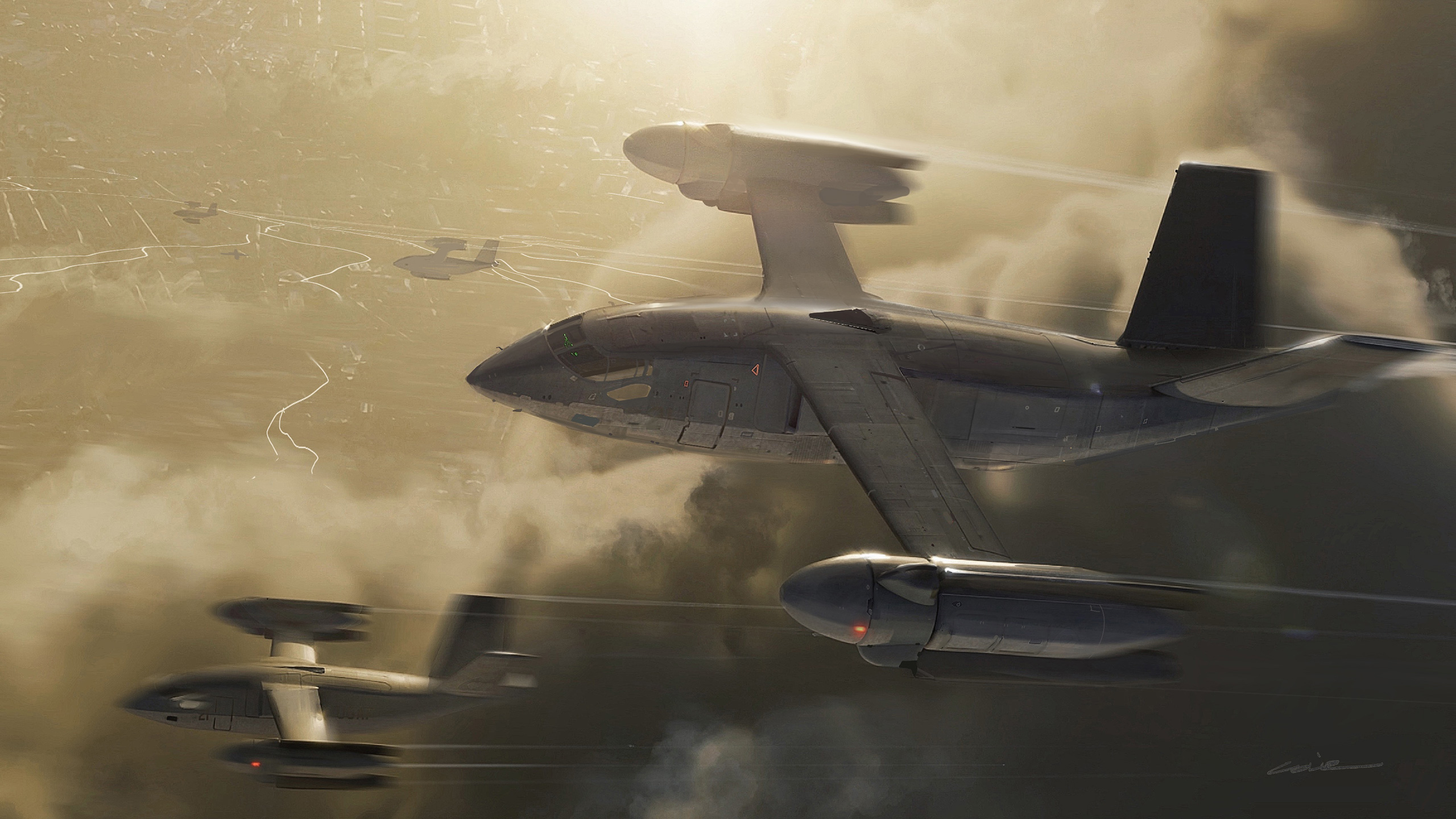
The United States has unveiled a new experimental aircraft designed to combine jet-like speed with the flexibility of helicopter operations.
The aircraft, designated X-76, is being built by Bell Textron as part of DARPA’s Speed and Runway Independent Technologies (SPRINT) programme. The project has now entered its build phase following the successful completion of a Critical Design Review, marking the transition from design work to manufacturing, integration and ground testing.
The SPRINT programme is a joint effort between the Defense Advanced Research Projects Agency (DARPA) and U.S. Special Operations Command aimed at overcoming a long-standing limitation in aviation. Conventional fixed-wing aircraft offer high speed but require prepared runways, while helicopters and other vertical take-off platforms can operate from austere locations but are significantly slower.
The X-76 demonstrator is intended to explore technologies that could bridge that gap. The aircraft is designed to cruise at speeds exceeding 400 knots while retaining the ability to hover and operate from unprepared surfaces without the need for traditional runways.
DARPA officials say the aim is to create an aircraft capable of rapid deployment and flexible operations in environments where conventional airbases may be unavailable or vulnerable.
“For too long, the runway has been both an enabler and a tether, granting speed but creating a critical vulnerability,” said Commander Ian Higgins of the U.S. Navy, the programme manager for SPRINT at DARPA.
“With SPRINT, we’re not just building an X-plane; we’re building options. We’re working to deliver the option of surprise, the option of rapid reinforcement, and the option of life-saving speed, anywhere on the globe, without needing any runway.”
The aircraft forms part of the long lineage of U.S. X-planes, experimental platforms used to test new aerospace technologies. DARPA said the X-76 designation was also chosen as a symbolic reference to the United States’ 250th anniversary and the revolutionary spirit of 1776, apparently.
With design work now complete, the next stage of the programme will focus on assembling and testing the demonstrator aircraft. If successful, the technologies explored through the X-76 could inform future military aircraft capable of high-speed, runway-independent operations.
Flight testing of the X-76 demonstrator is currently planned for early 2028.





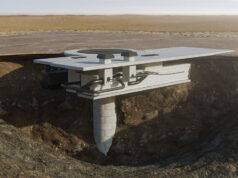


When the MOD announced they were looking for high speed aircraft able to take off and land on QE aircraft carriers without using cats and traps, they may have had this in mind.
I think that likelihood is best kept for chat in the pub, far too high end and distant.
Cos the UK is renowned for getting kit quickly.
I will be years away. If x bat is a thing and isn’t a tech bro investor scam, maybe worth looking at.
Or bae stryx
Something like this could make an excellent refueller for QE class and the USMC amphibs (and other F-35B VTOL carriers) if payload is decent.
I don’t think its that far off, with technology the way it is now firms are moving from design to prototyping at rapid pace. Exciting times.
Again ???
The US is like a dog with a bone with this concept type. I would have thought they would stop with the V-22 Osprey…
V22 has never really been satisfactory, with an iffy safety record and very questionable reliability.
But, to be fair, it represents 40 year old technology now and a first bold stab at getting it right. The V22 had the benifit of being a Cold War programme that was simply too important to cancel at the time, so despite the crashes and redesign etc, they just kept funding it.
Whats actually needed a much simpler VSTOL system, that should be possible today.
Sadly helicopters have a significant advantage in vertical lift for take off and landings. As their rotor blades shift a lot of air as they rotate, whilst a jet engine by comparison doesn’t. But the major problem with rotor blades is the speed of the tips. Too fast and they enter the transonic zone or even supersonic. Where the blade’s profile isn’t designed to generate lift. So instead generates a shed load of drag, which means you can chuck more power at the problem, but you won’t go any faster.
You then have two options, either make the blades really stiff and change the tip profile to a more transonic friendly design (Sikorsky-Boeing SB1), or you go down the compound gyroplane route (Fairey Rotordyne). Where you include a main wing to generate lift, allowing you to slow down the rotor rpm to near local airspeeds. But also include another form of propulsion to remove the need to tilt the disc, but also help push the aircraft along for the “wing” to generate the necessary lift.
However, both designs have their limitations. The SB1 uses brute force to get it above 200 knots. The rotor blades are made extra stiff to cope with the flow fluctuations over the tips when operating in the transonic zone. Then relies on the huge pusher propeller to reach these speeds. However, rigid blades have next to no flex, making the ride very choppy unless you have some form of damping between the main rotor gearbox and the aircraft’s top deck. Sikorsky also alluded that the main rotor rpm was slowed down slightly to make sure the tips don’t go supersonic. But without a main wing to provide the lost lift, the aircraft won’t be able to go any faster.
The Rotordyne had so much potential, but was designed too early. The rotor blades of the Rotordyne had a very short chord, i.e. distance from leading edge to trailing edge. Today’s blades would be at least double the chord, if not triple, and probably a lot shorter, if more than 4 blades are used. Giving more surface area to generate lift. Having the rotor blades driven by tip jets, does mean there is next to no torque reaction from the fuselage, so no need for a tail rotor, or coaxial blades. The main tractor propellors can provide any counter to torque reaction. But it had a main wing, so during forward flight it can convert from a helicopter to a gyroplane. this was done by removing the drive from the main rotor, which then turned due to the local air flowing over the rotor blades, as per a gyrocopter/plane. Whilst forward momentum was achieved using the two tractor propellers under the main wing. The limitation was the noise generated by the tip jets, which I believe Fairey/Westlands were in the process of being solved, when the Government canned the program.
Of the two methods listed above the Rotordyne has perhaps the best chance with competing with Bell’s X76 design with its folding prop-rotor blades. Although the X76 design isn’t without its issues. The main issue is propulsion, how do you power the prop-rotors, then power the aircraft when the rotors are folded? Bell have intimated that it might use two engines, one for the rotors and one for thrust. Which is not great, as you’ll always be carrying dead weight, much like the F35B. The problem is that in a turboshaft engine, the power turbine is designed to take something like 95% of the gas flow and turn it into rotational mechanical energy that spins the gearbox. I don’t believe there are any gas turbine engines that are multifunctional in this respect, where the power turbine blades have variable incidence. Which would allow more gas flow past the power turbine to generate thrust. I guess the other option would be to use something like Rolls Royce’s internal shaft generator design, to power the rotor drives electrically. But will it generate sufficient electricity? A modern Rotodyne could easily surpass 350 knots, but the rotor blades rpm and tip speeds even near local air speed will always be a limiting factor, it would be interesting to see how far you could push it? Though it won’t look as cool as the X76, being able to fold its blades in forward flight.
The Osprey is actually far safer than most people think, its incident rate is lower than the Blackhawk.
I love this craft. It will only be a step in the right direction, and I think we’ll see a next generation ordered and built at the end of the 2030s after this one has proven itself. Given a choice, I’d rather see extreme STOL for our carrier drones, just because this will be expensive and will take a while for the engineering to work in. However, X-76 is so very cool.
Nothing new, the UK looked at this in the 1960s with the Armstrong Whitworth AW.681. The original design was for a STOL aircraft later a VTOL aircraft with the engines of four Bristol Siddeley Pegasus ducted-flow turbofan engines. Harrier jump jet power plants. Labour binned the project and bought the Herc.
It is my opinion that for a transport aircraft the Harrier engine concept of ducted thrust is better and safer than a rotating turbine.