

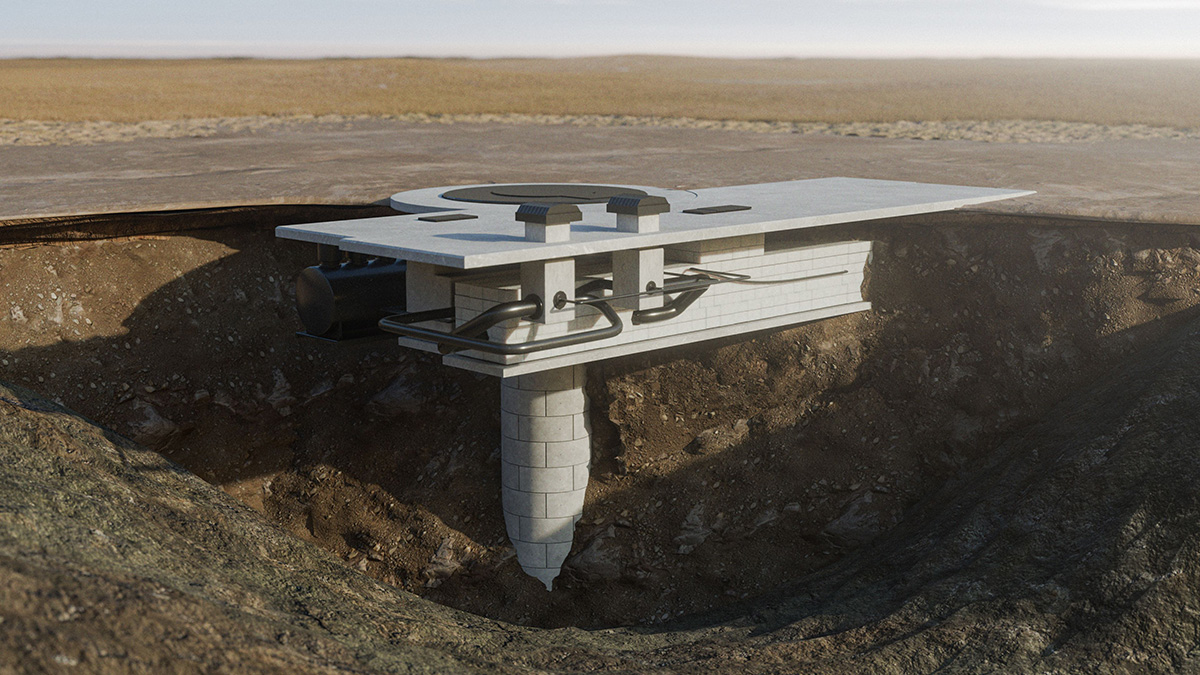
The United States has begun construction of a full-scale prototype launch silo for its next-generation Sentinel intercontinental ballistic missile, according to the U.S. Air Force.
Ground has been broken at Promontory, Utah, for the prototype, which is intended to validate a modular construction approach for up to 450 future silos planned under the LGM-35A Sentinel programme. The effort is being delivered in partnership with Northrop Grumman and Bechtel.
The prototype is designed to test a repeatable, standardised build process aimed at accelerating deployment and managing costs, while providing data to refine the final design ahead of full-rate production. The programme represents a shift away from refurbishing legacy Minuteman III infrastructure towards constructing new facilities.
“The new silo design delivers operationally relevant capability on a predictable cost and schedule,” said General Dale White. “We are accelerating delivery while ensuring the system is sustainable and ready for Airmen to operate for decades.”
The milestone follows a series of developments across the wider programme, including ongoing construction of a new command centre at F.E. Warren Air Force Base and testing of all propulsion stages of the missile. A flight test is currently planned for 2027 as the programme continues to mature.
“This prototype is a critical step in proving the design and reducing risk before production,” said Brigadier General William Rogers. “We are executing a disciplined acquisition strategy to deliver a fully integrated, operational weapon system on schedule.”
The Sentinel programme is intended to replace the Minuteman III system and is expected to deliver initial operational capability in the early 2030s.










The epic cost of these silos makes you think the US should have gone for road mobile launchers.
I’m was thinking the same thing, à la Midgetman, but that raises the issue of how to achieve safe dispersal during heightened tension, and the impact of the provocation that represents when it is observed. The silos are inscrutable in that sense, and have the advantage of being geographically dispersed already.
Silos force the opposition to have enough of their own warheads dedicated to taking out silos. Arms agreements limit each sides options when it limits numbers.. If they can’t hit the mobile missiles , they may as well aim them all at cities. It’s a very strange game they have played for years.
It’s just the cost at $140 billion and rising for a largely redundant weapon system seems excessive. I know there theory is the Russians will fire all their missiles at the silos but realistically will they? The Russians know full well what the US is trying to achieve and that the real US punch is in their submarines firing trident.
The missile cost are only around 10% of the program cost. Almost all the cost is in silo construction.
the sentinel is replacing minuteman and not able to use the legacy minuteman silos. a nice earner and paid work for states which have these silos.