

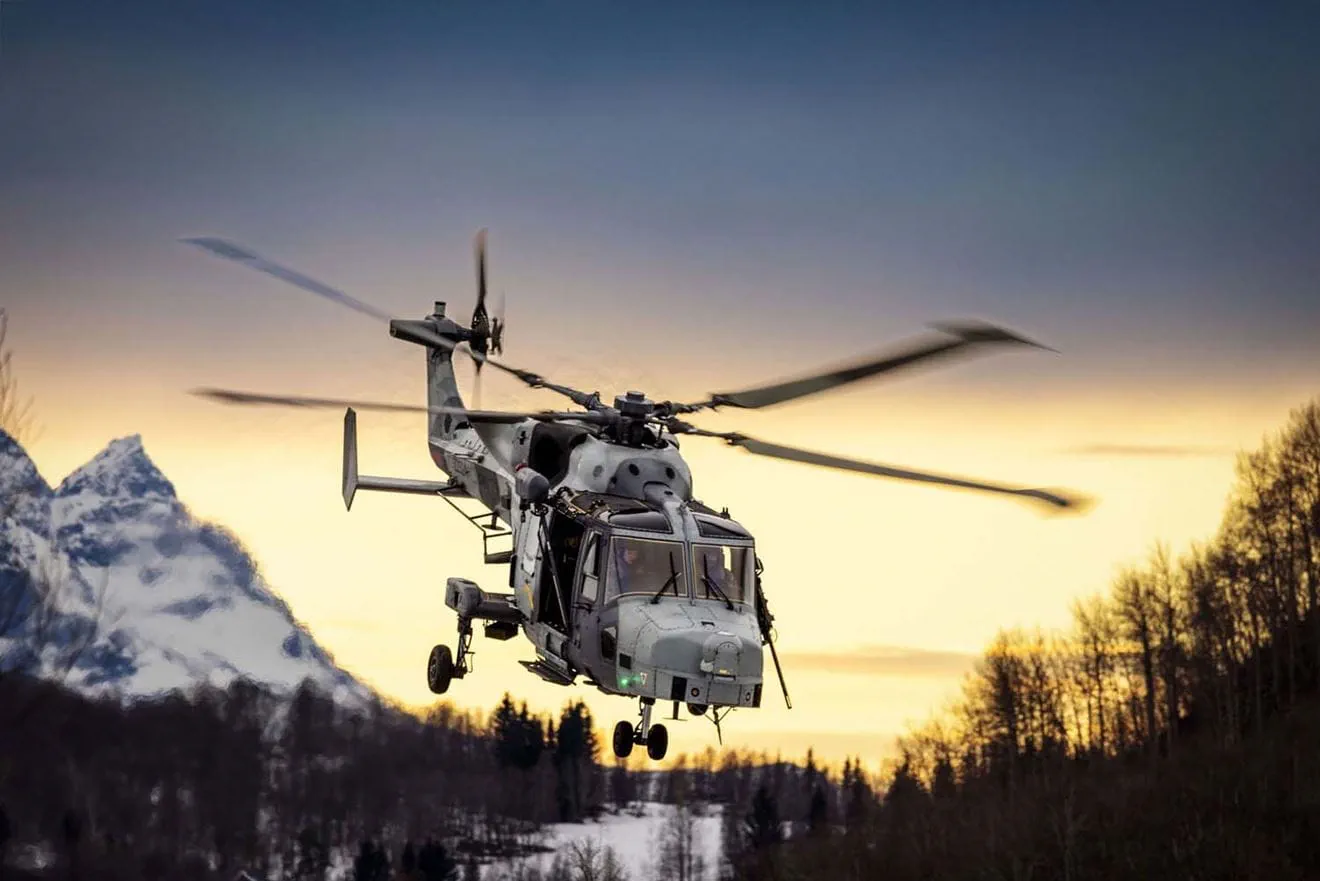
The Council on Geostrategy has warned that the UK’s approach to High North defence is too narrowly focused on the Royal Navy and RAF, with the British Army almost entirely absent from planning for a region where land forces could prove decisive, in written evidence to the Defence Committee’s Defence in the High North inquiry.
The submission, authored by Research Fellow William Freer, Adjunct Fellow Charlotte Kleberg and former British Army officer Matthew Palmer, argues that the High North represents arguably the UK’s primary security interest, describing it as the most likely axis of attack from which a peer threat against the home islands would emerge.
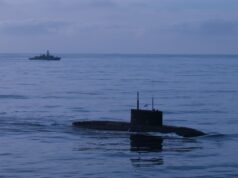
The Russian Northern Fleet is composed of at least 11 large surface combatants and 25 submarines with a combined offensive capacity of potentially over 800 missiles, with Russia continuing to invest heavily in basing infrastructure in the region “despite the burden of the Kremlin’s full-scale invasion of Ukraine.”
On the absence of the Army from High North planning, the submission is direct, saying the current strategy is the focus of the Royal Navy, alongside deep involvement from the RAF, and “extremely limited involvement from the third” branch. The High North is described as a littoral environment of islands and fjords where the ability to project and sustain land forces should play an important part in the Atlantic Shield, Strike and Bastion concepts, but the “decline of Britain’s amphibious force undermines the ability to do this at the scale needed” with the Commando Force currently limited by the retirement of the Albion-class amphibious warfare ships and no confirmed procurement of the successor Multi-Role Strike Ship, which is not expected to enter service until the mid-2030s. The submission is clear that “as useful as ‘raiding’ by commando forces can be, they are not a substitute for the ability to seize, hold, and reinforce key terrain.”
The submission suggests equipping an element of the Commando Force, such as 29 Commando Regiment Royal Artillery, with long-range missiles capable of striking both land and sea targets, and calls for 16 Air Assault Brigade to receive greater cold weather warfare training alongside Nordic allies given the likelihood of the High North featuring as an area of operations in a crisis scenario. It concludes that the UK’s military approach to the High North should be “a more concerted effort – even a national defence priority – cohered around the Shield/Strike/Bastion concepts” and that “a greater level of top-down political direction to direct the branches of the military is needed.”
On logistics, the submission identifies four critical challenges: resupplying land forces, keeping ships at sea, keeping aircraft in the air and doing all of this under contested conditions. Britain’s strategic sealift capacity is described as “significantly constrained by inadequate strategic sealift capacity, currently relying on an ageing, four-vessel Ro-Ro fleet” with the submission warning that even when new initiatives come to fruition in the 2030s, “total capacity will still fall short of surge demand.” The submission calls for peacetime contracts with commercial shipowners, saying “traditional requisitioning – i.e., Ships Taken Up From Trade – no longer ensures access to usable ships, crews, or expertise.”
The RAF’s ability to sustain operations in the High North is also questioned, with the submission noting that with only three E-7 Wedgetail and nine P-8 Poseidon aircraft, keeping these platforms on station over long distances will prove challenging, “worsened by the fact that the RAF’s current fleet of Voyager tankers cannot refuel either platform, as they are not fitted with a boom refuelling capability.”
On the Joint Expeditionary Force, the submission calls for significant reform, including establishing JEF Headquarters as a permanent independent entity, giving the JEF “a long-term, permanent campaign to operate” rather than time-bound reactive activities, and formalising the relationship between NATO and the JEF on division of responsibilities and crisis response. The submission cautions that “expansion should not be seen as universally good for the organisation” given that its strength lies in its flexibility and compact number of like-minded partners.







Once again Army looking for relevance.
It is a RN and RAF place and both these Services need more assets, not wasting them on the Army. In the end as an island, history shows we work well with a small army.
After all, we can only afford the expense of a decent RN and RAF at the expense of an Army….
The Army has had an outsized role during the 20th Century and it will be very hard for supporters of the Army to accept a reversion to its earlier status as a significantly junior partner to other Services.
However, that move would be the logical development given our reduced economic and global status, and the fact that all our European allies are largely land-based and so already have a focus on land warfare.
That said, the Army would benefit from having a key mission on which to focus its efforts but, to me at least, it already appears to have one: the defence of Estonia and the Baltic states. That is surely already a big enough role for what would be a smaller (i.e. more appropriately sized!) Army to properly fulfill.
Tim, the army already has a major role in NATO – provision of the commander, HQ, most Corps troops and two divisions to the ARRC. Why do you think the army has had an ‘earlier status as a significantly junior partner to the other Services’? – I have never heard that one.
Prior to what you call the British Army’s “outsized role during the 20th Century”, when was the Army ever a junior partner to the RAF???
I read it as the Army is highly relevant and has been left out of the planning.
Why has it been left out of the planning? Because it doesn’t have the mass it needs to sustain an Arctic and a Baltic commitment to NATO. ie the Army is highly relevant to all NATO scenarios and needs more mass, because at it’s current levels, it can’t be in two connected theatres concurrently.
All three domains will fail without securing the others.
Meanwhile in the real world. The army had an outsized leg infantry numbers compared to the rest Europe since the end of conscription. Northern Ireland, the Balkans, Iraq and Afghanistan was the justification for keeping large numbers of expensive low lethality troops. Since the reduction of leg infantry the army have been gunning for the Royal Marines. The Royal Marine have been tasked with high north operations for the last 50 years. This is inter service poltics nothing to do with capability.
Meanwhile in the actual real world….
You can’t say that political decisions to use military power were to keep infantry in the ORBAT…. have you considered that infantry persists because it is exactly what the military needs for most operations including major combat?
There is no such thing as “leg infantry”…. the infantry has maintained at 20% of combat power. The Army, however doesn’t see infantry like that. It actually thinks in terms of combat arms, combat support and combat service support. All-Arms manoeuvre has literally been the way it thinks since 1917, it just adds in arms and capabilities as they come available.
No-one in the Army is gunning for the RM, far from it. What the Army is genuinely worried about is that the Royal Navy have reduced the RMC to a light raiding force and done away with theatre entry capability. In fact I was literally in the briefing at MOD main building in the run up to SDSR 2020 where the Royal Navy wanted to offer up the Royal Marines as a saving – whihc is why we no longer have the Albion class.
The only inter-service politics I can see here is Royal Navy and Royal Air Force veterans wishing that the Army was irrelevant. However, as an Army veteran, I 100% accept why the other two services matter – I’m just taking an objective view on what this think tank were actually saying – you can’t control the High North and GIUK gap unless you control the land on either side as well as the surface, sub surface and the air.
Long winded replies dont change inconvenient facts. High intensity warfare requires heavy equipment that deployments in Northern Ireland didn’t have for 30 years. There was 20,000 solders in Northern Ireland in the 70s now its 1500. Its not a good use of limited resources to keep 10,000s of infantry for a mission that ended 30 years ago.
Sorry Ron, long winded answers that possess a repost to what you’re saying from someone who knows what they are talking about, doesn’t mean it’s changing facts. I’m sorry you don’t like your view being challenged.
You’ve also completely misunderstood the role of infantry and why it’s important in high intensity warfare. I’ll give you a very recent example.
Russia deployed Armoured columns into Ukraine in 2022, didn’t use Infantry to protect the flanks. Ukrainian light infantry absolutely decimated them with shoulder launched AT weapons.
Ron, Many of the large number of soldiers in NI were UDR which was specially raised from Local Nationals specifically for the Troubles…amd was disbanded.
Todays army has perhaps 17 – 18,000 regular Infantry of many different hues – armoured infantry, mechanised & light mechanised infantry, light role infantry, airmobile infantry, Parachute troops, Public Duties units, Trials units etc. There are so many types because there are so many ways in which infantry are used….and not just in the high intensity battlefield. The army is not keeping ‘10,000s of infantry’ sitting around in barracks doing little and just waiting to deploy to NI again!
I suppose it not so much that the army has to many infantry, the question is does it have to many pure light role infantry and how should they be equipped. The simple reality is in UK terms Light role infantry is essentially a category of under equipment battalions. if we look at the French army and what their light role infantry looks like it’s very very different..
Let’s just take one formation of french light infantry, 27th Mountain Infantry Brigade and look at its infantry battalions ( let’s not look at its recce, artillery ect because even this light infantry brigades CS will make us cry).
7th Mountain Infantry Battalion Mounted on VAB and VHM vehicles
13th Mountain Infantry Battalion mounted on VBMR and VHM vehicles
27th Mountain Infantry Battalion Mounted on VAB and VHM vehicles
And that is the problem.. the French army is ordering and operating about 6000 armoured vehicles for its infantry ( APC, IFV and protected mobility) the British army has so far got around to ordering 600.. even the french airmobile troops are getting a decent protected mobility vehicle in the VBAE.
That’s a fair reflection Jonathan. I suppose what the French do have is a very clear doctrine around rapid overseas intervention (primarily in Africa) and have built their force around that requirement. We’ve always had a slightly different approach and wider remit (hence we had much heavier forces than the French.)
What we did do very successfully in both Iraq and Afghanistan is rapidly convert light role infantry battalions dependent on the threat and requirement. For example, 1 RIFLES was employed as OMLT (basically the rangers current role) on HERRICK 9 and then used as what looked more like light mech using UoR armoured vehicles on HERRICK 14.
That actually provides a lot of flexibility and wider employment that a standing mechanised force (and dare I say it, at lower cost.). In essence, our infantry (and cavalry) concentrate on doing the basics well and then convert to the requirement when needed.
Yes the concept of having well trained light infantry is a good one and essentially the solid foundation.
Then if you need an air mobile battalion, protected mobility, light Mec etc you just grab a light role battalion… that’s a great concept.
BUT and this is the big one.. you need a good few battalions worth of protected mobility vehicles and APCs as well as medium rotors to turn them into those things at need.
Basically you don’t need the best vehicles in the world.. the Ukrainians made it clear actually any old APC or protected mobility vehicle is a good one as long as it’s very mobile, smallish and reliable..
So essentially we need to be able to have a “break glass” in time of war capability that allows all those light role infantry to become protected mobility, light Mec or air mobile battalions and the army should have the equipment to do that and the brigade level CS and CSS to create meaningful deployable brigades.
So yes agree completely the light role infantry battalions are a great concept and good building block.. but you need the rest of the structure and capabilities around them.
Agreed, on the understanding that some environments need light role troops. If you took the high north as an example, actually light role could be the way to go.
If we had to rapidly secure the Faroe Islands against a Russian threat(or because we wanted to put long range fires on it to target Russian surface shipping) it would probably be a light role task.
Yep and of course there is the elephant in the room that is the drone saturated battlefield and can traditional heavy combined arms formation’s even survive.. it may be that in the future the only viable force that can operate in large numbers on the battlefield are light role infantry and light recce… with heavy forces being held and hidden for specific tasks.
After all the most experienced army on the planet ( Ukraine) after 12 years of fighting and sucking up everything the west can teach essentially spends its entire time sneaking about really slow like and digging holes to hide in….
The other thing I’ll add:
The Royals provide(d) the Army with an extra manuever brigade. Nobody in the Army wanted that brigade to go. What killed it was the navy. The only arguments against the royals now arre about how much of a waste of CSS it is enabling UKCF if it isn’t going to operate as a brigade while the Army has Brigades that need CS and CSS, and at what point the Navy cutting the Marines reaches a point where the Marines having a seperate pipeline doesn’t make sense.
Also the high north last I checked included Northern Sweden and Finland, and while the Navy and Airforce I’m sure want to focus on places like Svalbard I think the Navy and RM have a bad habit of forgetting that NATO’s border with Russia is very different from where it was 4 years ago. It’s a 90mile road move to cut Murmansk off from Land connections, a joint Swedish-British Corps, or even Division (1st Swedish Division reinforced with maybe 16AA and 7LM) putting a march on the Russian naval base would without a doubt help the naval situation, adding another 500 miles to any Russian navy movements.
So here’s an out there challenge point..
Make the Marines what marines once were essentially shipboard infantry… boarding and force protection..and raiding, essentially maritime only roles. Essentially strip it right back.
Then give the army a new role.. it provides the brigade level amphibious capability for Northern Europe as well as a high north offensive punch ( deterrence) Sculp the army to fight at and into the Russian borders of Norway and Finland.. because that’s the biggest border and probably the greatest counter threat you could make from a land Forces point of view..Finland has always has a defensive army that’s going to swap land for pain so it’s no deterrent.. . basically if you turn the British army into a dagger in the north you have a huge deterrent .. as you say Russia has a lot of strategic assets and its second city up there… it’s never going to be able to concentrate its assets into the Baltics if its a got high level of threat ( AKA the bulk of the British army ) staring at it across the Finnish border..
I’m starting to think that a new European nato needs to be thinking about dividing up command for geographical areas with a small cohort of nations essentially majoring on one area.. so UK, Norway, Sweden,Finland, Denmark essentially focusing on leading above lat 60N, the Baltics, Poland Germany, France focusing on below lat 60N. Mixing up obviously ( so the UK maintaining a Baltic presence ect).
I wouldn’t really have an issue with it, but people generally get a bit upset when you suggest stripping the marines back and giving roles to the army. Frankly I’d happily turn 4th Light Brigade into an Amphib formation with enablers the Marines don’t need anymore. I’ve done a few concepts about how Marine assets like their armoured group could be used alongside the Light Dragoons etc. Would I rather see 3 Cmdo Brigade as a full manuever formation and 4th Light working alongside it? Sure. But if the Navy is going to half arse it’s Commando Formations then at least let the army get the most bang out of it’s buck.
As for European NATO see this:
https (space) ://www (Space) .youtube. (Space) com/watch?v=P_i0JIrF2-M
This would be the sensible thing, strategically and politically-financially – it gets around that inevitable Treasury question of “Why does the Navy need funding for an Army brigade?”. The RMs performing raids using drones and missiles as force multipliers can shape the battlefield and perform deception through diversionary actions.
Though this still requires amphibious landing ships to get the army there when the ports have invariably been denied or destroyed, and the multi-role support ships for the marines to carry out their raids from. Neither are being ordered, and given that ” your naval strategy is your build strategy”, this leaves us out in the cold…
Bob, the army only has a BG in the Baltic, with only a vague aspirarion to step up to a brigade. The army’s really significant contribution to NATO is its provision to the ARRC which is likely to start deployment for any conflict with Russia from Germany or western Poland.
Not really. The clear concern is that with the transition of RM to raiding and the loss of amphibious vessels, intervention in the high north by land forces, whether RM or army, will be very limited in scale and difficult to support and sustain.
Half joking, UK might need to lease the (or buy one) Trieste off Italy…and or the other half…at east regenerate the Albion to a uaeful level as a stop gap before MRSS and keep or sell.later at a higher price?
Exactly that: if our amphibious forces can no longer take and hold ground due to being re-rolled to much lighter forces, then the Army needs to adapt to be able to operate in the maritime expeditionary role.
I have sometimes voiced the opinion that the entire British armed forces (in some ways at least) would be better off thinking of themselves like the USMC does, rather than separate branches. I know the analogy doesn’t fully work- especially now that the USMC has got rid of their heavy armour- but back when they had it they trained for landing on a beach, taking ground and holding it. They’ve now handed that heavy role over to the US Army as I understand it, so the role is still there. We need to get the British Army to do the same.
Reminder that NATO now includes Sweden and Finland, and both are in the high north.
Jonty, Army once again looking for relevance? Where does that come from? When has the army ever lacked relevance? – they are the service that we have most used in real, hard kinetic operations in the last several decades.
The primary task of the army is to supply Corps HQ, multiple Corps Troops units and two divisions to the ARRC, one of only two SACEUR strategic reserves. So how is that not relevant?
How is it sensible to forget about British land forces when considering how to deter and defend on ‘the most likely axis of attack from which a peer threat against the home islands would emerge’?
Our island status does not preclude us from deterring and defending the Euro-Atlantic region together with our NATO allies.
You clearly want a small army – we have got a small army – its been cut once or twice each and every decade since 1953 (not a typo!).
Yes it’s not so much “ again” looking for relevance, it’s always relevant, it’s how it redesigns itself for the task it has to face in the next war..and I think the issue at the moment is that it’s not sure what that even looks like.. what is going to be relevant for land combat in the next war is a big old up in the air question really.
It feels like we have hit a potential real paradigm shift moment.. where will the army be fighting ? It’s looking more and more like very cold and inhospitable environments in the high north and the even bigger what does a drone saturated battlefield really mean.. I think western armies have been holding onto their heavy combined arms formations like a child with their teddy bear..but are sort of starting to worry maybe the teddy is not everything.
Wow big surprise, Former Army officers think army needs more money.
Not sure if the former army officers have noticed but there is not a lot of land in the high north.
Pongo grunters have be sent on special courses for that sort of thing.
He mentions the RM as raiding, yet now they seem to be reverting back to arctic role judging by comments from the 1SL.
On the Army, they should have a greater role. Question is, what, and what with?!
At the moment it is niche specialised troops, such as the Mtn Troops of 22, and 24RE, 29RA.
This is an area where the army needs to improve drastically, the RAF and RN find it easy to sell themselves during budget cuts but the army is still stuck in this glacial timeloop where it’s still trying to fight the last war but without the right equipment/mix. Surely if they could cobble together a few units and made them a hybrid arctic/mountain/naval infantry they might be able to win when it comes to investment and priority.
Jim, the NATO definition of the ‘High North’ includes the following land areas: northern (Arctic) Canada, Greenland (externally governed by Denmark), Iceland, Norway, Sweden, Finland, Alaska (United States)….as well as northern (Arctic) Russia!
Interesting subject I’ve touched on this before, usually chatting with Dern.
When the RM were going over to Littoral Strike Groups and Grey Zone, which subsequently died a death with the usual cuts and never reached the level they were envisaged, I questioned whether just 45 Cdo Group and some extras was enough ongoing Arctic experience.
I’d pondered whether a lighter Army Brigade, 7, 4, take your pick, could be given the north flank role. Dern I recall didn’t think there was much army training going on arctic wise to enable such a move.
Now what’s left of the RM ( nice work, HMG…) are back in the north, with both 40 and 45 Cdo Groups listed by the 1SL, are more Army really needed? Maybe for Finland, with the RM in their traditional far northern Norway role?
And as BobA says above, even if an Army Bde allocated was highly desirable, how is it possible without pulling a Bde from elsewhere, the mass isn’t there.
Love the idea of 29 RA with longer ranged missiles. Reminds me of an internal slide on the future RM I saw years back, that was pulled offline quickly. It mentioned longer ranged effectors, as otherwise good old 29RA remains with Light Guns and a Battery of LMM.
Where are the Strike Drones and longer range missiles then?
Many thousands have been delivered according to HMG, but the usual veil of secrecy descends so judging, and also deterring, becomes impossible.
Norway, Sweden and Finland dont need mass, they have plenty of mass by themselves. What they could benefit from is small numbers of specialists forces to act as force multipliers and disrupters on land. Their conscript armies have only between 1 and 2 years of service and that limits training. Greenland, despite the rather limted thinking in the Whitehouse, doesn’t need land forces. The only way any hostile land forces can be sustained in Greenland is if NORAD has lost air superiority. If NORAD has lost air superiority you are already in what is known as deep do do and Greenland is the least of your worries.
The Army has a permanent presence in Scandinavia now via 3 Ranger, which is generally becoming the closest thing that the Army has to an arctic unit. Norway and Sweden need mass, neither of them have the same conscription base that Finland does, but they also do not have much of a border with Russia. Finland’s mass conscript army is good for holding ground, and what you say about specialist forces might be of use to them, but the bigger thing is the Finnish Army’s “Operative” (read mobile) Forces are quite small, three mechanised/armoured and two light brigades without a Divisional structure. A Swedish Division and a couple of NATO Brigades would make an impact here if they enable offensive manuever and threaten the Kola peninsula.
3 UK Div and ARRC are probably baltic bound, but 16AA, 7 Light Mech and LSOF should have contingencies for operating in the high north IMO.
The problem with Norway, Sweden and Finland is they don’t actually have mass. Norway has a tin army and essentially works on the assumption its environment will be lethal to large formations. Finland works on its entire society becoming one big trap..5 million people with guns, hunting skills and a predilection for fighting ( and more mortars per head of population than any other nation on earth).
This means they are great soaks but they are entirely passive and you don’t end wars by being the passive recipient of pain ( ask Ukraine) you win wars by taking the fight to your enemy and destroying them. So the high north needs an offensive army.. Russia know very well the Nordic states don’t have the standing professional armies to undertake offensive actions, but you stick the British army in the mix and it’s a while different threat..all of a sudden you have a conventional deterrence and Russia has to spend resources to defence the high north.
Common sense there as always mate. I take the point about Finland, in fact all of the Baltics need Britani Jundi with mass. As for the high north? No one is better trained or has the attitude than the RM. And yes, they have been stripped to the bone.
I can speak from experience of Northern Merger, my opinion is the RM, not line infantry, are best suited to operate in that type of enviroment. Just as I would not expect the RM to operate out of the back of an APC with tanks…
29 RA? Yup stuck with arty, when yes, what is needed is a similar outlook the USMC has adopted on Pacific islands. Then we can always dream eh?
The Army is already overstretched and unable to meet its existing commitments in reality, there seems to be little value adding them to the equation at all unless NATO commitments change and free up existing capacity which seems extremely unlikely. Funding properly and re-expanding the RM to atleast pre-cuts levels (they don’t struggle with recruiting) should be the focus for any high north focused sea/land forces that are outside of the NATO ARRC commitment.
Surely it makes more sense structurally too with it being a Naval focused area of operations.
I think it’s fine that the RMC/RN/RAF take a lead in the North it makes sense.
working backwards a bit – the Paras seem to be the preferred Global Response force (Global 1) and the Marines seem to be the preferred maritime/arctic force (JEF/NATO Northern Flank) Logically this makes sense. Especially if we then add a third response group for NATO (Central European- Estonia being the current deployment).
What we need is for these to be resourced properly – my preference is for standing divisions similar to a USMC set up of 4 active MEU’s + 2 MEU’s worth of HQ/CSG = 15k personnel (inc. circa 4k embedded air)
this is doable and means we can deploy an MEU (enhanced regiment to UK) of 2.5k personnel on a rotational basis indefinitely to these regions.
what it does mean is that the RMC needs to expand to take on the North fully and the Army do NATO/UN/ commonwealth/ Global activities – it also means we need to focus on what we really can do with what we have and where we get the most bang for buck
More bang for buck, yes.
But, when will that happen, when “defence” means something else entirely to HMG and so much budget is spent on all the non military voices?
Problem, as I see it, is what is the ‘ground’ role in the High North? To me, it’s these three:
-Reinforcing/supporting our allies with capabilities they may not have, or have enough of. I’m thinking this would not be dissimilar to the battlegroup we have in Lithuania already. This would definitely be Army, but we can barely sustain the Lithuania battlegroup, let alone having another one available that can work in extreme cold temps in northern Norway or Finland.
-Preventing expansion of Russian-held zones in the High North. This would likely be as part of a larger force, but essentially troops semi-permanently preparing positions and holding islands and coastline that might otherwise be quickly taken by aggressive Russian action to improve their hand. This is similar to the fait accompli sudden attacks on the Baltic states that people were worried about a few years ago- Russia launches across the border, secures the land bridge to Kaliningrad and a few dozen kms either side, and then sits there daring NATO to kick them out again and risk nuclear war. This time with the various bits of islands and ice above the Arctic circle that could reduce our ability to keep tabs on their fleet and suchlike. Again, this strikes me more as an Army job than a RM one- certainly the raiding role we have right now.
-Taking forward positions along the Finnish and Norwegian coastlines and Islands, on the Barents and Baltic Seas. To allow precision strikes against Russian assets in areas they previously thought of as safe, gather ISR, etc. This is definitely a job for the RM, and they should already be doing it to prove to everyone that the can.
So, to me, there is a role for the Army in the High North. But they should be able to do the roles I’m describing anyway- it’s just a matter of being able to do it in the cold and dark!
Finland, Norway and Sweden have reasonably sized decently equipped conscpit forces. The Sweds have a specialist ranger battlion and the Finns have a specialist jeager regiment. There’s really not a lot for the army to do that’s not already covered by domestic forces or RM. Norway and its gas supply is strategically more important to the UK than Finland or Sweden. Finland and Sweden’s entry into NATO has made the High North less dependant on outside forces not more.
Points well made and taken. I presume that you see my first two actions for Ops in the High North as exclusively for Norway, Sweden and Finland to handle? I’ve no doubt they’re good, but are they able to do the first two actions without support from us or other European/NATO states? I’ve always understood that there was an expectation we’d send at least a battlegroup to assist in the defence of Norway (for example); at one point that may have been a battlegroup built around the RM, but they’re not in that role anymore- which leaves the army.
Fundamentally, I don’t think the RM is even light infantry anymore in terms of capabilities at scale. Their capacity for taking on armour in any quantity (even the light amphibious stuff that the Russians have) is questionable, same with attack aircraft (they have none of the capabilities that we’ve recently deployed with success to the ME and Cyprus) and potential counter-battery fire (The Army barely has sufficient systems and ranged guns and GMLRS). They wouldn’t be able to hold an island or a coastal choke point against much more than a shore party from a Russian vessel.
If we’re looking at the entire High North, from Greenland across to the coasts of Finland on the Barents Sea, and all the islands and suchlike between, I find it hard to believe that the Scandi countries can look after it all from a land military perspective, and our RM alone won’t fill that gap.
I suppose the point is the army and the marines are meant to have different roles.. the traditional role of the army really is the closer to logistic hubs high intensity battlefield and the role of the marines is the scattered lower intensity battles for control in the far places of the world without the infrastructure or logistic basis to keep a heavy high intensity focus army going.
So we have to ask ourselves what is the high north.. is it a closer to logistics hubs area that will see high intensity battle with large combined arms and heavy formations.. or is it the arse end of the world that is profoundly difficult to support large heavy formations in in which you need light troops specifically trained to live and fight in that environment.
Because of the historical context of ship board infantry being called marines and ships being the only thing that could take to to the arse ends of the world, we in the modern world where there are a few ways to now get around still have that demarcation.. but it’s really a bit false.. many marines are now deposed to their battlefield by air or by wheels.. what is really the same is their focus on fighting away from large logistics hubs in harsh alien environments. But as delivery to these places is no longer just the remit of ships, the army has also developed this capability ( air mobile troops).
The Chinese has in their practice communist way managed this by essentially removing a number of barriers and making the difference between army and marine where they operate not so much how.. so the Chinese army for instance has entire amphibious brigades.. that are not soldiers you load and unload from a boat, they are focused, trained and equipment in amphibious war first… the only difference between them and PLANMC is really area of operations, the PLAA are responsible for amphibious operations closes to china that will essentially be still heavy combined arms operations.. but from boats and the PLANMC are responsible for all amphibious and expeditionary endeavour away from the Chinese periphery and main logistic hubs.. ( sitting in Africa or on some island in the Indian Ocean ).
Yes there is always the ship based infantry role.. but that’s very very small beer and I would argue you don’t need 5000 personal to do that. In reality serious marine forces are about operations where your army is not designed to go ( because you can only design an army around a limited number of environments and purposes )
So really the question is who has the job of the high north and who is best to deliver it.. now the issue will be be inter service rivalry.. if it takes a force of say 8000-10000 to provide a fully equipped brigade that can be deployed by sea and air into the most hostile of environments away from any real logistics hubs .. even if the marines are the people to do it everyone will fight tooth and nail to stop them getting more personal instead of them… and say they can do the job as well and the Marines will fight tooth and nail to say it’s their job and that is what they are good at.
One point raised in the article I can agree with is that the JEF should have a permanent HQ and its relationship with NATO should be formalised. We desperately need a NATO with in a NATO and an expanded JEF is the way to go. Poland, Canada and Germany should all be added but it should remain under UK command at all times.
I suggest changing the name to Joint European Force or Joint Northern Force if Canada is in. Perhaps France and Italy could work on a joint Southern Force as well and then rhe UK and France could operate a Joint Nuclear Force to cover the entire European continent and Canada.
The best way to manage NATO’s America problem is to work around the issue. Assume that NATO won’t hold and that the USA won’t be there and have non NATO capabilities able to fight on day one.
The USA normally does the right thing it’s just takes them a couple of years to get there and having the US in NATO even just politically acts as a massive deterrent because and enemy nation won’t know what they’re are going to do.
However with even Germany now out producing the USA in medium caliber weapons now it won’t be long until Europe starts to say goodbye to the USA every time trump threatens to leave. Even just the UK has lunched two satellite constellation in the past year with another ready to go next year and other European nations are rapidly doing the same. Many of the gaps in a European context are looking smaller all the time and now Russia can’t even put tanks in a parade in Moscow on May Day because it can’t risk loosing them.
JEF formalise its relationship with NATO how?? Isn’t JEFs strength that its free of NATO bureaucracy? Smells like an attempt to bring the wayward JEF to heel.
Is it just the RN arm of JEF that is to headquarted at Northwood?
You’d think the Special Operations Brigade and 16 Air Assault would have training for operations in the high north
ASOB as whole won’t train for operations in the high north, it’s constituent formations have regional commitments. 3 Ranger is North East Europe, so they train for the Baltics, Finland and northern Sweden, and train for that.