

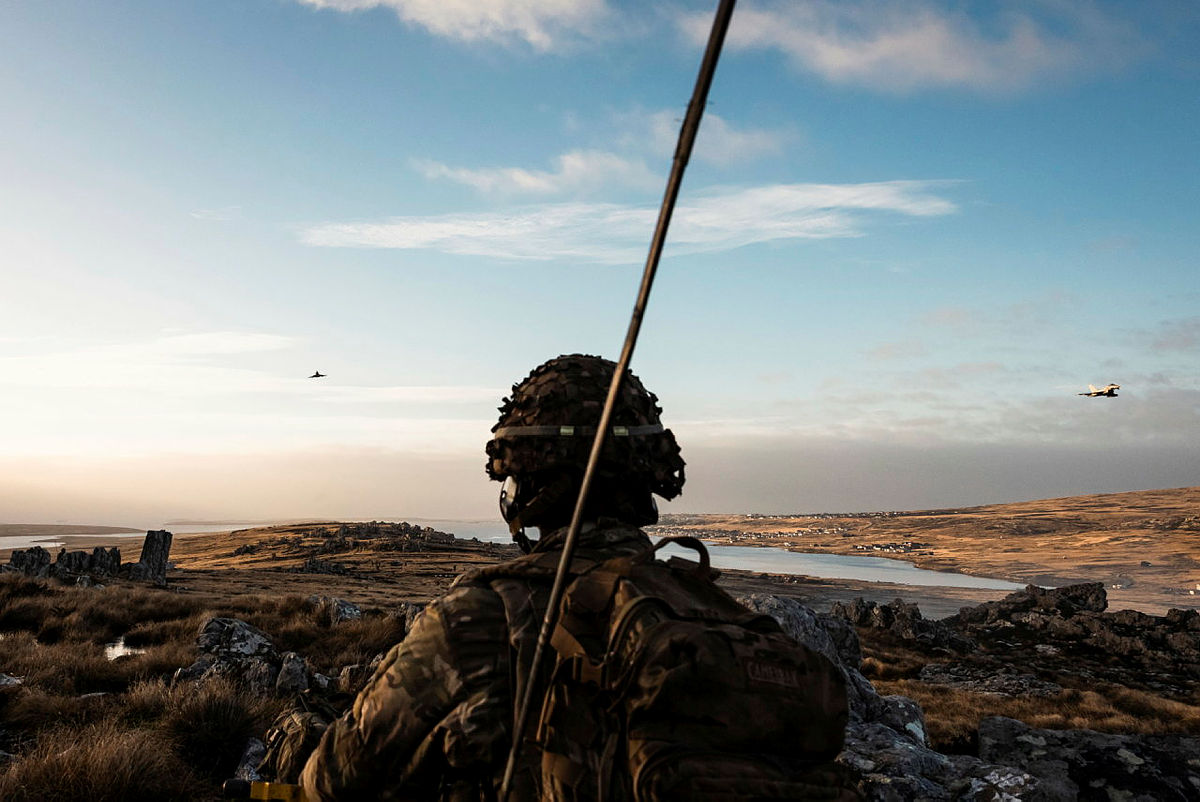
The Ministry of Defence intends to place an 18-month contract worth £150 million with Babcock Integrated Technology to sustain the British Army’s tactical communications systems, warning that failure to do so would leave a critical capability gap, the department stated in a transparency notice.
The notice, identifier 2026/S 000-075680, was published on 10 August 2026 and covers logistics support, repair and overhaul services for Land Environment Tactical Communications and Information Systems, known as TacCIS. Excluding VAT the value is £150 million, rising to £180 million with VAT included.
The earliest date for signature is 22 February 2027, with estimated contract dates running from 26 February 2027 to 28 August 2028.
The award is being made directly, without competition, under the defence and security regime. The department sets out its reasoning at some length. The current Logistics Support Contract expires on 27 February 2027 and is due to be replaced by a competitively procured arrangement, but that successor is not expected to be awarded until February 2028, leaving a gap in provision of up to 18 months that the interim contract is intended to bridge.
According to the notice, not placing a continuation contract with Babcock would leave the department without access to a single industry point able to coordinate support across the various tactical communications systems and equipment fielded by the Field Army. The department warns of a decline in TacCIS availability, an inability to replace faulty equipment in operational theatres and a loss of asset visibility in the supply chain, stating that the result in the battlespace would be a loss of information exchange capability and an unacceptable risk to safety and life.
The notice also links the support chain to the BCIP 5.7 update, saying its absence would remove the logistical underpinning needed to transition from the current BCIP 5.6 standard and prevent the work required to bring in-service equipment up to the right configuration for updating.
TacCIS covers the radios, data terminals, satellite links and associated infrastructure that carry voice and data across a deployed British Army formation, from dismounted section radios up to headquarters networks. Bowman, the tactical communications system introduced from 2004 to replace Clansman, remains the backbone of that capability, with the Bowman Combat Infrastructure Platform, or BCIP, the software and configuration baseline that has been progressively upgraded through successive iterations.
Replacing Bowman has been an objective for well over a decade. The Morpheus programme, intended to deliver an open architecture successor through an evolve-to-open-architecture approach, was restructured after the MOD ended its contract with General Dynamics in 2022 following delays and cost growth, a decision that drew scrutiny from the Public Accounts Committee.
The department has since pursued the requirement through the Land Environment Tactical Communication and Information Systems portfolio, with elements delivered incrementally rather than as a single replacement programme.
Babcock has held the logistics support role for the equipment through the existing contract, providing repair, overhaul and supply chain coordination across the fleet of radios and associated systems in service and deployed.











Here we go again – another looming capability gap!
Oh!
‘Replacing Bowman has been an objective for well over a decade. The Morpheus programme, intended to deliver an open architecture successor through an evolve-to-open-architecture approach, was restructured after the MOD ended its contract with General Dynamics in 2022 following delays and cost growth’
Isn’t that the same General Dynamics UK Ltd responsible for the Ajax programme?
‘Several of the reconnaissance transporters stopped working…They had been taken out of service after 31 soldiers were left feeling unwell having ridden in 23 Ajax during the Titan Storm drill, with some reportedly stumbling from their vehicles vomiting and unable to stand. During a trial aimed at returning the vehicles to action, engineers realised they had developed more problems and pulled them back in to be fixed. The news is the latest problem to hit the £6.3bn programme…’
DT 07 August 2026