

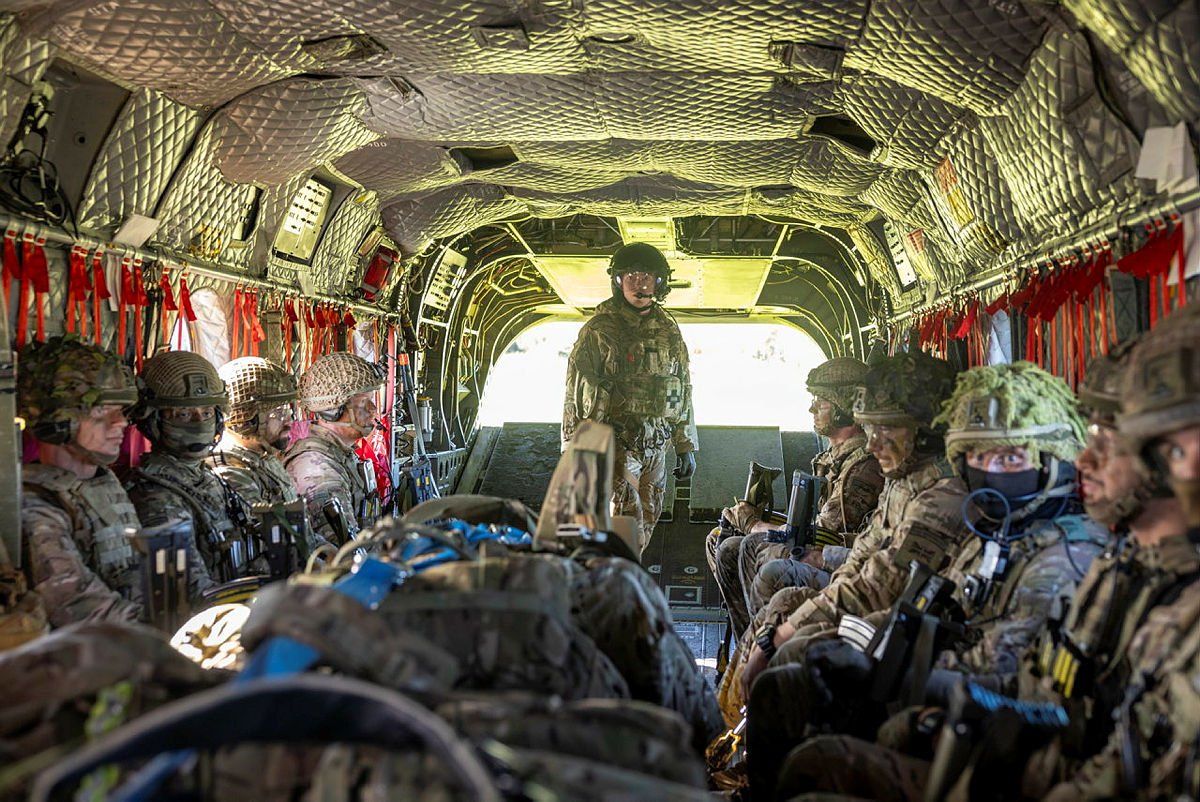
The proportion of British Army recruits failing to complete initial training has fallen to 19 percent, according to new figures released by the Ministry of Defence.
Data covering the most recent recruiting year shows Phase 1 attrition has declined steadily, returning to levels last seen before 2020 after several years of higher dropout rates. The figures indicate a downward trend in recent years, with the proportion leaving training falling from 29% in 2021/22 to 25% in 2022/23, 22% in 2023/24 and now 19% in 2024/25.
Defence minister Louise Sandher-Jones said there are multiple reasons why recruits leave during initial training. “Reasons for leaving training during Phase 1 are numerous, but include issues such as medical conditions, discipline, false information given on joining and general unsuitability for Army service.”
The data relates to Regular Army Other Ranks and includes all personnel who leave before completing Phase 1 training. It excludes Gurkhas, reserves and other non-regular personnel.
Phase 1 training is the first stage of a soldier’s career and focuses on basic military skills and preparation for service. Infantry recruits complete a longer combined course at Catterick, which integrates basic and specialist training.
Here’s the answer in full.
| Recruiting Year (Year of Intake) | Proportion of Recruiting Year that left Phase 1 Training | |
| 2017/2018 | 19% | |
| 2018/2019 | 19% | |
| 2019/2020 | 19% | |
| 2020/2021 | 26% | |
| 2021/2022 | 29% | |
| 2022/2023 | 25% | |
| 2023/2024 | 22% | |
| 2024/2025 | 19% | p |
| Source: Analysis (Army) | ||
1. The figures are for the Trade Trained Regular Army only and therefore exclude Gurkhas, Full Time Reserve Service, Mobilised Reserves, Army Reserve and all other Reserves, but includes those personnel that have transferred from GURTAM to UKTAP.
2. Prior to September 2016, Analysis (Army) are unable to distinguish between Phase 1 and Phase 2 training.
3.. Figures include those that leave the Army before becoming Phase 1 trained for any reason.
4. The proportion is calculated by dividing all those that have left Phase 1 Training in the 24 months since joining by total numbers recruited into Phase 1. Outflow used in the calculation of proportions is up to 1st July 2025.
5. There may still be a few personnel who entered during Financial Years 24/25 that can outflow as Phase 1 trained. These figures are provisional ‘p’ as these figures are subject to change.
6. Infantry recruits undergo a longer 28-week Combat Infantry Course (CIC) at the Infantry Training Centre (ITC) in Catterick, which combines basic training with infantry-specific skills.
7. Figures include Junior Entrants who have a longer Phase 1 training time.




So it is back to what it was 2017-2020, so reasonably stable?
Amazing how every time something like this comes up there’s always one someone who instantly screams “DEI” (even though that’s an Americanism) and claims standards have been lowered despite no evidence of it huh?
Well, the RAF were caught out for discrimination a few years ago, but I’ve not seen any evidence of it in the army or the RN.
Nor lowering of standards. You should know, you’re in it!
If the % remains stable then I don’t see any issue, I guess people do give up for lots of reasons. I’d be more concerned if it Phase 2.
And all the services discriminated against anyone who wasn’t white, straight, and male, for decades. So should we assume that every white straight man is a case of discrimination too? See how bigoted the automatic assumption is with zero evidence when it’s thrown about by people?
Or is it only shitty when it affects your demographic?
All of it is shitty for the person at the end of it, sure, but why are you aiming this at me, I didn’t bring it up? I was asking about drop out % if they’re to be expected at that amount for a set period.
.. catching strays? I suspect the initial reply was likely aimed at the comment below yours..
I suspect one possible reason for reduced levels of dropout is by lowering of standards. When an army spends so much on DEI and debates whether front line soldiers can wear make up we know there are serious issues.
We know that was a problem within the Royal Air Force:
‘The (Royal) Air Force is paying £5,000 each to 31 white men – a total of £155,000 – who it found had been unfairly disadvantaged by a recruitment policy that – under the leadership of Air Chief Marshal Sir Mike Wigston, the head of the RAF – sought to boost female and ethnic minority ratios in the air force, according to a defence source.
A further review indicated hundreds more had been disadvantaged, the source said.
The RAF confirmed that 31 individuals had received payments.’
2023
‘I noted that the boards have recently been predominantly white male heavy, if we don’t have enough BAME and female to board then we need to make the decision to pause boarding and seek more BAME and female from the RF [recruitment force].
“I don’t really need to see loads of useless white male pilots, lets [sic] get a [sic] focussed as possible, I am more than happy to reduce boarding if needed to have a balanced BAME/female/Male board.”
Email shown to Government Inquiry from RAF recruitment Squadron Leader Jan 2021
I hope he was sacked for those comments.
Amazingly, for some strange reason every photo I ever see of our military on ops or in group photos shows majority whites.
And this is a majority white country.
So, to say they’re useless……words fail me. Without whites we’d have no military.
No-one was disciplined. The CAS was retiring in any case.
One of the disgraceful aspects of this was that the rather splendid Group Captain Elizabeth Nicholl resigned from her recruitment role at RAF Cranwell rather than push through a policy which had discriminated against 160 male would-be recruits.
Yes, I know of her.
She was the whistle blower for the whole damned business I recall.
She should have been recalled and promoted. I think she pursued a constructive dismissal case and received a decent, and well merited, out of court settlement.
Good on her.
Quite right Danielle. I’s expect, in a predominately white Country (at the moment) that the majority of personnel would also be white. Those that believe otherwise would also, i presume, expect the Nigerian armed forces to have an equal mix of BAME service personnel. The same would apply to Chinese, Russian, Japanese, Turkish, Arab Countries etc. You get the point. Do these Countries recruit on the grounds of BAME? I think not. Why should we? Records show that costs spent by the British Armed Forces, on DEI, has more than doubled in recent years. The number of personnel working solely on diversity and inclusion roles more than doubled. The majority of personnel working in Britain’s military are non combat troops. There are more Admirals in Britain’s navy than combat surface ships (As of early 2026 approximately 134 senior officers at the rank of Rear Admiral and above (1-star to 4-star) across the Ministry of Defence. There are less than 18 major surface combatant vessels). Our Forces are in a sorry state for sure.
This ‘seems’ like good news, I would like to start my day on good UK defence news for once!
Is this down to the fitness boot camps I read about in preparation for basic training?
I wonder what the AR recruitment and retention rates are at the moment, as well as the overall trend?
Congrats on the Army for holding on to more bods and hopefully filling the PIDS.