

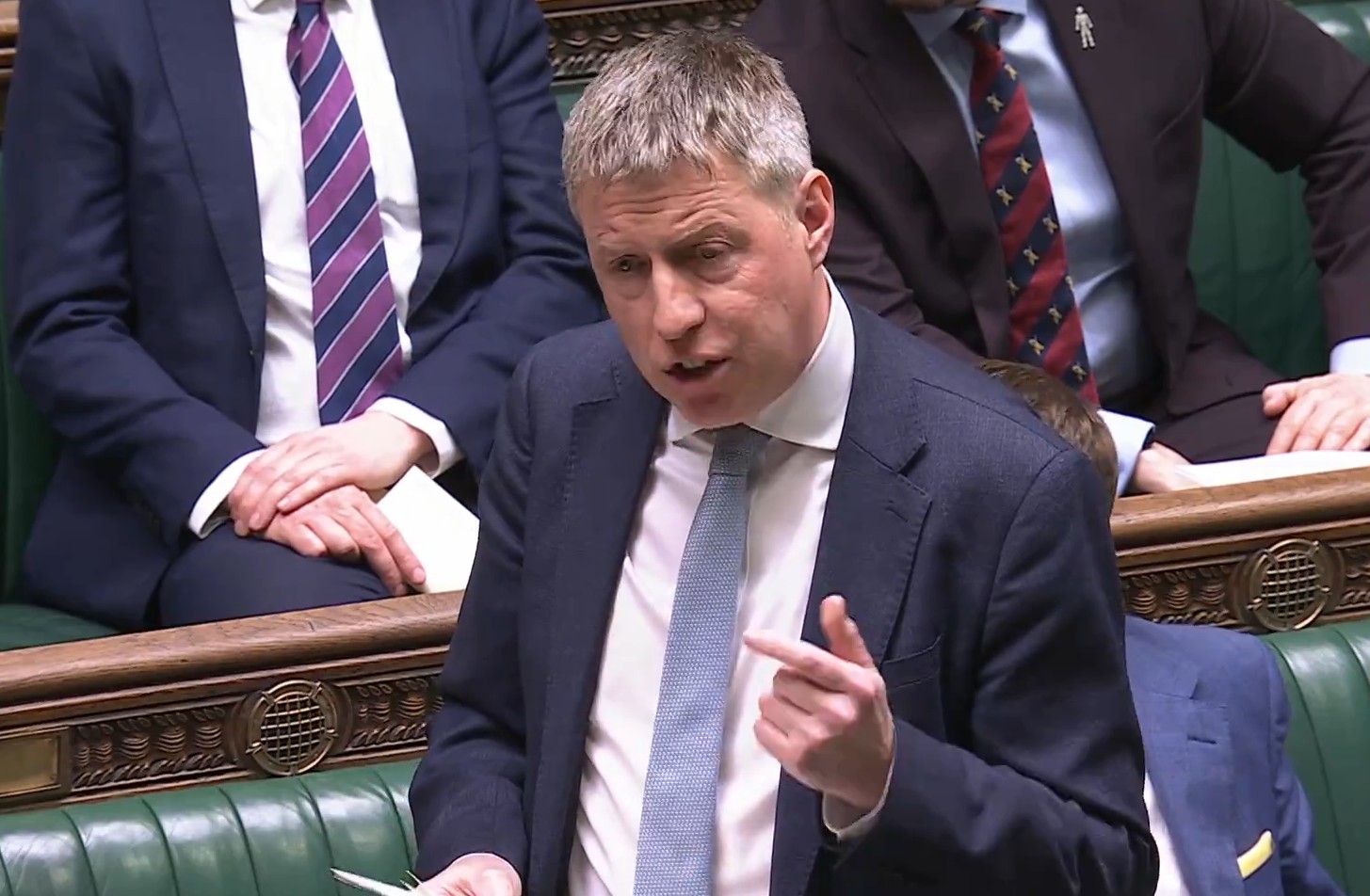
A proposal to use defence bonds to accelerate UK military investment was raised in Parliament today, as MPs debated how to close what has been described as a multibillion-pound funding gap in defence.
Liberal Democrat defence spokesperson James MacCleary argued that while there is broad agreement on the need to increase defence spending, the pace of investment is falling short of what the security environment demands.
He warned against funding increases by cutting other areas such as international development or renewable energy, describing that approach as “just robbing Peter to pay Paul.”
Referring to warnings from the Chief of the Defence Staff, MacCleary said there was a £28 billion shortfall in defence funding and urged ministers to consider a new financing mechanism. “I want to offer the Secretary of State a practical, costed way to close much of that gap. Defence bonds,” he told the House. He said the proposal could raise around £20 billion over the next two years and channel investment rapidly into military capability and the defence industrial base, including small and medium-sized enterprises. He asked whether the government would give the idea “serious consideration as part of a clear funded plan to plug the funding gap and get defence investment moving.”
Defence Secretary John Healey responded by pointing to the government’s existing spending commitments, contrasting them with previous opposition positions. “This is a government that has made a commitment and is making a record investment in defence,” he said, describing it as the largest increase since the end of the Cold War. Healey added that the government would consider “any potential way of raising the level of investment going into defence,” but pushed back on criticism of its funding approach, noting plans to reach 2.5% of GDP and beyond in the coming years.












Say what you like about the Liberal Democrats but they are now the only party who have a costed & immediate increase of the defence budget.
Labour: 3% sometime in the next parliament. Sometime, maybe, never…
Conservatives: 3% now but no idea where the money is coming from apart from unexplained cuts to other areas.
Greens: Have no defence policy other than hoping the Russians go away.
Reform: Have a fantasy economic policy which means they have no believable spending plans at all.
that’s about right. why would anyone believe Reform or vote Green?
Where can I see this Rob.
The Liberal Democrats can say what they like as they will never govern the country, not credible at all given it’s not really costed, they would not slash NHS, welfare or the tax burden. They had to eat their promises the last time they had a half hand on a lever of power.
Im afraid there is no party we can trust to do the serious things.
We need wider debate and new ideas for defence funding, as there is clearly a very big gap between.what is needed and how much can be extracted from the hard-pressed public purse.
Whether the Lib Dems may or may not have a role in a future government is neither here nor there, anymore than the Conservatives regaining power any time soon. What is needed is support and ideas from all corners of the House and a consensus on how we rise to the funding challenge. So I have no problem at all with the Lib Dems or any other party coming up with ideas to meet the challenge.
It’s easy how to rise to a reasonable position on defence, spend less on other things. But that’s hard to do politically and requires competence to deliver more with less wastage (including in defence spending itself) so instead of tackling that, the Libs talk of war bonds when we are not in an existential war. That’s why it’s not serious, it’s baloney but I welcome, as you say, the discussion to keep it elevated in the public mind.
Their policy of reducing the number of SSBNs down to 3 or alternatively rely on SSNs with a handful of low yield TLAM variants no doubt help bring costs down…
I’m not sure one can describe borrowing more money as a ‘costed’ policy. The nations finances are now so bad that the only credible way of increasing the budget are cuts elsewhere.
“2.5 per cent in the coming years” What a load of garbage When? 3030? 2035? Sometime never?
FY 2027/8
Has this country really sunk so low that war bonds have to be considered in “peace time” to fund a self inflicted black hole in lies about defence spending? Perhaps Sir Keir could ask his ex besty Mandelson for some cool idea of how to make money? Pathetic treasonous wasters to a man. Healey should throw him self on his biro but he wont he will continue to promote the lie that defence spending is increasing.
Just another way of saying they would borrow more money. How original!
It helped the government during WW2. The idea had merit and needs serious consideration . I certainly I would buy into them.
There is a sort of trade unionist-type view from many on here that, whatever the other competing claims for funds, the government must just give defence lots more money. It ignores the fact that the Treasury was bare at the end of Sunak’s term, no big heap.of wonga to chuck about. That our national debt is at its fiscal ceiling. And that the public will not vote for or buy yet more cuts to roads and rail, police, courts, schools, NHS, standard of living etc, etc, of which they have had 14 weary years.
We have a serious funding problem: there is not enough money in the defence budget to replace the air, land and sea equipments going out of service, let alone to fund the next generation Tempest, Dreadnought and the like and the raft of ‘transformational’ optimally manned/uncrewed platforms and weapons envisaged.
One main problem is soaring inflation in the cost of equipment, which used to take about 25% of the MOD budget but is projected to exceed 40% of future procurement. The Tories had a novel idea: cut 30,000 troops from the army and switch (most of) the money saved into new equipment. Alas, it didn’t go into new army equipment, it went into paying for the very expensive naval ships and subs – £1.7bn Astutes, £3.5bn carriers, £1.2 bn frigates, not to mention the umpty-billion Dreadnought SSBNs.
Net result is that the army is tiny, down from 105,000 when Cameron came in, to just 73,000 today – but has never been so poorly equipped. 40-50 year old FV432s, ageing Warriors, almost no field artillery, Landrover TUMs overdue for replacement, desperately slow purchase of Sky Sabre, due to shortage of cash and so on.
The army has really 20 major weapons systems procurements needed. There are just five struggling along, with very small numbers being acquired very slowly – Challenger 3, Boxer, GMLRS, Sky Sabre and of course Ajax. Other future acquisitions are trailered, like Boxer RCH 155, the ‘Heavy’ Protected Mobility replacement for Mastiff/Ridgeback, a Utility vehicle, some UAVs, but how they are to be funded when we can barely pay for the current batch of new kit is a riddle that the MOD can’t answer with £££, just words.
The RAF’s budget is equally stretched and threadbare. They have to find about £1.2bn a year to fund Tempest, which is more than half their combat air budget. There are gaps everywhere in combat support, with no AEW successor for Sentry, no cash for NMH, Hawk T1 and T2 overdue for replacement (and the 60 Tutors used by the UATS), minimalist, inadequate numbers of Poseidon, Rivet Joint, Protector UAVs, Envoy, etc.
The point here is that, on a budget of 2.34% of GDP (2024), if we opt to have vastly expensive status weapons like SSBN and aircraft carriers, along with £1bn-plus SSNs, destroyers and frigates, we don’t have anywhere near enough money left to fund army and RAF kit, so these become ever-slower to order and produce, ever-shrinking in numbers and ever more gapping in the inventory
What do we do about it? HMG has committed close to £14bn extra for defence over three years. That is poo-pood by some, mainly those who haven’t kept up with what is going on. It is a 22% increase on paper, from £60.2 bn to £73.5 in FY 2027/8. But a lot of that will be lost to inflation, no doubt a tranche will be handed to Ukraine and some of it will be needed for the service pay rises. Net result is that, even with the new money, we are still £28bn short.
So the task is to either cut that figure down, by dropping some of the transformational wish-list, gapping some kit and delaying some purchases, OR figuring out some way to get more funding in the pot. In this, we are pretty much in the same boat as our ENATO allies. They are finding the extra money in a variety of ways. One is making defence spending an exception to their fiscal borrowing rules, so extra money can be borrowed for defence expenditure. Another is the EU’s SAFE fund, where member states (and third parties) can borrow money at a useful rate to enable a quick military build up now.
The Lib Dem idea of war bonds is another route to raise a quick war chest to meet our immediate needs. The war bonds in WW2 were not that successful at raising money from the general public, under 5% came from them, the rest from the commercial financial markets and institutional investors. A defence bond today would need to offer more attractive terms than other government gilts and the money markets consulted throughout, to avoid any market jitters at what is basically more borrowing. It is a workable idea I think, would create a pile of new money to enable us to start rearming in these tense times.
For me, I would go for a penny in the pound tax rise, ring-fenced for defence. Or, to assuage the self-interested public, that 1p.to be split between defence and social services, as another sector that has been starved of funds for at least 14 years.
Whichever, we should be actively looking for ways and means to grow the defence budget, not simply moaning about how big.a freebie the state can hand out
.