

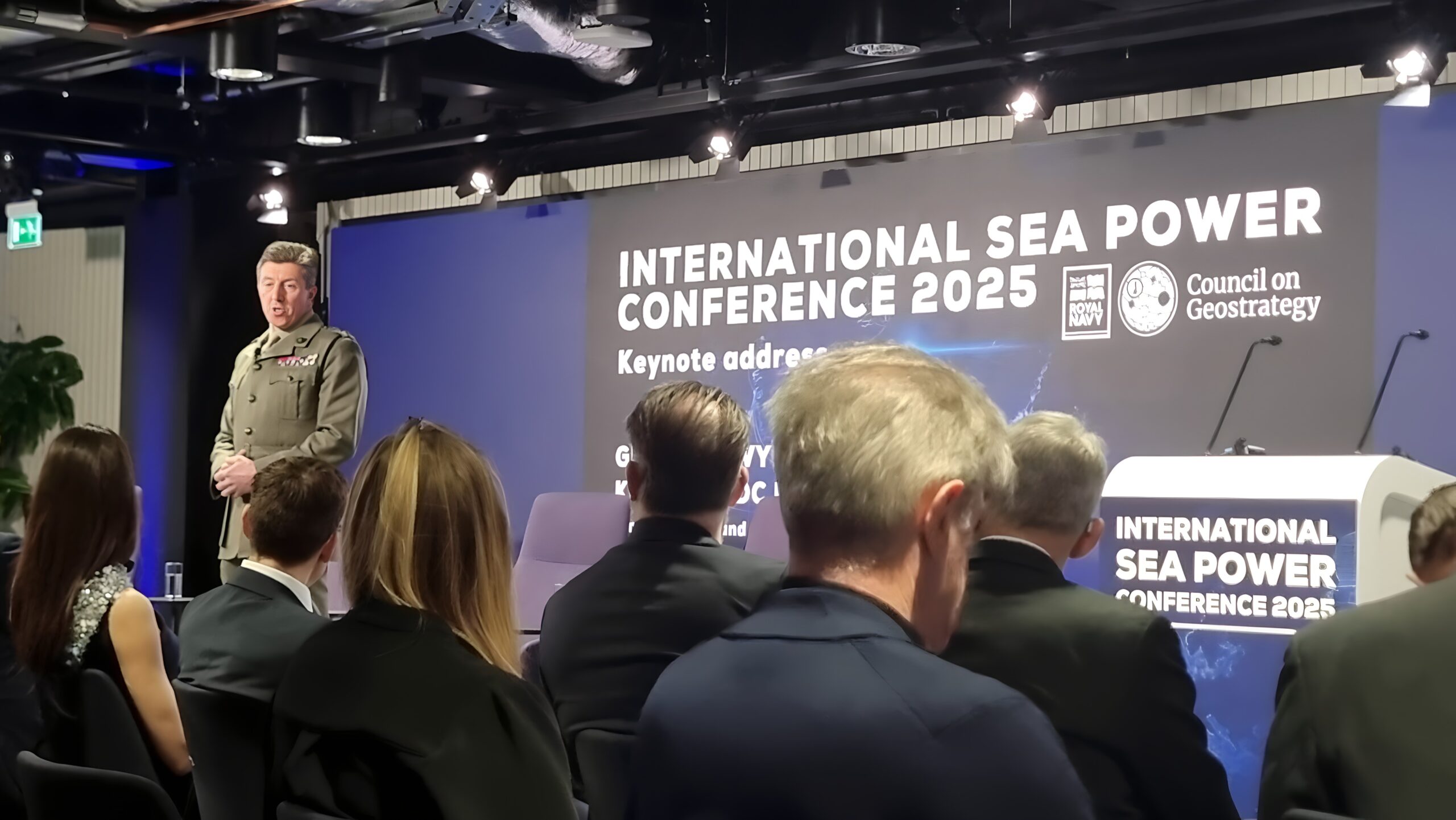
The First Sea Lord used the International Sea Power Conference in London to issue one of the starkest assessments of the UK’s maritime position since the end of the Cold War.
His core argument was clear: the strategic advantage that Britain and its allies have long held in the North Atlantic is under threat, and without rapid transformation the Royal Navy will struggle to keep pace.
He began by grounding his warning in the fundamentals of maritime power, stressing that geography, seaborne trade and alliances remain constants that shape every serious naval calculation. As he put it, “virtually all our trade, virtually all our data and virtually all our energy flows, either above on or under the sea”. The UK’s location is central, with the Norwegian coast and the narrow approaches to the Atlantic forming what he described as a lifeline not just for Britain but for NATO as a whole.
Alliances, he argued, derive their strength from difference and debate rather than uniformity, saying “we are stronger because we are together, not because we see the world in the same way… our strength comes from our differences”. But that foundation, he suggested, will only matter if allies act quickly and decisively enough in a deteriorating global environment.
The speech’s pivot was unambiguous as the threat picture has shifted, and the change is structural. “The world is becoming an unstable place”, he said, before highlighting Russia’s expanding maritime posture. Moscow has increased incursions in UK and NATO waters by 30 percent in two years and continues to invest heavily in its Northern Fleet. The spy ship Yantar is only the visible part of the problem. “It’s what’s going on under the waves that most concerns me”, he warned.
His bluntest line followed. “The advantage that we have enjoyed in the Atlantic since the end of the Cold War… is at risk. We are holding on, but not by much.” That judgement is not likely to fade from policy debates.
Rapid advances, especially in autonomy and artificial intelligence, mean that guessing the future is futile. “The pace of technological change will never, ever be as slow again as it is today”, he said. The Navy’s answer is to build for speed and adaptability rather than fixed assumptions.
This is the logic behind the hybrid warfighting navy and, in particular, Atlantic Bastion, which he described as “our bold new approach to secure the underwater battlespace against a modernising Russia”. The programme links autonomous sensors, crewed platforms and digital networks to detect and track threats across vast ocean spaces. The First Sea Lord emphasised that industry has invested heavily alongside the Ministry of Defence, adding that the UK’s leadership in maritime autonomy reflects both commercial opportunity and strategic necessity.
Early sensors will enter the water next year, and the concept is already drawing allied interest. Norway has signalled its intention to integrate its future Type 26 frigates into Atlantic Bastion, a move he welcomed as evidence of the shared stakes in North Atlantic security. “We need allies. Together, we will build a network… and we will remain in control in the Atlantic.”
He linked this to wider transformation plans across the Navy: autonomous escorts under Atlantic Shield; experimentation with fast-jet launch from carriers under Atlantic Strike; and the continued reshaping of the Commando Force for the High North. These steps, he insisted, are not speculative. “If this all sounds like science fiction, it is not. It is science backed. This is not future technology. This is stuff that is here now.”
The Royal Navy’s new warfighting readiness plan for 2029 launched as he spoke. It is intended to harden leadership, accelerate decision-making and strip away internal bureaucracy. “War fighting is the difference between deterrence and vulnerability”, he said, underscoring the rationale. The Royal Navy has moved beyond incremental reform and is attempting large-scale structural change in the face of a resurgent threat and accelerating technology. His closing call left little room for ambiguity.
“We are moving out because we have no choice. The alternative is not worth thinking about.”
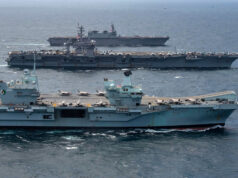
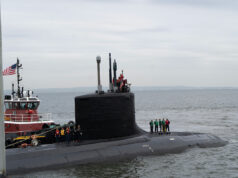


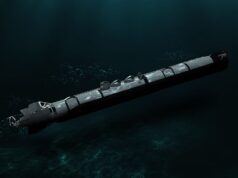
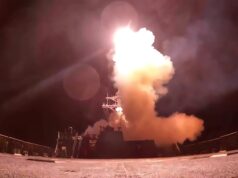
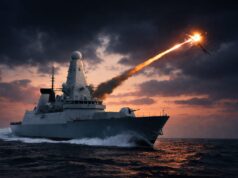


It’s shitty click bate headline grabbing statements like this that get me.
If their was any truth in this statement then the first sea lord should immediately resign and there should be a public enquiry.
The actual truth is the North Atlantic has never been so secure for Britain since 1905.
In the Cold War we faced 400 Soviet submarines. Now Russia barely has 3 SSN’s operating in the west and the Atlantic along with the Mediterranean and Baltic is a NATO lake.
And we have zero operating SSNs and 1 frigate deployed up north
We have five SSN’s with a sixth joining shortly. You don’t just count warships at sea in a navy, on that metric Russia has no navy.
I said operating didnt I? Out of that 5 we have not the 6th which is years away from deployment, 1 is in long term layup, 2 in protracted refits, 1 is waiting on a drydock to be available and the newest Anson has just come back into port.
Yes and my point was Russia has only three SSN’s total operating in the west vs our 5.
Our navy should only match the threat environment, we need to stop biging up the Russian navy. Ours alone is superior much less the rest of NATO.
The threat pissed by Russia is largely a privacy nuisance threat that SSN’s and frigates are ill prepared to deal with.
How many SSN’s and Frigates does it take to stop a Russia spy ship in international waters conducting surveys?
More than 1 of each, were not engaging them with firepower so we have to herd them out of the areas we dont want them and a single ship cant do that.
So you want to downplay the russian threat and watch our armed forces continue to shrink then.
No I don’t want our armed forces to shrink
I don’t want us to be paralysed by an no existent Russian threat much as we were in 2022 over Ukraine.
Russia sends spy ships and the odd submarine around our waters to try and provoke media reactions which in turn feed in to their gravy zone activities.
We can’t heard ships in international waters nor can we do anything but follow submarines in international waters.
We need more ships and SSN’s but not at the expensive of power projection. There is a growing chorus of useful idiots in the UK amplified by Russian and Chinese bots calling for the navy to scrap the carriers and double down on frigates.
That wasn’t the right call in the 1970’s and it’s not the right call today but it’s something China and Russia want . The Trump administration wants the same likely because the one thing America does have is aircraft carriers and they like us being dependent on them while we provide the work horse ASW frigates that their defence industry can’t be f**ked doing because they aint enough gravy in frigates.
We need a balanced fleet and we should not let an imaginary Russian bogie man change that.
Bless you Jim, I’d much rather be fighting in the gravy zone than the grey zone! We definately need more escoprts & subs. If we have escorts as motherships for various drones, thet does muktiply capability some, but losea few escorts & we’re struggling. If the USA continues its Putin loving aberation we could be facing a hostile USN sometime too, so we must up our game or learn to speak Russian & Chinese plus keep our mouths shut. Most of us commenting on here would be for the chop too.
But life is richer with gravy!
I’m with Hugo on this. Our “nuclear deterrent” subs seem to all be in dock. They’re a deterrent when they’re armed, manned and at sea, not sitting at base waiting for maintenance. Arguing otherwise is like saying a racing car is “a contender for first place” when it’s still in the lorry which is stuck in traffic.
Wrong. The Astute class SSN are not the SSBNs responsible for CASD.
The UK independent Nuclear Deterrent is intact and not in dry Dock.
I don’t know where you’re getting these numbers of Russian subs from, as far as I’m aware the Northern Fleet has:
8 Yasen/Yasen-Ms (~4/5 active, with ~3/4 under construction)
14 Oscar II (~5/6 active)
~12 Akula (~10 active)
UK has 1 active SSN, with a couple more potentially ready in the next couple of years.
The deployment readiness of the active boats in the Northern fleet is of course hard to know for sure, but with it being the one part of Russia’s military that gets significant and consistent investment, and the lead time for Naval capabilities being measured in years and decades, it would be immensly foolish to write off this threat as click-bait. With 3/4 Yasen-Ms under construction this means the NF has a massive head start on future hulls compared to UK.
The loadout for these boats is a threat UK doesn’t currently have a credible defence for. If 2 or 3 of these managed to slip through the net and Putin really wanted to start a war, they could do enormous damage. UK must ramp up its capabilities to respond. Leaving this to fate, or the whims of Russian will would be a dereliction. I for one am very glad we have a 1SL who is talking in terms that drive transformation and development of our Navy, it would be sorely needed even without a pacing threat at the end of the street.
This is just not accurate. Yes, there are 3 Yasen SSGNs in the Northern Fleet (another vessel of the class also just started sea trials), but at least one Oscar was also reported active as of 2025 together with at least 2 Akulas and 1 Victor III. Other SSNs may also be active according to open sources. Russia is also starting to deploy a new class of SSK (Project 677) in the Atlantic … and then there are the “special operations” submarines also operating with the Northern Fleet.
I agree that many people seem to want to have it both ways: the Russian navy is decrepit and simultaneously a massive threat. The truth is much more complicated.
As AFU have demonstrated, nobody should overlook the corruption and incompetence of the armed forces of the terrorist state.
As they previously demonstrated by refusing assistance, they don’t care about zeroing a whole crew to show how mighty they are…
It’s amazing how you list Russian submarines under construction but only British submarines at sea.
🤔
Might think you had an agenda 😀
Yes and we have twenty SSN’s in Rosyth and Davenport on extended readiness
😀
Are you OK? Boats waiting to go INTO maintenance tends to mean, they can’t go out to Sea.
The RN is in a dreadful state and all who are interested in her, should say so and not make excuses.
That is only the case if you ignore their purpose-built SSGN fleet, which are very dangerous indeed to shipping and the UK itself, and the special purpose SSNs that are the main threat to subsea infrastructure.
Plain SSNs are the least of our worries.
I’m referring to their SSGN as SSN’s as they don’t have any pure SSN’s that are less than 30 years old. They have five Yassen class three of which are in the Atlantic area and that is their entire offensive navy against NATO.
Any time these submarines go past Norway it seems to be front page news suggesting they are no where near as quiet as is made out in western media.
What if, for every one we detect, they’ve been through three times undetected?
Paint a threat that does not exist. Bung in a meaningless statistic. Pretend that you don’t know anti- Russians countries in Europe move their national boundaries to catch out Russian flights and shipping, and you have a good argument to ress for war.
What he should have said, was something along the lines of 30 years of poor UK Government investment in the military as they didn’t want a strong military, they wanted one that was in the eu, and no ties to respect, discipline ,honour and loyalty.
The countries in the East of Europe, close to Russia, are increasing the size of their armies and stockpiles of battlefield systems; not just because it is critical to NATO but because these capabilities are intimately linked to their own personal defence. They are not massively increasing their fleet sizes to send to Atlantic because that is not their domain. The Atlantic and North Seas are not only critical NATO lifelines but also intimately linked to the defence of the United Kingdom. If we’re not going to take ownership of that then who else is best placed to do it? The proposed defence spending increases could enable that but not if UK defence money is liberally peppered about trying to match other allies in their own domains while denuding our own.
If only there was an allied nation with the most powerful navy on the planet and more money than god that also saw control of the Atlantic as key to its own security, we could perhaps share the burden in some form of international alliance structure. We might call this alliance the treaty of the North Atlantic and create an organisation to oversee it.
Then together we could stand up to Russia’s three active SSN’s and that one spy ship that likes to hang around cables. 😀
We could also provide a combined tug boat force to escort Russia’s SSK’s as they evacuate the Mediterranean.
Hi, Jim. Yes, I agree but these days, when we’re talking about “NATO”, I feel that there is an orange painted elephant in the room that we have to tiptoe around and make contingencies for.
I also mostly your optimism with regards to Russia’s much vaunted capabilities.
– “mostly share your optimism.”
I agree when it comes to the Estonian boarder, the US may not show up, Russian submarines sinking ships in the Atlantic is a much bigger issue for the USA than us. Europe imports little over the mid Atlantic, the USA almost everything.
As the American’s found out in 1942 to their horror, America is only a fortress if the UK is holding the GIUK gap against a hostile actor. If that changes then almost Americas entire population and economic base is just a few short miles from the threat.
I think there are ground for concern regarding the United States Navy. Firstly, Trump’s recently released security strategy is grim reading from a European perspective. Secondly, the Chinese navy is numerically superior the USN and is almost entirely concentrated in the Asia Pacific Region. There may be a time when having significant naval forces outside the Asia Pacific is no longer viable for the America.
If we form our war planning around the basis that the US will not be involved then we won’t be caught out if that comes to pass. Also, if we demonstrate that we are capable without the US then figures such as Trump can’t use American dependency as stick to beat Europe into submission.
Why we need a 30 combatants navy with 12 SSNs ASAP.
Trouble is that it takes so very long to build things and there isn’t even the gumption to order things now.
The follow on slots for T31 are already screaming to be filled.
We’re in an era where if we try to do everything with our budget we end up doing nothing. Having a fleet as you suggest would assist the primary function of the military: to prevent the death of Brits and the destruction of their property at home, in Britain, while securing an area that is vital to NATO and the defence of Europe.
It would be synergetic with the stated National Maritime Security and Shipbuilding strategies and reinforce the UK’s secondary interest in being ‘Global Britain,’ enabling continued deployments East of Suez, if that is still seen as a worthwhile enterprise.
The cost is an accepted deficiency in areas that are of less immediate concern to British Security that could be ramped up if a serious war actually occurred when we’d expect the defence budget to surge into double digit percentages of GDP.
Ordering 10 more T31 A140 type vessels costs peanuts over the 7-10 years it would take to deliver them.
Even with 32 slot Mk41 VLS, NSM and a mid level hull sonar/or mid level tail the costs would not be astronomical.
A £4Bn program @ £575m/yr?
There does come a point where the CBE joke [Cant Be Everywhere] does have currency. Mass has a quality all of its own……
Hugo, or his twin, will pop along to tell us we can never crew anything ever even with a full recruitment stream. So Hugo’s advice will be to retire to a dark corner with a bottle of cheap whiskey!
If newer T31s can halve the number of required core crews, as Babcock has claimed, buying ten and retiring five should not trouble Hugo. Similarly, take half as much expensive whisky into the dark corner and your taste buds and liver will both thank you. Win-win.
You think we have 575M a year available for shipbuilding? especially with programs like Astute and Dreadnought ongoing?
Astute and Dreadnought already have budget lines.
I’ve allowed 1/3 of the uplift to go to those programs.
The primary function of the military is to deter The King’s enemies. That requires rearmament on land, sea and air. Putin/Russia will trigger NATO Article 5, either within The Suwalki Corridor or The Baltic States, if they perceive weakness, as they did in 2014 (just after Britain withdrew its conventional deterrent from Continental Europe) and 2022 (just after the Afghanistan debacle). With the notable exception of Poland, that weakness persists to this day. Only consider the suborning by Russia of governments in Hungary, Serbia, Czechia, Slovakia and Austria to understand how small the reassurance that a re-armed Poland provides to anyone except itself. Unfortunately the reality is that Britain has abrogated the security assurances that it gave to Ukraine in 1994 and unilaterally disarmed since then…and that will not change without the (still unlikely) election of a majority reforming government.
Nobody disputes the desirability of rearmament on land, sea and air but there is the world that you want and the world as it is. In the world that is, there is not the money to do everything that you want. No one agrees who should pay for it. Even folk in this very post, who have above average interest in the matter, are debating on who it is that should be paying more tax.
With regards to the 1994 Budapest Memorandum that was to provide security assurance to Ukraine, that was signed also by the United States and Russia. In the world of 2025 that is, I feel that the UK is the signatory that is acting closer to the spirit of the memorandum than the others. What was the real alternative without the US honouring its part?
As the U.S. points out, had Europe, or in the case of the Budapest Memorandum, Britain, not unilaterally disarmed, it is unlikely that Russia would have risked annexing Crimea. Crimea having been annexed, the immediate action should have been to position an Army Corps headquarters with at least one fully formed armoured division in Poland. Deterrence is the.key. For some reason, Europe appears to require British military leadership. We are therefore committed to providing a two division Army Corps to NATO in Europe. We currently do not even possess one credible Armoured Division. As a real commitment to our allies in writing, that must be our priority…for deterrence. But, as you say, pigs might fly. That is why we require a reforming government….which, may very well be too late.
And no-one should be paying more tax. The first step of a reforming government will be to abandon the unevidenced silliness that is net zero. That will free up annually the 2% of GDP uplift that the defence budget urgently requires.
Zelensky, quite rightly, asks:
‘There is one question I – and all Ukrainians – want to get an answer to, if Russia again starts the war, what will our partners do?’
I think we needed to intervene kinetically to provide both air cover & troops sufficient to defeat & drive out Russian forces a long time ago. That is the only means Putin would be detered. Pussy footing around allowing Russia to devestate, kill, steal & kidnap Ukraine plays intomPutins hands at horrifying cost. Shame we’ve waited so long that the USA has elected a pro-Putin president with a grudge against zelenski.
I think the other concern about the US Navy is industrial capacity for shipbuilding and maintenance. Yes they have a shipbuilding plan, but currently vessels being built is nothing like rates required in this plan. Since 2012, they have commissioned the following large surface combatants, 3 Zumwalts (which have been a white elephant so far) and 12 Arleigh Burkes in 13 years since, though 2 should be commissioned first half of 2026. Of those only 4 have been assigned to the Atlantic fleet in 13 years (in fact 15 years for the Atlantic fleet, as there is a gap of zero from 2010-17) … but both the 2026 vessels are for the Atlantic fleet. The fleet will shrink as they will need to decommission vessels faster than they are building them.
You’re fighting an old war…. The Atlantic is now nothing but a duck pond when it comes to strategic defence.
Better we made friends than enemies ( and NATO has been making enemies for the last 35 years)!
The only countries in Europe that we’re not friends with are the ones brutalizing their neighbours and who also happen to be the same ones who would benefit from NATO and Britain neglecting the seas that Britain happens to exist in. Is that Russian spy ship just a glass bottom pleasure cruise?
So who should “we” make friends with, Russia?? in case you hadn’t noticed they are actually losing the fight, but they don’t want to give in, why because their economy would implode. Why do you think that Trump et al want to bale out Russia financially?? so when they win (sarcasm) then their economy will be stable and Trump can get rich, its all about business opportunities for him.
You say that NATO has been making enemies for the last 35 years, would you like to share with the rest of the class, who those enemies are, apart form you that is?? (make a list, go on)
At this moment in time the only enemy that Europe has is Trump and America, he would sell out you for the price of a Mars Bar or less
That’s got to be one of the most foolish, clueless posts I’ve ever read. You need to get out more. MSM is stifling your ability to think for yourself
Its simple economics, not sure you understand the concept?? Russia is at war, they are running on a wartime economy and everything that entails, sure everything is fine at the moment, but the moment the fighting stop’s then the Russian economy will run into trouble, and yes Trump et all want to invest financially in Russia
Where do you get your information from, do tell
For once a credible statement!
Too little resource and £££££ to deal with a real and verifiable threat.
The issue with money is inequality: the 1% of our population are receiving like 90% or more of the money. Meanwhile services are crumbling, skills are stagnating or declining and Labour is openly advertising the UK as the world’s breadbasket, even as everyday Brits are seeing food prices escalate.
“ The issue with money is inequality”
The issue with money is a lack of understanding of how it works.
People earning £125k are taxed @ 60% – unsurprisingly they are now moving in droves to low tax jurisdictions to work remotely.
The next problem is that half the population take more out of the system than the put into it – I’m not talking about the infirm and genuinely disabled – I’m talking able earners who get handouts.
Top earners are subjected to Scandi levels of taxation for third world services. Whereas in Sandi the low earners contribute here they don’t – that is the issue. The system is broken and a lot of upper middle management are off – that is a very serious problem.
Unless they remove themselves from PAYE and start employing themselves thought there own company and top it up with divided payments or people who have book jobs and cash jobs
I thought that the 62% marginal tax rate only applies to the portion of income between £100,000 and £125,140. It is not the average tax rate for the entire £125,140 income, the total effective tax rate on that full amount is much lower.
Still its a lot, but running a country is expensive.
Student idea.. save it for a school forum
Instead of criticising what is your solution then, apart from the final one??
Go on, come up with some ideas about what you would do
Are you stalking me! Unlike you, I’m not a duck pond admiral, without my finger on the pulse. But I have been around long enough to know that politicians and military brass over the last 30 years have let the country down.
If you say so, also not a duck pond admiral, and not stalking just find your comments interesting from an anthropological point of view, I didn’t think you would mind 🙂
The government believes we have to live within our means. The military knows the enemy also has to die within those very same means. MOD doesn’t exist without purpose.
Interestingly I hear more noises about private finance, but when I mentioned this on UKDJ earlier, someone asked if that meant PFI, and I still can’t find people who know what if anything concrete is being done. It’s probably just warm words at the moment, that we should be encouraging private finance, without any real plans. There are backbencher MPs on board, but seemingly no ministers, and I heard Gen. Patrick Sanders speak on the subject, but no current senior leadership.
The Peace Dividend delusion is over and we are not safe.
Time to pay the insurance premium for freedom or learn ruzzian [CDS]
The Peace Dividend delusion has allowed politicians to safeguard their electoral prospects by shifting Defence spending to social provision and even war in Europe hasn’t enabled them to pivot back to Defence.
We bailed out the bankers in 2008 and now its their turn to invest in Defence since their business depends on peace and stability. Lower risk means lower cost for Defence Investment Bonds than standard Gilts.
Thus the 3.5% GDP Defence spending target for 2030, and 2.75% GDP for 2026 are affordable without tax increases. A long term investment plan for national security.
A requirement for a banking licence.
Over to Finance Ministers to make it happen. Rachel from accounts already failed with 2.6% GDP for 2026 since she’s afraid of the Bond Market.
Time to grow a pair and use carrot & stick. The DIB quota and upside opportunity are the carrot. Windfall tax on unreasonable banking profits are the stick.
It’s not reasonable to make large profits whilst not investing in Defence industry directly or DIBs because security and stability are all banks license and risk requirements.
Why would Russia want Europe or the UK – we are destroying ourselves via our own governments
The Russian mindset views Orthodoxy and / or Slavic ethnicity as synonymous with allegiance to Moscow – 1917 did not change this world view, which was interrupted by fall of the Berlin wall. Putin sees himself as the saviour tasked with recreating Imperial ‘mother’ Russia. Orthodox Ukraine, Bulgaria, Romania, Serbia are all at risk of losing their democracies as are the Baltic states which experienced immigration of ethnic Russians. The Poles are ethnic Slavs and differentiate themselves by their Catholic faith, but they understand Putin’s slavic mindset and a rearming accordingly. The Russian orthodox mindset is also characterised by bunker mentality, a persecution complex which requires generous geographic buffer zones like East Germany, Poland, Croatia, Hungary. Non of this troubles an isolationist US who I hope are having a great day 🙂
Good take.. only I disagree. NATO have been expanding for over 30 years; starting wars on dubious ‘intelligence’ and creating instability creating massive movement of people.. Russia has everything to fear (or didn’t you listen to a Victoria Nuland?!).
We fought Russians in Crimea when Ukraine never existed… And the Americans did not want Soviet nuclear weapons on their doorstep; the Russians don’t want NATO weapons on their’s either.
As I say, you make some good points in your comment – thanks
FSB talking point NATO expansion.
Sovereign democratic nations decide to apply for NATO membership and their motivation includes aggressive nearby dictators invading peaceful nations.
Mikael Gorbachev is on record that there was never any agreement that NATO could not admit new members just that the DDR would not be militarised following German unification.
Obviously no US SecDef could speak for current or future NATO members since they have no jurisdiction over sovereign states outside USA.
Busted.
So, it takes to tango. Indeed, as the Victoria Nuland memo illustrates, the US has a ‘tradition’ of evangelising its world view – cultural colonialism. On the whole, since WW2, Europe and the UK have been backing out of this colonial heritage with various degrees of elegance. Since nature abhors a vacuum this has lead to violence and chaos in many parts of the world and competition for influence and power between the major blocks. The big US corporations have conspired with the IMF in US hegemony. Africa’s economies are run for the benefit of first world shareholders rather than the local population who are poor and starving. It’s no surprise that 3rd world countries in Africa turn to Wagner mercenaries and cheap Chinese loans and that Islamic insurgents have an open goal.
I don’t believe that NATO has any intention of offensive military action against Russia. What Putin is afraid of is the cultural threat which ‘liberal democracy’ ( aka lots of Fascist gays) poses; its ability to undermine a Russian culture and society rooted in Orthodox Christianity. Europe’s weakness is rooted in the EU’s Lisbon denial of its Catholic heritage. Lavrov remarked that ‘European philosophy has gone no-where’. He is right; we are struggling because Western Europe has forsaken its birthright – Christendom. Russia has retained its faith and its mothers are willing to sacrifice their sons in such numbers.
Putin invaded Crimea when his marriage fell apart and he invaded Ukraine proper when the Ecumenical Orthodox Patriarch in Istanbul (Constantinople) issued the edict that granted autocephalus to the Orthodox church in Kyiv – overturning almost 400 years of subservience to the Moscow Patriarch. Putin and Trump have a relationship based on the lowest common denominator – bruised egos.
@Wilcox
It’s UK voters democratic choice not that of the killer of the kremlin, literally.
However it would be nieve to believe that there is no foreign interference in the democratic process since that’s the FSB core competence, which avoids kinetic war that they cannot win, preferring a compliant puppet regime that they control.
The current US administration being a worked example of how to manipulate the poorly educated and foster a personality cult for a wannabe dictator who is easily manipulated.
As the FSB says, it’s all going to plan..
Interesting that it has taken a Marine to give us plain speaking and not a Bluejacket.
I can only imagine what Britain’s allies think about the state of our military. “They’ve got our backs?? With one sub and a frigate??”
No doubt, if the situation weren’t so serious, they’d be laughing at us. Half the world is currently laughing at us. And we’ve got the weakest, most insipid, self-serving government in my lifetime (I’m nearly 50), who are not just allowing them to laugh at us but actively encouraging them to do so, and muzzling us if we respond. Our allies must be wondering what the hell we’re playing act, acting like kings on a pauper’s budget.
The position Jenkins finds himself in has one positive. When the UK built its first ironclad and again when it built the first Dreadnought, it held a massive lead over the next largest navies and gave that up to pursue the newest technology. We are on the verge of another paradigm shift in naval power but this time we have less to lose by making the old fleet redundant.
Downplaying the threat from Russia is just plain dumb.
The USSR/Russia, just in my lifetime, has attacked Hungary, Poland, Czechoslovakia, Chechnya, Georgia, Ukraine (twice) and used CBRN materials to murder civilians on British soil.
The first invasion of Ukraine took place immediately after the withdrawal of Britain’s land deterrent from Continental Europe. Many of us, at the time, said Russia would go again if not deterred and so it proved.
The First Sea Lord is bang on. Britain must re-arm rapidly on land, sea and air.
Funds should be freed up as a matter of urgency by jettisoning the questionable goal of net zero.
Quite clearly, none of that is going to happen until and unless this country votes a reforming government into power.
Haha.. see you are spouting the same nonsense here as you do at TCW…
And what are you doing, pray tell?? except spouting nonsense, you haven’t come up with a single sensible idea, have you??
Cheers, Dits….
Slightly more sensible then you maybe??
Ditching net zero will free up the 2% of GDP uplift that Britain’s defence budget now requires.
The Peace Dividend delusion is over and we are not safe.
Time to pay the insurance premium for freedom or learn ruzzian [CDS]
The Peace Dividend delusion has allowed politicians to safeguard their electoral prospects by shifting Defence spending to social provision and even war in Europe hasn’t enabled them to pivot back to Defence.
We bailed out the bankers in 2008 and now its their turn to invest in Defence since their business depends on peace and stability. Lower risk means lower cost for Defence Investment Bonds than standard Gilts.
Thus the 3.5% GDP Defence spending target for 2030, and 2.75% GDP for 2026 are affordable without tax increases. A long term investment plan for national security.
A requirement for a banking licence.
Over to Finance Ministers to make it happen.
You well illustrate the point that the government could quite easily fund the required uplift in defence spending with a bit of creative thinking.
Unfortunately the government is not engaging in any thinking whatsoever regarding increased defence spending,
Presumably they hope that the whole war thing will just go away and leave them alone.
But it has been going on now for eleven years. It isn’t going away. It is getting closer.
An entirely new perspective from a new and reforming government is required.
The 1SL can say whatever, I have no faith this government is listening, or is even remotely interested unless it gives a chance to Grandstand.
Though this comment of his is interesting “and the continued reshaping of the Commando Force for the High North.”
Hello? 3 Commando Brigade, which was arctic trained for Norway, was gutted, and the emphasis was placed on LRG(S) and LRG(N) with the UKCF now seen as a raiding force supporting the ASOB in the Grey Zone. Not just high north, in the Med, in the Gulf, wherever the hybrid threats of the Grey Zone lie.
So the high north in effect was reduced in importance.
So how is the force being reshaped for the high north? You had just reshaped it, changed one of its “green” Commandos, Four Two, to Specialist Maritime Ops, and removed 4 out of its 7 Amphibious ships. By my understanding, Four Five Commando Group is the primary arctic trained element.
There is zero expansion in helicopter support, many of the Landing Craft have been cut, along with the ASRM that crewed them, and 29RA, an Army formation, still has a paltry 12 Light Guns.
You have, on the balance sheet, given them nice new uniforms, a new IW for some, new comms, and some hand held Drones and some loitering ones. The MRZR seem to be for wider littoral raiding, not deep snow of the north. We have also established Camp Viking.
BV206 is in need of replacement, and the Armoured Support Group RM was cut down to Viking Squadron within the CLR.
So for this”continued reshaping” of the RM, I dread to think, it is cut upon cut. Maybe they’ll do a complete U Turn like their masters in Westminster so like to do to please the left on their backbenches and return 3 Commando Brigade as our arctic trained formation?
Or is yet more cutting, while buying the replacements for the LCVP and LCU what he means by “reshaping”?
Spot on.. it’s all about words and paperwork, rather than the man and his equipment
After reading the latest policy from the Kremlin (sorry USA🙄) we probably will have no convoy’s coming our way to defend anyway,we will be in the business of actually sinking them going to Murmansk!
Convoys wouldn’t work with today’s missile and submarine technology… stop living in the past!
And you’re right, the latest coming out of the USA is that Europe and the UK are destroying themselves with mass immigration and the globalist idea of no borders (which means no national loyalty)
All the gen I can find is that convoys are still the best way to defend merchantmen even today!
I’m no lefty and agree we have big problems but if you think cosying up to pootin is the way to go then we really are doomed!
If we’re going to do the proper thing after decades of treacherous neglect & rebuild fleet numbers we need to get a crash building program going asap. Come conflict we could find our shipbuilding & repair facilities knocked out by multiple strikes very soon.
So at last we have heard from the 1st SL. Telling us we have a problem with the North Atlantic. “No Shit Sherlock”.
Nice to hear he has a plan, as we need one with delivery of that plan PDQ.
I hope he will keep the pressure on the Labour Government as there are many more issues that need the same laser focus. Namely more money and more resources!! Gone very quiet on the DIP.
I sympathise with him that he has to tread a very fine line with his political masters. However if things are that dire then they need to be called out and challenged.
Lots of noise from the Government on Defence not seen too much action!!! Less Talking More Doing!!! JFDI!!!
The Peace Dividend delusion has allowed politicians to safeguard their electoral prospects by shifting Defence spending to social provision and even war in Europe hasn’t enabled them to pivot back to Defence.
This UK government failed to reduce benefits spending due to a backbench revolt of their own MPs, living in the 1970s.
We bailed out the bankers in 2008 and now its their turn to invest in Defence since their business depends on peace and stability. Lower risk means lower cost for Defence Investment Bonds than standard Gilts.
Thus the 3.5% GDP Defence spending target for 2030, and 2.75% GDP for 2026 are affordable without tax increases. A long term investment plan for national security.
A requirement for a banking licence.
Over to Finance Ministers to make it happen.