


In 2024, prior to the General Election, the then Defence Secretary, Grant Shapps MP, made reference to the current geopolitical climate being a “pre-war world”.
This description has since been used repeatedly by his successor, John Healey MP, who has argued that the shift in the global security landscape requires fundamental reform of the Ministry of Defence (MoD) and a move to “warfighting readiness”.
This article is the opinion of the author and not necessarily that of the UK Defence Journal. If you would like to submit your own article on this topic or any other, please see our submission guidelines.
While the MoD is set to receive a budget equating to 2.5 percent of GDP, actual steps to prepare Britain’s Armed Forces for the implied future “world at war” appear not only minimal, but in some cases actively contradicted by the current state of the MoD and the lack of firm commitments to future growth.
Let’s talk hypotheticals for a moment. At the time of writing, 5 December 2025, it is widely expected that the following “war” scenarios could occur within the next ten years.
China is widely expected to launch its invasion of Taiwan before 2030, with the current “best estimate” being late 2028 or early 2029. China has stated that it does not intend to act on Taiwan while US President Trump remains in office, as despite his failings elsewhere, Beijing appears to genuinely believe he would intervene to defend Taiwan.
Venezuela is currently anticipating imminent hostilities from the United States as part of Operation SOUTHERN SPEAR. While the official purpose of this mission is stated as counter-terrorism and counter-narcotics, with the Trump administration designating various drug cartels as terrorist groups to enable more kinetic options under US Department of Defense rules of engagement, it is widely accepted that the ultimate aim is regime change. Nicolás Maduro likely knows his days are numbered, one way or another.
Russia’s invasion of Ukraine continues, and given recent developments across Europe and the United States, it seems unlikely that the conflict will end any time soon, despite the immense bravery and perseverance of the Ukrainian people. Recent Russian UAV incursions across Eastern Europe, along with more recent “unattributed” incidents in Ireland, France, Belgium and elsewhere, combined with the NATO response under Operation EASTERN SENTRY, make the prospect of prolonged and expanded conflict in Europe increasingly likely. Poland and Germany, at the very least, are taking significant steps to re-arm to face the threat.
Add to all of this the ongoing flashpoints in Sudan, Nigeria, the Gaza–Israel–Lebanon area, the resurgence of terrorism in Afghanistan, and other sporadic conflicts such as Thailand–Cambodia and India–Pakistan. It is not hard to see how several of these incidents occurring simultaneously could constitute a “world at war”. Given UK interests in many of these arenas through alliances and commitments, a genuine “pre-war era” should involve substantial MoD funding and the launch of major rearmament and procurement programmes.
So let’s review the state of the forces as they stand, starting with the Royal Navy.
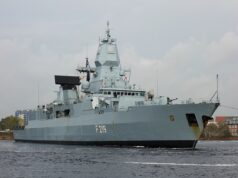
At the time of writing, we have heard news that HMS Lancaster (F229) is being retired from service after a distinguished 35 years. She will not return to the UK and will instead be disposed of in Bahrain, where she has been based for most of the last two to three years. One of the Type 23 Duke-class frigates, Lancaster is the latest to be retired. Of the 16 originally built, only 13 were operated for most of their careers, with three sold to Chile in the 1990s.
Recent losses include HMS Montrose (F236) in April 2023, HMS Argyll (F231) and HMS Westminster (F237) in May 2024, and HMS Northumberland (F238) in March 2025. This leaves a fleet of six active frigates, plus one in refit, HMS Kent (F78). Current estimates for replacement classes entering full operational service remain some time away, with Type 26 frigate HMS Glasgow (F88) expected in 2027 to 2028 and Type 31 frigate HMS Venturer (F12) expected in late 2026 or early 2027. By then, it is entirely possible that the existing frigate fleet will have shrunk further.
In addition, there are six Type 45 destroyers, currently undergoing upgrades to enable service until 2040, partly because the planned Type 83 replacements remain in the concept phase. This represents the smallest number of surface escorts the Royal Navy has had in over 100 years, and arguably since its formation.
The Royal Fleet Auxiliary is also struggling with recruitment and retention, alongside its own fleet size challenges. RFA Argus (A135) is now almost certainly destined for disposal. The joint amphibious warfare fleet currently has just one operational ship, following the retirement of HMS Albion and HMS Bulwark and ongoing refits of RFA Mounts Bay and RFA Cardigan Bay. The Multi-Role Strike Ship programme, intended to replace both Albion-class ships, the three Bay-class vessels and Argus, remains at the concept stage. Reports suggest funding has been allocated for only three of the six proposed ships, with construction unlikely to begin before 2030.
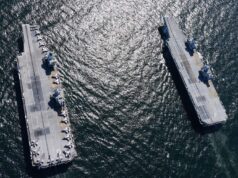
In practical terms, if the Royal Navy were required to deploy in force to South East Asia following a Chinese invasion of Taiwan, whether to support Taiwan directly or to protect allies such as Australia, New Zealand, Singapore and Japan, the current fleet would likely only support a small, pre-planned carrier strike group deployment. A mass mobilisation on the scale of the 1982 Falklands campaign would be extremely unlikely. The government appears to be moving slowly on naval modernisation, seemingly content with existing frigate build programmes and reluctant to accelerate mine warfare replacement, the MRSS programme, or additional Type 31 orders, despite the 2025 Strategic Defence Review identifying these areas as priorities.
The Royal Air Force is also in a poor state.
Analysis by myself and other members of the Military Air Tracking Alliance OSINT group suggests the RAF has just 107 Eurofighter Typhoon airframes still in service. Of these, four are deployed to RAF Mount Pleasant in the Falklands, between eight and twelve are deployed on rotation to RAF Akrotiri in support of Operation SHADER over Iraq and Syria, and a further two routinely deploy from RAF Coningsby to Estonia and Poland as part of NATO’s Operation EASTERN SENTRY.
An unspecified number are assigned to the UK’s 24/7 Quick Reaction Alert mission at RAF Coningsby and RAF Lossiemouth, while others are used for pilot training. A small number, believed to be between four and seven at any given time, are assigned to BAE Systems at Warton for testing new equipment, sensors, software and weapons.
The RAF’s fleet of F-35B Lightning II aircraft numbers 24, many of which have recently returned from the 2025 Operation HIGHMAST carrier strike group deployment. A significant portion of these aircraft are now undergoing extended maintenance after up to eight months overseas. In reality, the RAF would struggle to deploy more than two dozen fast jets to any additional major conflict.
Meanwhile, BAE’s Project TEMPEST, also known as GCAP or Edgewing, aims to fly a prototype in the early 2030s, well after Eurofighter Typhoon production is expected to end. The war in Ukraine has demonstrated that even high-end combat aircraft such as F-16s and Mirage 2000s suffer notable losses against near-peer adversaries. This is a type of conflict the UK has arguably not faced this century. It may surprise some readers to learn that Ukraine now fields more combat-ready fast jets than the UK.
On a more positive note, the RAF’s tanker and transport fleets are in relatively good shape, with up to 22 A400M Atlas aircraft, eight C-17A Globemaster III aircraft and up to 14 A330 MRTT Voyager aircraft available. However, all three fleets are heavily worked, and with no replacement for the retired C-130J Super Hercules aircraft, which are now being purchased by Turkey, the RAF is increasingly being asked to do more with less. This is hardly reassuring in a so-called “pre-war era”.
The RAF’s ISTAR fleet has also faced significant challenges this year. The three E-7A Wedgetail AWACS aircraft, reduced from an original planned five, are heavily delayed in entering service. Their predecessors retired in 2021, and the E-7 was originally expected to be operational by 2023. Combined with the three overstretched RC-135W Airseeker aircraft, which were forced to evade Iranian missile attacks earlier this year, and the cancellation of planned upgrades to the Beechcraft Shadow R.1 fleet, the UK may now be relying too heavily on the incoming MQ-9B Protector RG.1 unmanned aerial vehicles for critical intelligence support. Despite promised budget increases, the government has taken no decisive action to address these issues, and the 2025 Strategic Defence Review made no firm commitments on new aircraft or fleet expansion.
Then there is the British Army.
I will not dwell extensively on the Army, partly because it has featured prominently in recent mainstream coverage, including Ajax IFV issues, widespread sexual abuse allegations, reductions in full-time personnel, problems with its fleet of over 6,000 general-purpose trucks, and cuts to the Challenger main battle tank fleet. It is also because, frankly, the Army is not an area I can claim deep expertise in.
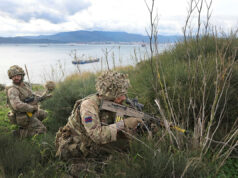
What is clear is that the Army is also not in a strong position. As an island nation, the UK’s land forces cannot deploy independently at scale without support from the Royal Navy and RAF. Yet one of the Army’s most pressing issues appears to be the basic availability of functional equipment should it be required to deploy, with Ajax being the most obvious example.
In summary, the politicians responsible for the state of the armed forces, including MPs within the Ministry of Defence, Chancellor Rachel Reeves, who appears reluctant to commit additional defence funding, and ultimately Prime Minister Keir Starmer, whose role should be intrinsically linked to the defence of the realm, do not appear to be acting with sufficient urgency if they genuinely believe the UK is in a “pre-war era”.
While comparisons can be drawn between today’s geopolitics and the Phoney War of the late 1930s, the sense of urgency that drove Britain’s rapid military preparation during that period is conspicuously absent in 2025. I hope Ukraine continues to withstand Russian aggression and ultimately prevails, but realism is required. With US support increasingly uncertain, the conflict may not remain distant indefinitely.
Similarly, while a Chinese invasion of Taiwan may seem remote to many in the UK, its global implications would be immense. The loss of Taiwan’s semiconductor manufacturing capacity, with plans reportedly in place to destroy facilities to prevent their capture, would have profound consequences for global technology supply chains, shipping and economic stability, particularly in the face of inevitable sanctions.
We effectively face two choices. We can continue to do very little in this supposed pre-war era and find ourselves ill-equipped to support ourselves or our allies when the consequences of a world at war reach our shores. Alternatively, we can urgently re-arm, rebuild our strength on land, at sea and in the air, and restore our global presence, deterrence and credibility as a force for stability. If we do not, it is worth asking who will.”





Absolute mess basically.
BOOM.
Over to you, you UTTERLY USELESS Labour government.
But lets ensure we include every government over the last 30 years as well, they started it, they made the cuts.
Wait for ruzzian drones and missiles to hit the UK, then the public will be angry then they will actually do something about it.
I doubt that will happen. Those clowns can’t even persecute right on their own doorstep, let alone tangle with NATO
“In light of this horrific attack on British citizens, which resulted in the death of 25 people and 40 wounded, we have made the decision to sanction Putin’s butler and cut two frigates.
We remain committed to the defence and security of the British people.”
It will be too late by then.
UKs lack of GBAD leaves all military, industrial sites and government vulnerable.
A saturation attack with cruise missile and long range drones could deliver a knockout blow.
Yes because you would totally use very expensive GBAD with a limited radar horizon to guard a mountainous island against cruise missiles.
Off-course you could use a fleet of over 100 super sonic interceptors armed with the very best air to air missiles in the world to shoot down cruise missiles instead.
If only we had one of them 🤔
Oh C on a Crutch… it makes you want to fling your tea cup at the TV.. including the tea bag.
Our medium range GBAD now consists of between seven to maybe nine Sky Sabre systems… two of which are in Falklands and Poland.
Yes we have 122+ Starstreak (excluding gifts to Ukraine), but these are short range 7km.
The Sky Sabre needs to be acquired in large volume to provide anything like a partial layered defence, and is not able to deal with hypersonics, both ballistic or otherwise.
Deterrence is mostly about convincing an enemy they will suffer if they move forward with an attack.
Having so extremely few ground based air defence assets is almost culpable in allow our enemies to make the plans they state they are not… honest we won’t attack you if you respect us.
Oh sh…t, pul your finger out Labour, and back them in the house conservatives… we need lots more GBAD.
Sadly the major issue facing us now, that we didn’t face in the 1930’s, it the lack of “industrial” infrastructure and capacity. It looks like we are about to close our last blast furnace, so no high grade steel can be made which is vital for armoured vehicles, we certainly won’t be able to convert all the car factories to building airplanes, and we would be hard pushed to cloth all our military, as again we no longer have the capacity to do so at scale.
Time the politicians either told the truth about needing to cut welfare and increase military spend, or employ people to “clean” the white cliffs of Dover so that everyone knows we are about to surrender.
24 F35s? We have 37-38, don’t we? And Mirage 2000s aren’t exactly ‘high-end’.
As for the rest, a truthful and well-written summary that I hope is shown more widely than the UKDJ choir.
I imagine it is supposed to say that we have 24 frontline F35Bs, with rest in the OCU and testing.
I think it was a typo and is supposed to read 42, I think we’re at about that number if we include the 3 instrumentation aircraft in the US, which are a write-off in combat terms.
The other typo is calling the Ajax recce vehicle an IFV…or perhaps the author’s lack of knowledge about the army is as he says it is.
I believe we currently have 39 F-35b, with a further 5 due in early 2026.
Unfortunately I believe it will take a direct attack on the UK for any Government to wake up. They know we are being attacked in the “grey” all the time, but that is mostly hidden from public view and does not cause alarm to most people.
We are sleepwalking into a disaster due to a combination of poor national finances and a lack of will to make hard decisions.
So much is riding on the equipment plan, but we just know it will be a fudge. Even if it is big on ambition there won’t be the money to turn it’s aspirations into reality.
In reality, the UK will respond in numerous directions as various methods of disruption could lead to many new establishments. In terms of cyber attacks, these could increasingly bugger daily life, from transport disruption to banking and media transmissions. Many new jobs may be required to increase countermeasures against widespread hostile cyber activity.
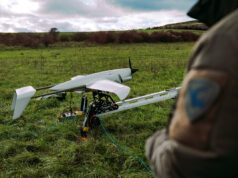
Local anti-drone troops made up from full-time and volunteers to monitor and intercept low-yield explosive devices against vital infrastructure and large civilian population centres. These units could emulate the WW2 Home Guard in terms of organisation and functions, as well as working in unison with police forces.
An expansive anti-missile (Iron Dome) network across the UK covering principal military sites, major cities and towns. Again, the setup could reflect the Thor Missile sites of the 1960s and become commonplace in the British countryside.
The above are actions I can envisage; however, the British people have to wake up to a new reality before this government will feel comfortable enough to spend real money on defence. Remember, the Labour Party will always place welfare before guns.
It is foreseeable that there is a good chance of war soon. Neville Chamberlaine took a lot of flack – but at least he actively put the UK on a war footing and massively increased the efectiveness of the armed forces. Current lot (and the Tories before them) have done nothing… basically meaning every PM for about the last 10 – 15 years are far worse than Chamberlaine as far as defence goes.
Would be another Singapore….
Having dismantled the British armed forces since 1990, the Labour government will complete the dismantling process. Aside from mocking the public by claiming to be increasing capabilities, nothing is safe from cuts under this government. Let’s hope the two aircraft carriers are saved and that one of them isn’t sold off.
Always thought the T23s went to Chili in 2005.
I wouldn’t say we are doing nothing. Lord Robertson says he has a torch in every room and a transistor radio. We need to focus on the grey threat. 😂
The article said that 24 have returned to the UK from operation highmast , we have I believe 39 with the rest to delivered at some point next year making 47 in total , assuming no more delays in production .
When war starts, Russia/China can turn the UK into nuclear ash in 10 seconds. 😂
And we can do the same to them. Hence why it’s called a deterrent.
You might want to get off your ass and actually protect yourself. NATO is not going to do it for you if Trump says you can
That comment makes no sense at all.
As long as the Americans allow . The UK cannot defend itself. It’s the gimp. The only thing helping you is American nuclear missiles and warheads and American nuclear reactors… Other than that, the UK defense forces are an absolute joke!
It can do the same to the US
Obvious bot is obvious.
Go collect your Rubles, you repulsive third world cretin
What a mess
Even if we had the money to increase to the desired 5% it will take decades to procure equipment train personel and ramp up our industries to the level needed
to meet these threats.
Says what we all know, defence is kicked in the long grass again, money need for large families and those with mild ADHD, nothing will change Started un the last Government you know the one that used bang on about defence and now the root is so deep there simply is not enough cash to fix it thats if there was even the will power to do which there is not. DIP delayed says it all, excuse after excuse, long winded statemeants about nothing. I just hope the Army does no have fight a war as we see what a disaster that will be no kit reserves, about a week of Ammo, its not Governments that pay the price its those serving.
The government talks about preparing for war whilst at the same time demanding that the MOD finds £2.5 bn of savings (cuts) in FY2025/26. End result – Exercises cancelled, ships stuck in harbour, refits and maintenance cancelled or put on hold, equipment gifted to Ukraine wont be replaced for years, combat aircraft and warships prematurely withdrawn from service and offered to foreign buyers at fire sale prices (ANY offer considered), large scale cannibalisation of front line equipment to keep at least some tanks, ships and aircraft in working, long awaited orders not placed (e.g. MLH), disastrous capability gaps (e.g. AEW and missile defence), the withdraw of the RN from the Arabian Gulf and Red Sea, no political willingness to defend Gibraltar and other crown colonies, a foolish hope that AI and unmanned systems will be a cheap quick fix that will avoid the government actually having to increase defence spending, rather than pretending it’s going to using accounting tricks.
Nice article. Nothing we didn’t already know though, and very little mention of equipment that will be entertaining service in the not to distant future. We also have 111 Typhoons in service. 4 T1 jets will remain until 2027. 40 F35Bs have been delivered from tranche 1 48 order.
When your most active enemy is already lodged inside your country, why worry about Russia that has just lost a million men in the muddy fields of Ukraine to what purpose?
Why build weapons when the elites have described the one reliable part of the U.K.’s shrinking native demographic that once crewed such weapons as ‘gammons, knuckle draggers and thickos’? I am amazed any join.
Once again the crisis is one brought on by the few and placed on the shoulders of the many; politicians, bankers and the over promoted who gained their seats at the trough by going along with stuff they never believed in but, … who cares? The plebs are stupid and we are doing fine.
Yup. “gammons, knuckle draggers and thickos”. You describe yourself perfectly and you’re definitely the enemy within 🤡🐷
Ignorant righttrash will bring about their own demise and it’s glorious to watch 🤣👌🏾
You make my case for me better than I do myself.
You really are a sad, troubled, little chap aren’t you.I hope you get the help you, so desperately, need.
I think, sometimes, the political party running the country has to consider that the correct course of action may be detrimental to their future electoral success but that some courage is needed in taking that course, nevertheless.
In the European democracies, the military basically has to go out to the public with a begging bowl. Our enemies, on the other hand, go out to their public and tell them what is going to be spent on the military and ask whether there are any complaints, as they noisily cock a pistol.
Agreed. I think Labour would be much more successful, ironically, if they stopped worrying about their popularity. To my mind, we need to rejoin the EU pronto, rebuild the armed forces, means-test the state pension and control the ballooning welfare bill. Taken together, these things will anger nearly the entirety of the UK electorate. But not doing any of these things will also anger everyone, with the side effect that nothing gets accomplished.
This is a good but depressing artical but only scratching the surface, there have been little to no interest in the UK’s ability to defend itself/wage war by the political elite or the civil service for the last 30 odd years.
Yet money still flows from the treasury on all sorts of ‘humane’ things home and abroad😡
Yes, we should withdraw your benefits, righttrash skiver 🤡🤣
The Brazilian navy would eventually keep one of the two aircraft carriers. We,ll see.
Well, with everything that’s happening in the world, we’re in a situation where the US is antagonising countries across the world while failing to do anything to keep their lead on China, or to commit to preventing Russia from winning in Ukraine.
Russia winning that war will send a devastating message that the West is weak, the West won’t support their allies, all you’ve got to do is remain committed and apply military pressure until they break.
Meanwhile we’ve got Starmer actively raising the white flag, withdrawing British prestige and influence until it won’t even reach past the Channel. I honestly wouldn’t be surprised if he was a stooge of a hostile foreign power; he’s certainly acting like a few of them.
I just cannot fathom how devastating the outcome of world events might be for the UK; I don’t even think our country will be recognisable within a generation. And what is our Prime Minister doing? Making it illegal to sing songs about him.
There is apparently a “New World Order” being imposed. Spheres of influence agreed without UK or European participation. Taiwan, Ukraine? Casualties. The Han Empire will dominate the Pacrim, the US will stick to the continental north and south Americas. Europe? Increasingly subservient to China for anything produced by heavy industry, based in London they will influence continental Europe.
Domestically the UK will be riddled with ethnic strife, as will parts of Europe. My guess is it is part of a “cunning plan”. No Spock, not conspiracy, a hard fact. The UK will probably Balkanise anyway, Chinese interference.
The talk of war with Putin is all distraction, apart from if you are from a Baltic country. Fracture Nato is a long term aim, isolate Israel another.
Me, apart from being sick of spineless idiots in politics telling lies? Sick of Joe Public not caring and being too welfarised to bother? Of an age where thankfully I won’t see the outcomes.
Hopefully I hope history throws a curve ball, China has many internal problems, Russia is in a parlous state, who knows?
I suspect Starmer is just burying his head in the sand and hoping that the next US president will for some reason be willing to resume subsidising allies who don’t invest properly in their own security. I think he’ll be disappointed. While the Tories completely neglected their obligations, one does not vote for a party that was willing to elect Jeremy Corbyn as leader and expect them to take national security seriously either.
Yeah, and the Conservative Party.will always place tax cuts (for the better-off) before guns.
At least this HMG is increasing the defence budget usefully, after 14 years of cuts…
On not that weary, contrived right wing rubbish again please! On the eve of mobilisation, we will round up and incarcerate a couple of thousand Russian agents and their paid spivs, a big batch of ultra-right nutters and known Muslim extremists, and then the remaining 67 million Brits will gear up for hostilities.
The real issues are as the article states, we have run our forces, their equipment and our manufacturing capability into the ground. We may only have a small window in which to get things back up and enormous pressure needs to be put on HMG to do so without further delay.
The “Broadsheet” newspapers are reporting that the delay to the Defence Investment Plan (DIP) is not due to the Ajax to fiasco, but rather because Starmer was concerned that it was unaffordable and wouldn’t sign it off. One reason why it is unaffordable is Starmer’s unfathomable decision to gift the Chagos Island to the Manutius (a 1000 miles away!), sweetened with a front loaded £30 bn cash payment taken from the MODs budget for the continuing use of one island by the USA’s military. The Mauritius’ at first couldn’t believe their completely unexpectedly lottery win, but are now demanding that the UK pays £billion more as plans to sell lucrative fishing and other EEZ exploitation rights to China and India are constrained by conditions in the proposed treaty. Of course post handover those conditions will soon be meaningless as India and China aggressively compete to occupy the islands.
The first priority of any Government is the security of its citizens. As usual it seems the UK’s Talks.the Talk, but thats about it in that regard.