


Britain will retrofit British capability onto equipment given to Ukraine by other partners, the Prime Minister told President Zelensky at Downing Street, alongside a fresh package of Lightweight Multirole Missiles and talks on accelerating long range support before winter, according to the government.
Andy Burnham welcomed Volodymyr Zelensky to Downing Street on Wednesday afternoon, and the two began by reflecting on their call the previous Saturday and on what the government described as Russia’s blatant indiscriminate attacks on civilians and energy infrastructure since President Trump called for an energy ceasefire. It was clear Russia had no interest in peace, the leaders underlined.
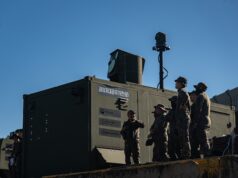
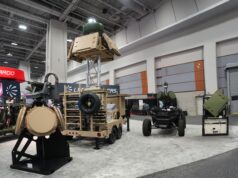
On how Ukraine’s allies could step up, particularly against Russia’s barrage of jet-powered drones, the Prime Minister set out the latest British package of Lightweight Multirole Missiles. He added that Britain would continue to develop innovative military solutions for use on the battlefield in Ukraine, including retrofitting British capability onto equipment gifted from other partners.
On long range missiles, the leaders discussed how Britain could accelerate defensive support ahead of the winter, and the Prime Minister said Britain would continue diplomatic efforts to support international supplies of defensive equipment.
Donated equipment arrives in Ukraine from more than fifty countries in a bewildering variety of types and standards, much of it Soviet-era, some of it decades old, and a great deal of it without the sensors, communications or guidance that would let it work inside a modern targeting chain. Fitting British seekers, fuzes, datalinks or electronic warfare packages onto someone else’s donated hardware turns a stock problem into an integration problem, and the British defence industry is better placed to solve the second than the first.
Britain has already done something along those lines at a smaller scale. Stone Cloak, the tablet-sized jammer designed by the government to stop Russian air defences tracking the drones it is fitted to, is manufactured under a British contract and its intellectual property has been handed to Ukraine so that Ukrainian industry can mass-produce it.
Jet-powered drones are the specific threat behind the latest missile package. The Geran-3, a jet version of the Shahed-136 design, flies considerably faster than the propeller-driven type Ukraine has been shooting down since 2022, which compresses the time available to detect, track and engage and pushes targets out of reach of the machine guns and small arms that handle the slower ones. Lightweight Multirole Missiles are one of the few interceptors cheap enough to use against them in quantity.
Thales builds those missiles in Belfast, where production now runs at four times its 2022 rate with £100 million committed to expanding further. The company says the work sustains 1,100 direct jobs in Northern Ireland and around 700 more across its British supply chain.







Fantastic. Let’s keep doing what we can for Ukraine.
And keep stocks up in the UKs cupboard too.
No doubt to avoid ITAR and us [lowercase lack of respect intentional] influence in such activities – which means it’s already happened.
.
.
When will the UK government understand a strong[er] UK military, with a stronger UK military industrial base will also support foreign policy initiatives such as [supporting Ukraine] defeating the russians and their cohort of other bad nations [china, iran and naughty Korea]. This buys influence on the world stage, far greater than any soft foreign aid [sic] intiatives [sic] – sticks, the bigger the better win wars, directly and in this case, indirectly.
Seems like we also need to figure out an alternative to Skyshield now that Trump needs Russian oil.
Has any Sky Sabre CAMM been used in Ukraine and would it have any ABM capabilities? And didn’t France or Italy donate some Aster? Someone’s got to be taking notes on how these are performing.
Maybe there’s a need for a cheaper mass CAMM now or is that more like the Star Hammer?
Yes to Aster, no to CAMM. The closest CAMM has come to Ukraine that I am aware of, was when it was deployed to a Polish airfield near the border.
As far as CAMM’s anti-ballistic capability goes. It was not part of the original requirements. CAMM was originally designed to replace Seawolf in the point defence role. Which meant its primary targets were the then current range of anti-ship missile, such as sea skimming and high diving missiles, along with manned aircraft. However, its effective range meant that it could provide local air defence as well. Since the requirements were written, naval warfare has a couple of new threats, namely drones and anti-ship ballistic missiles. Drones do not present anything new to CAMM, as the Banshee target drone is a similar size to the Shahed, and it has shown it can take out smaller drones equally as well.
Ballistic missiles were never part of the threat picture when CAMM was designed. However, a number of countries have developed anti-ship ballistic missiles, which have shown to be a threat to a ship. Both the Houthis and Iran have used them in recent conflicts, where they have either missed by a wide margin or been shot down. None so far has hit a warship, with only a couple cargo ships being hit. So do they pose a risk to a warship, yes undoubtedly, especially as the technology is being refined and made more accurate. Which means the RN must rethink the threat picture its warships face and how to counter this threat.
A lot will be said that CAMM is too slow. But it is classed as a hittle with an explosive back up. The thing is though, if you place a Mach 3 missile weighing around 100kg in the path of a ballistic missile (BM) travelling at Mach 5 or so, the energy generated by the two missiles colliding together is going to be immense. So in theory CAMM should be able to take out a BM in its terminal dive, so long as CAMM can be placed directly in the path of the BM. Even a side glancing blow will be sufficient to cause damage to the BM, where as its dropping at super/hypersonic speeds, will incur the high pressure air getting into the damaged area of the missile, possibly ripping it apart.
I fully expect the MOD and MBDA are actively exploring, how CAMM can be used against a BM in the late terminal phase, i.e. when the BM passes the 10,000m altitude threshold of CAMM. The other two variants of CAMM, the CAMM-ER and especially the CAMM-MR, have bigger rocket motors, so will be able to reach a higher altitude and terminal speed. Giving them potentially better anti-ballistic missile capabilities.
We should be providing Ukraine with as much kit as possible – helping them curtail Russian advances reduces the risk of British forces becoming involved in direct conflict.
And on a purely economic perspective, this has likely been the cheapest possible way to remove as much Russian capability as possible while also bolstering out own manufacturing capabilities. It is windy win. We get to help Ukraine against undeserved aggression, weaken Russia and strengthen ourselves. Plus we have finally woken up to the fact we can not trust the US (something they have proved many times in the past without us learning the lessons)
Not to mention, a great opportunity to test and improve the weapons we do supply giving us a head start if heaven forbid, we get drawn in at some stage in the future.
‘Improvisational engineering’ is something we have a particular talent for so this is a sensible move.