

The Ministry of Defence is to award Inzpire a contract worth £502k to deliver air warfare education and training to the Ukrainian Air Force, covering roughly 20 weeks of instruction a year, the department stated in a contract award notice.
The contract runs for a year from 26 August 2026, with a single 12-month option period available, and the earliest date for signature is 26 August.
According to the notice, the work covers an air tactics and planning course, including the setting of training objectives, course development and delivery. The contract was placed directly rather than through competition, and is classified under the common procurement vocabulary code for technical training services.
The supplier is Inzpire Limited, a company based at Alpha Court in Lincoln and recorded as a small or medium-sized enterprise.
Inzpire was founded in 2006 by former RAF aircrew and has built its business around mission planning software and the provision of experienced military personnel as instructors and advisers. Its GECO mission system is used on British and export aircraft, and the company has held training and evaluation contracts across the RAF and Royal Navy, including work supporting fast jet and rotary wing crews.
Britain has trained Ukrainian personnel continuously since 2022, most visibly through Operation Interflex, the infantry training programme run in the UK with contributions from more than a dozen partner nations, which has put tens of thousands of recruits through basic soldiering courses. Air training has been a smaller and less publicised strand.
Ukrainian pilots began elementary flying training in the UK in 2023 as part of the international effort to prepare crews for the F-16, with the aircraft themselves supplied by Denmark, the Netherlands, Norway and Belgium since Britain does not operate the type. Language training and ground school ran alongside, with conversion to type handled elsewhere.
Tactics and planning instruction of the kind covered by this contract addresses a different problem from flying the aircraft. Soviet-derived air forces were built around close ground control, with controllers directing aircraft onto targets, while NATO practice places far more responsibility on the aircrew to plan missions, interpret the air picture and make decisions in flight.




Over the past 72 hours, Ukraine has achieved significant gains through an intense, long-range strategic drone campaign targeting Russian economic and naval infrastructure – while making limited, tactical advances on the ground.
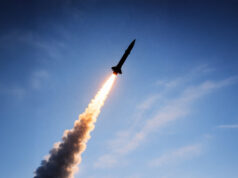
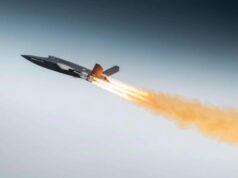
On the night of August 11–12, Ukrainian forces executed a massive, coordinated strike using naval drones, aircraft and rockets against Russia’s vital Black Sea port city of Novorossiysk. Preliminary satellite analysis indicates the strike inflicted serious structural damage on key assets of the Russian Black Sea Fleet, specifically targeting the frigates Admiral Makarov and Admiral Essen. The assault also hit the port’s infrastructure, forcing two major Russian grain export terminals to completely halt operations
Ukraine also successfully struck multiple energy complexes located over 1,300 kilometres deep inside Russian territory, heavily fracturing Moscow’s regional fuel logistics. A successful strike on the Orsk refinery near the Kazakhstan border forced the facility to completely shut down. The regional governor publicly admitted that due to international sanctions, replacing the imported equipment will take “up to” six months
Ukrainian drones successfully hit an oil and petrochemical complex in the Russian republic of Bashkortostan, igniting a massive blaze at a facility directly responsible for supplying fuel to Russian front-line troops
Ukrainian drones successfully targeted and set fire to another massive logistics warehouse belonging to Wildberries (Russia’s largest online retail giant) also in the Bashkortostan region, compounding uninsured losses for hundreds of domestic businesses. This was the 20th Wildberries warehouse/hub that Ukraine has burned to the ground
While the overall ground conflict remains a grinding war of attrition, Ukrainian ground forces have achieved localized victories in the past 72 hours
Verified battlefield reports this week indicate that Ukrainian forces successfully advanced and seized new positions along the Kupyansk tactical front. Ukrainian airborne and assault units have successfully recaptured a total of 745 square kilometres of occupied land this year across the strategic Oleksandrivskyi sector
Ukraine has significantly shifted the dynamics of it’s defensive war by executing a high-impact, long-range asymmetric strategy. By combining sophisticated deep rear drone strikes with disciplined tactical ground operations, Kyiv has successfully disrupted Russia’s economic stability, naval presence, and frontline military logistics.
Ultimately, these synchronized achievements demonstrate Ukraine’s evolving capacity to aggressively project power, degrade Russian economic resources, and fracture front-line logistics deep inside sovereign enemy territory. This year, Ukraine is winning.