UK firm Cambridge Pixel will showcase radar, tracking and sensor-processing software for uncrewed and autonomous surface vessels at SMM 2026 in Hamburg.
Cambridge Pixel will use the SMM 2026 maritime exhibition in Hamburg to showcase software designed to help developers integrate radar, cameras and other sensors aboard uncrewed and autonomous surface vessels, according to the company.
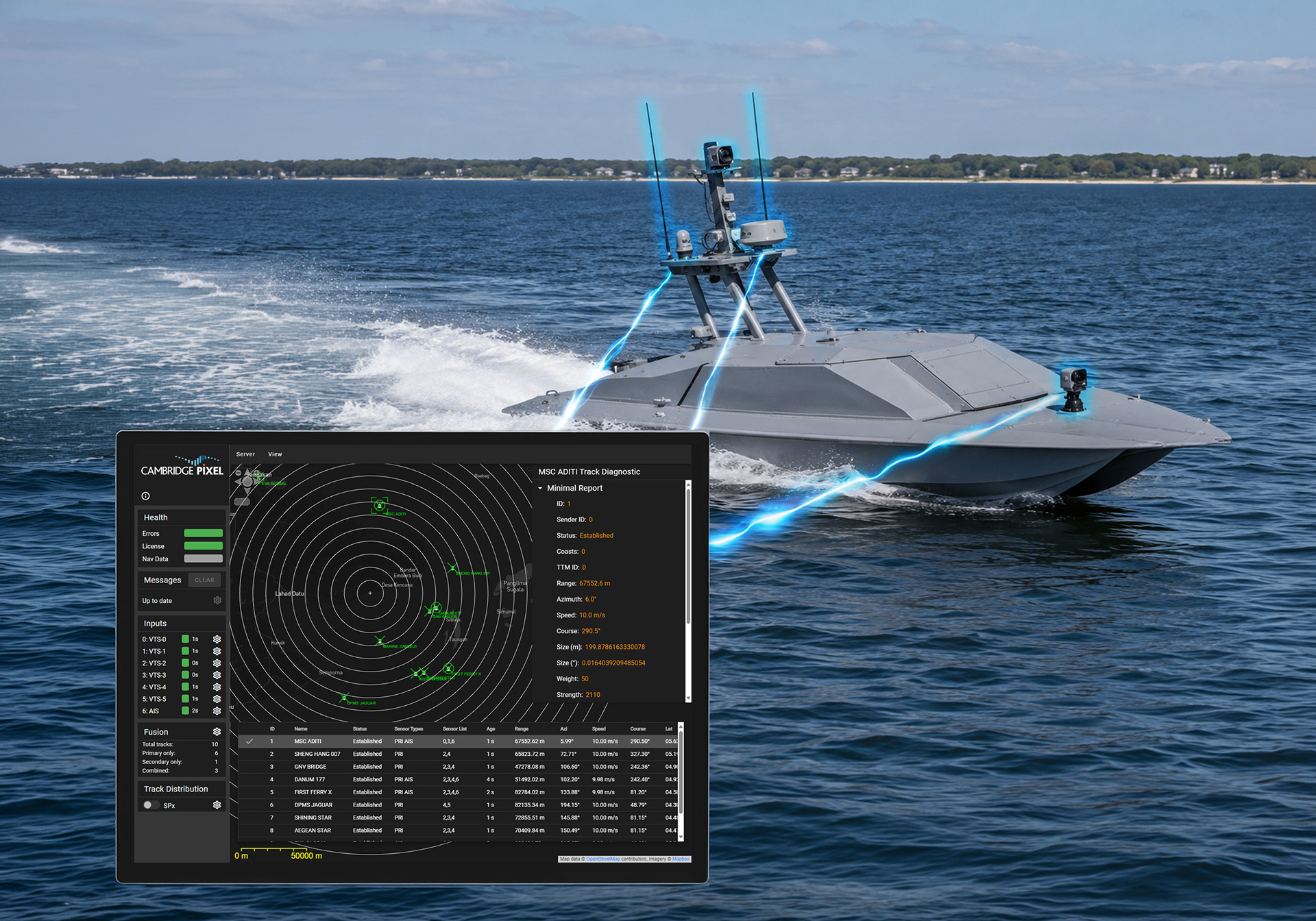
The Cambridge-based firm says its modular software can support both commercial and military USV and ASV projects, providing functions including radar processing, target tracking, obstacle detection, sensor fusion, camera control, recording and navigation support in GPS-denied environments. The company will exhibit the technology between 1 and 4 September as part of SMM 2026, which this year includes a dedicated Maritime Security & Defence Expo.
At the centre of the offering is Cambridge Pixel’s SPx Server V2, which provides radar video processing, proximity detection and tracking functions intended to support collision avoidance and autonomous navigation. A Detection Server configuration can provide plot extraction and proximity detection, while the Tracking Server adds multi-hypothesis target tracking to follow contacts in more complex environments.
Cambridge Pixel says obstacle and target information generated by the software can then be passed to an external autonomy or vessel-control system using established data formats including ASTERIX, NMEA-0183, TAK and SAPIENT. This allows the radar-processing layer to be integrated with a wider vessel architecture rather than requiring developers to adopt a complete proprietary control system.
The company is also promoting its ability to interface with existing maritime radars, saying its software has already been integrated with more than 80 different radar types. For developers of uncrewed craft, that can provide a route to using commercial or military radar hardware with custom autonomy, navigation and command software without having to develop the radar-processing layer from scratch.
The technology is intended to address several practical problems facing autonomous surface vessels, including navigation where satellite positioning is degraded or unavailable, maintaining awareness of nearby traffic and obstacles, and combining information from radar with cameras and other sensors. Cambridge Pixel says those functions can be provided through software components without requiring extensive bespoke hardware.
The company has worked with uncrewed and autonomous vessel developers for more than a decade and says its technology is already used by organisations in 65 countries. Customers and integration partners cited by Cambridge Pixel include BAE Systems, Hensoldt, L3Harris, Lockheed Martin, QinetiQ, Saab, Thales, the Royal Navy and the US Navy, although the announcement does not identify which specific systems or programmes use the USV-focused software being demonstrated at SMM.
The Hamburg event will also provide a wider defence backdrop for the company’s maritime autonomy work. SMM expects more than 2,200 exhibitors and almost 50,000 visitors from over 100 countries, while the new Maritime Security & Defence Expo will focus on areas including uncrewed systems, cyber security, maritime surveillance and protection of critical infrastructure.
For Cambridge Pixel, the emphasis is less on producing complete uncrewed vessels than on supplying the processing and integration layer that allows radar and other sensors to feed useful information into navigation and autonomy systems. That approach places the company within a wider market in which naval and commercial operators are seeking to add increasingly autonomous functions to existing and new surface platforms without replacing every component in the vessel’s sensor architecture.
The SMM demonstration will therefore centre on how established radar and sensor data can be processed, fused and distributed into external control systems, with Cambridge Pixel positioning its modular software as a means of reducing integration time for developers building both military and commercial autonomous maritime platforms.