

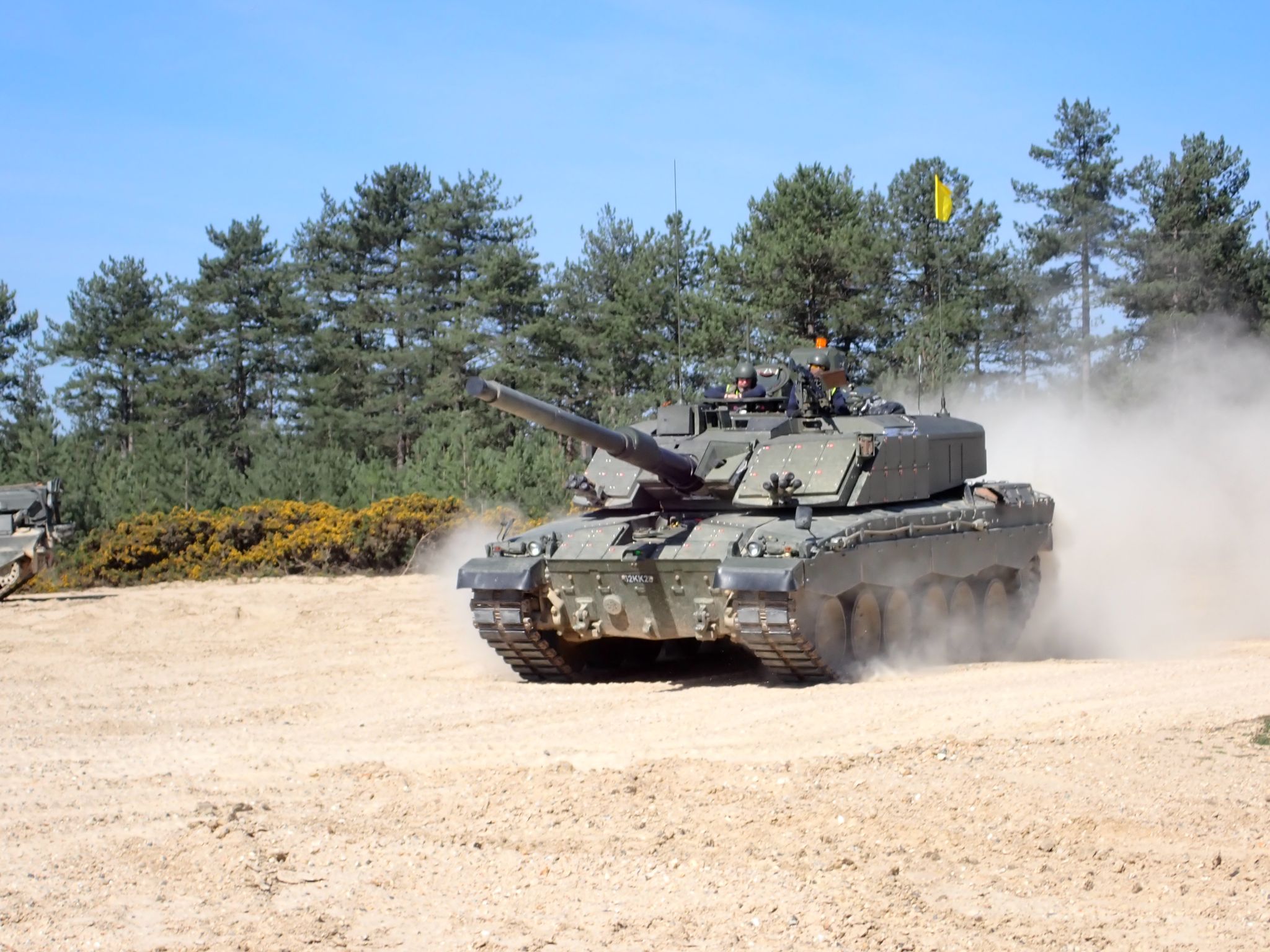
The Army’s Challenger 3 tank will use automated functions in its hunter-killer sights and hard-kill protection system to help identify and track targets and protect the vehicle, according to a parliamentary answer from Luke Pollard, Minister for Defence Readiness and Industry.
Ben Obese-Jecty, the Conservative MP for Huntingdon, asked about the feasibility of integrating automated decision advantage into the two systems.
Pollard replied: “Based on the current Challenger 3 design, both the hunter-killer and hard-kill systems will incorporate automated functions to support target identification, tracking and vehicle protection.”
Challenger 3 will be fitted with Rafael’s Trophy active protection system, which detects incoming anti-tank missiles and rockets and fires countermeasures to destroy them, the UK Defence Journal reported when the Challenger 3 active protection system moved into its next phase of trials. A lighter Trophy variant is being integrated for the British tank by Rheinmetall BAE Systems Land.
Trials of the tank are due to finish by the end of 2026, with initial operating capability expected in 2027, the UK Defence Journal has reported. Pollard said on Thursday that no decision has been made on the future of the 137 Challenger 2s not being upgraded.






Would be Interesting to know the actual details,condition and whereabouts of these oft mentioned additional CH2’s.
Do they work individually or combine sensor pictures between tanks and with other platforms (particularly aerial) when that’s available? I recall one argument against Warrior and IFVs was that if they got close enough to a trench to detect people, they couldn’t depress the barrels far enough to hit, and I always wondered, why weren’t they given a combined picture, allowing further away IFVs to attack? Considerable works seems to have been done in other domains normalising multi-platforms pictures, but I don’t recall reading that this has been done inside the land domain.